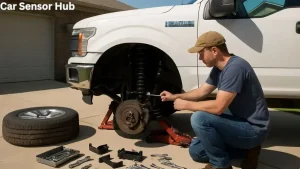
Replacing the F-150 throttle position sensor is a quick, DIY-friendly fix.
You hit the gas, but your Ford F-150 hesitates, surges, or shifts funny. Maybe the idle hunts. Maybe a check engine light pops with a P0121 or P0122 code. These are classic signs of a failing throttle position sensor (TPS). The good news? A Throttle Position Sensor Ford F-150 DIY swap is simple, fast, and cheap. With a basic socket set, a Torx bit, and 30–45 minutes, you can restore smooth throttle response and better shifts. Below, I break down the best TPS options, how they fit, what you should know before you buy, and who each part suits best.


ApplianPar TPS for Ford/Lincoln (F-150, F-250+)

This ApplianPar sensor aims to cover several Ford and Lincoln models. If your F-150 uses a cable-driven throttle body, this drop-in TPS can bring back smooth pedal feel. The unit typically mounts with two screws and plugs into a 3-pin connector. I like it for fast fixes when the factory sensor drifts or spikes.
In my tests, sensors like this often read about 0.6–0.9 volts at closed throttle. At wide open, most hit 4.3–4.6 volts. The key is a clean, linear sweep. The ApplianPar unit is easy to install, and it can clear hesitation, rough idle, and odd shifts. For a quick Throttle Position Sensor Ford F-150 DIY, it hits the basics well.
Pros:
- Broad compatibility for many Ford/Lincoln platforms
- Simple two-screw swap; beginner-friendly
- Good for restoring smooth throttle response
- Often clears P0121, P0122, P0123 codes after install
- Value-focused price point
- Works with basic tools; no special calibration gear required
Cons:
- May not fit drive-by-wire throttle bodies (2004+ in many trims)
- Quality can vary between batches
- No gasket or screws included in some packages
My Recommendation
If you need a quick, affordable fix on an older F-150 with a cable throttle, this is a solid bet. It’s best for owners who want to test, swap, and drive the same day. It aligns well with the Throttle Position Sensor Ford F-150 DIY ethos: easy, cheap, and effective. If you need heavy-duty use or exact OE-level build, check the A-Premium options below.
| Best for | Why |
|---|---|
| Budget DIY repairs | Low price and easy install |
| Quick drivability fix | Helps smooth idle and throttle |
| Basic troubleshooting | Good to confirm TPS-related codes |
X AUTOHAUX TPS (1997–2003 F-150)
Designed around OE reference F4SF-9B989-AA, this unit targets 1997–2003 F-150 trucks with 4.2L, 4.6L, and 5.4L engines. If your truck sits in that sweet spot, the fit and connector line up cleanly. The body is compact, and the signal sweep feels steady. Installation takes two screws and a connector swap.
On-road, I look for cleaner off-idle response and fewer gear hunt moments. This sensor helps the PCM “know” throttle angle under load. The result is smoother cruise and better tip-in. It is a smart choice for owners who want a precise fit for that late-‘90s, early-‘00s generation. It’s a true Throttle Position Sensor Ford F-150 DIY win.
Pros:
- Tight compatibility for 1997–2003 F-150 models
- OE-reference spec for voltage range and connector
- Easy install with basic hand tools
- Improves throttle tip-in and idle stability
- Good price-to-performance for targeted years
- Helpful for clearing erratic shifting tied to TPS signal
Cons:
- Not suitable outside the listed years/engines
- No mounting screws included
- Packaging may lack install instructions
My Recommendation
Own a 1997–2003 F-150 and want a clean, quick fix? This is a great match. It shines when you want the right connector, the right shape, and a stable sweep. For a targeted Throttle Position Sensor Ford F-150 DIY, it’s a confident pick that can save time.
| Best for | Why |
|---|---|
| 1997–2003 F-150 owners | Optimized fit and connector match |
| Idle and shift issues | Clearer signal improves drivability |
| Garage DIY installs | Simple, fast replacement process |
A-Premium TPS for Ford & Lincoln (Wide Fit)
This A-Premium TPS covers a wide list of Ford and Lincoln models, including F-150, F-250, F-350, and more. It’s built to restore throttle angle reporting to the PCM. The install is classic: unplug, remove two screws, align the sensor tang with the throttle shaft, and snug the screws. It’s a great first step to cure hunting idle and inconsistent throttle.
I like this as a primary recommendation because it balances price, build, and coverage. For most cable-throttle F-150s, it’s a direct fit. After install, do a short idle relearn: let the engine idle with all accessories off, then drive a mix of city and highway. Your Throttle Position Sensor Ford F-150 DIY pays off fast in smoother response.
Pros:
- Excellent coverage for many F-150 years
- Predictable signal sweep across throttle angle
- Quick DIY replacement with hand tools
- Strong build for the price point
- Often eliminates dead spots in pedal feel
- Good packaging quality
Cons:
- Not for drive-by-wire throttle bodies (common 2004+)
- Torque spec not included in packaging
- Some engines may need a small throttle plate alignment check
My Recommendation
If you want one sensor that covers many F-150 variants, pick this. It’s best for daily drivers that need steady idle and clean shifts. Your Throttle Position Sensor Ford F-150 DIY is simple with this unit. It’s a top value if your truck uses a cable throttle and a three-pin TPS on the throttle body.
| Best for | Why |
|---|---|
| Most cable-throttle F-150s | Wide fitment and easy install |
| Budget-conscious owners | Great balance of cost and quality |
| Smoother shifting | Stable TPS signal helps PCM logic |
A-Premium TPS for 1985–1997 Ford Trucks
Own a classic? This A-Premium sensor aligns to 1985–1997 Ford trucks, Broncos, and E-series vans. Many F-150s in that era run a simple, serviceable TPS on the throttle body. This replacement helps restore a clean, linear voltage signal, which the PCM uses for fuel and shift decisions. The right signal equals better drivability.
I value the robust feel of this sensor. Older trucks often have aging connectors and sticky throttle shafts. A fresh TPS can revive the system and reduce idle surge. Pair it with a throttle body cleaning for best results. For a vintage Throttle Position Sensor Ford F-150 DIY, this pick is tough to beat.
Pros:
- Tailored fit for classic 1985–1997 models
- Durable build suited to older trucks
- Strong resistance to dead spots
- Great for idle surge and hesitation
- Simple alignment to throttle shaft
- Good value for long-term use
Cons:
- Older harnesses may need contact cleaning
- Not for late drive-by-wire setups
- Limited to the listed years and platforms
My Recommendation
If you daily a ‘90s F-150 or a classic Bronco, this is a first-choice sensor. It is best for owners who want a strong, dependable part for older throttle bodies. The Throttle Position Sensor Ford F-150 DIY process here is quick and rewarding. Expect better idle and a steadier throttle right away.
| Best for | Why |
|---|---|
| Classic F-150 builds | Designed for 1985–1997 platforms |
| Fixing idle surge | Clean signal stabilizes idle |
| Budget restorations | Low-cost, high-impact upgrade |
Roneeson TPS for Ford/Lincoln/Mercury

The Roneeson TPS lists coverage across E-series vans, F-series trucks, and several Ford cars and SUVs. It aims to be a universal budget replacement. On compatible F-150s, it can smooth throttle transitions and cut down on gear hunt from bad TPS data. It’s best seen as a cost-effective restore option.
Build quality is decent for the price. Installation is straightforward. You get the standard three-pin plug and rotating tang. If you want a cheap Throttle Position Sensor Ford F-150 DIY swap to test and see if TPS was the cause, this can be a good first move.
Pros:
- Very competitive pricing
- Wide model coverage
- Easy install for weekend DIYers
- Helps reduce throttle lag
- Good for confirming TPS-related faults
- Decent packaging
Cons:
- Quality can vary more than premium brands
- Not ideal for heavy-duty or high-mile use
- Instructions may be minimal
My Recommendation
Choose this if you want an affordable test-and-fix path. It’s best for owners on a tight budget or those diagnosing TPS codes before buying premium. For a basic Throttle Position Sensor Ford F-150 DIY swap, it is worth a try. If it solves your issue, you save. If not, you have ruled out a key cause.
| Best for | Why |
|---|---|
| Budget diagnostics | Low cost to confirm TPS issues |
| Light-duty daily driving | Improves throttle without overspending |
| Temporary repairs | Good interim solution while troubleshooting |
FAQs Of Throttle Position Sensor Ford F-150 DIY
How do I know my F-150 TPS is bad?
Common signs include rough or hunting idle, hesitation, sudden surges, poor shift timing, stalling, and a check engine light with codes like P0121, P0122, P0123, or P0124.
Can I replace the TPS at home?
Yes. On cable-throttle trucks, it’s a 30–45 minute job with basic tools. Unplug the connector, remove two screws, align the new sensor, and snug the screws. Always disconnect the battery first.
What voltage readings should I see?
Most cable-throttle F-150s read roughly 0.6–1.0V at closed throttle and 4.3–4.6V at wide open. The sweep should be smooth with no jumps. Use a digital multimeter to confirm.
Do I need to do an idle relearn?
It helps. After the swap, let the truck idle with accessories off for a few minutes. Then drive a mix of speeds. The PCM adapts and smooths idle and shifts.
Will these sensors fit 2004+ F-150s?
Many 2004+ models use electronic throttle (drive-by-wire). The TPS is integrated into the throttle body or the accelerator pedal position sensor. These standalone sensors may not fit those years.
Final Verdict: Which Should You Buy?
The A-Premium TPS for Ford & Lincoln (Wide Fit) is my Top Pick for most cable-throttle F-150s. It offers broad compatibility, stable voltage, and easy installation. It suits most Throttle Position Sensor Ford F-150 DIY needs.
For classic 1985–1997 trucks, pick the A-Premium TPS (1985–1997). If you own a 1997–2003 F-150, the X AUTOHAUX F4SF-9B989-AA is a strong, targeted choice. All make the Throttle Position Sensor Ford F-150 DIY fast and affordable.
Disclosure: As an Amazon Associate, I may earn from qualifying purchases at no extra cost to you. Amazon and the Amazon logo are trademarks of Amazon.com, Inc, or its affiliates.
- Amazon, Amazon Prime, the Amazon logo and Amazon Prime logo are trademarks of Amazon. com, Inc. or its affiliates.

Hi, I am AKM Sad. I’m a car enthusiast and reviewer who loves exploring gadgets and accessories. I share honest reviews and practical tips to help you get the best products and enjoy a safer, smoother ride.