Turn off power, pop lens, swap bulb on your Explorer, test, reassemble.
If you want a clean, bright cabin in minutes, you’re in the right place. I’ll show you How to replace Ford Explorer interior lights the safe, simple way. I have done this on older Explorers and newer models, with both halogen and LED. You will learn what bulbs you need, where they go, and how to swap them without damage. Stick around to save time, avoid mistakes, and get pro tips you will not find in most guides.
Before you start: tools, safety, and prep
A little prep makes the job fast and stress free. Park on a flat spot. Turn off the lights. Give hot bulbs a few minutes to cool. Set the parking brake and keep the key out of the ignition.
I like to work with a small tray so clips and lenses do not roll away. Use a plastic trim tool, not a metal screwdriver, to avoid marks. If you are nervous about shorting a circuit, pull the fuse for interior lights or disconnect the negative battery cable.
What you need:
- Plastic trim tool or guitar pick. For prying the lens without scratches.
- Nitrile gloves. Keeps skin oils off bulbs and lenses clean.
- Replacement bulbs. Check your owner’s manual for sizes.
- Flashlight. Helps you see clips and bulb seats.
- Microfiber cloth. Wipe lenses and remove dust.
- Optional: multimeter. If you need to test power.
Pro tip: Keep the doors closed while you work. Use the dome override switch, or a door latch trick, so the lights are off. This prevents heat and saves the battery. This also helps when you test LED polarity.
How to replace Ford Explorer interior lights starts with safe prep. This sets you up for a quick win.
Know your Ford Explorer interior bulb types and sizes
Bulb sizes vary by year and trim. Always confirm in the owner’s manual or a verified parts catalog. Ford service info lists lamp specs by VIN. If your Explorer has factory LED, some lamps may be sealed modules.
Common Ford Explorer interior lamps and typical sizes:
- Front map lights. Often T10/194 wedge or 31–41 mm festoon, year dependent.
- Dome lights (second row). Often 31–41 mm festoon.
- Cargo/liftgate light. Often 31–41 mm festoon or T10/194.
- Vanity mirror lights. Often 29–31 mm festoon.
- Glove box light. Often T10/194 wedge.
- Footwell lights. Often T10/194 wedge.
Year notes:
- 2006–2010: Many lamps use 194 wedge and 31–41 mm festoons.
- 2011–2019: Mix of 194 wedge and 41 mm festoon. Some trims have LED from factory.
- 2020–present: Many interior lights are LED modules. Some are not made to be user-serviceable.
If a lamp will not come out like a normal bulb, it may be a module. In that case, you may need to replace the whole assembly. How to replace Ford Explorer interior lights can vary a lot by year, so double-check before you buy parts.

Source: hidkitpros.com
Step-by-step: replace front map and dome lights
These are the most used lamps. They make the biggest change in how the cabin feels. Here is a simple, safe process I use on client cars.
Steps:
- Turn off the lights and remove the key. Let bulbs cool for a few minutes.
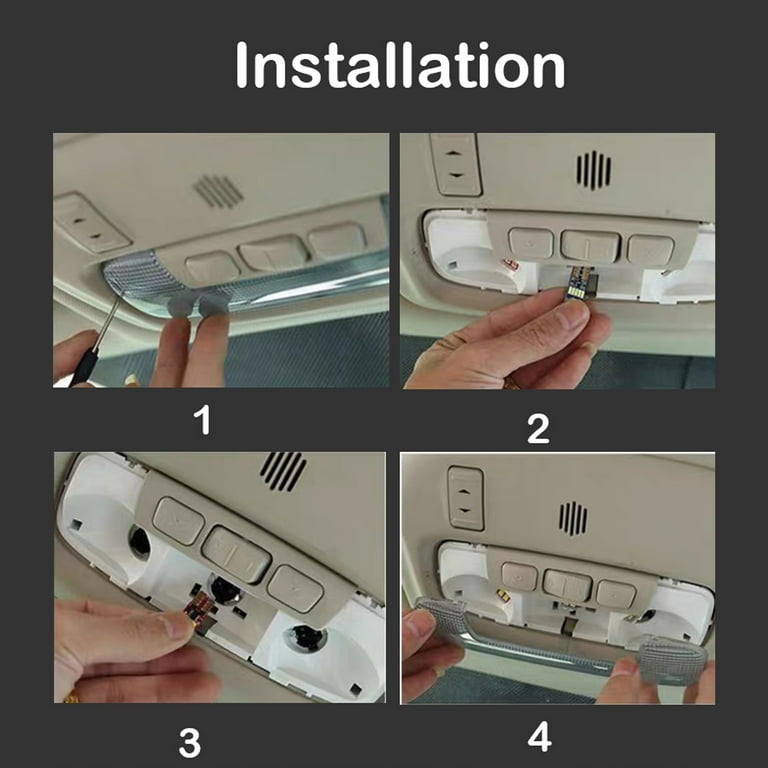
- Use a plastic trim tool to pry at the notch on the lens. Work slow. The lens will pop down.
- Identify the bulb type. Wedge bulbs pull straight out. Festoon bulbs sit in spring clips. Push the bulb to one side and lift out.
- If you are installing LED, note polarity. If it does not light, flip it around.
- Test the light before putting the lens back. Tap the map light button to confirm it works and dims.
- Clean the lens inner side with a microfiber cloth. Refit the lens until it clicks all around.
Pro tips:
- Do not twist wedge bulbs. Pull them straight to avoid breaking the socket.
- If a festoon is tight, slide one clip back a hair to ease install.
- Keep spare bulbs on hand. Map bulbs often match the glove box and footwell.
How to replace Ford Explorer interior lights often starts here. The map and dome lights are quick, and the result is instant.
Read More: How To Install Explorer Seat Covers Tool
Step-by-step: replace cargo and liftgate lights
A bright cargo area is great for gear runs and school drop-offs. The process is much like the dome lights.
Steps:
- Open the liftgate and turn lights off. Let the lamp cool.
- Pry the cargo light lens from the notch with a trim tool. Support the lens as it comes free.
- Remove the bulb. Festoon bulbs are common here. Note the length, usually 31–41 mm.
- Install the new bulb. For LED, check polarity by turning the light on. Flip if needed.
- Snap the lens back in. Make sure all tabs are seated.
Tip: If your cargo light is dim even with LED, clean the reflector and lens. Dust cut light fast. I once gained 20–30 percent brightness with a quick wipe.
How to replace Ford Explorer interior lights in the cargo area is simple and saves night-time eyestrain.
Step-by-step: replace vanity mirror and glove box lights
These small lamps add nice touch points. They are easy once you know where the tabs are.
Vanity mirror lights:
- Flip the visor down and open the mirror cover.
- Pry the small lens from the notch. Go slow to avoid cracking.
- Remove the festoon bulb. Install the new bulb and test.
- Snap the lens back in place.
Glove box light:
- Open the glove box. In some years, drop the box by pressing side stops inward.
- Find the lamp housing and pry the lens.
- Pull the 194 wedge bulb. Insert the new bulb and test.
- Refit the lens and close the glove box.
Keep it gentle. These plastics get brittle with age. How to replace Ford Explorer interior lights in these spots takes only a few minutes per side.
LED upgrade tips: brightness, color, and no-flicker installs
LEDs last longer and run cool. They also look modern. But not all LEDs are equal. Here is what to watch for.
Key tips:
- Match size and base type. 194 wedge and 31–41 mm festoon are common.
- Choose color temperature. 4000–5000K is clean and neutral. 6000K is crisp white with a hint of blue.
- Pick CANbus-friendly LEDs if your Explorer warns about bulbs. This can reduce errors or flicker.
- Look for built-in resistors and constant-current drivers. They dim smoother and last longer.
- Avoid super cheap packs. Poor LEDs can strobe, buzz, or fail early.
I like to test LEDs before closing the lens. Press the switch. If the LED does not light, flip it. How to replace Ford Explorer interior lights with LED is easy if you test as you go.
Troubleshooting and common mistakes
Small missteps can slow you down. Here is how to avoid the common ones.
Common issues:
- Light will not turn on. Check polarity on LED. Confirm fuse and switch. Test with a known good bulb.
- Flicker or after-glow when off. Use CANbus-safe LEDs or add a load resistor if needed.
- Lens won’t seat. Check that the bulb is fully seated and no wires are pinched.
- Broken clip. Work slow and pry at the notch. If a clip breaks, many lenses are cheap to replace.
- Dim light after install. Clean the lens, reflector, and check battery voltage.
From experience, the most common error is forcing the lens. Gentle pressure at the correct notch saves parts and time. How to replace Ford Explorer interior lights the right way is all about slow, steady moves.
Maintenance and care for longer life
A little care keeps lights bright and clear. You will also avoid hot spots and haze.
Simple habits:
- Wipe lenses during car washes. A quick microfiber wipe removes dust film.
- Fix door switches if lights stay on too long. It saves the battery and bulbs.
- Use quality LEDs from known brands. They last and run cool.
- Keep a small kit of spare bulbs in the glove box.
How to replace Ford Explorer interior lights is not a one-time job if you cut corners. Do it right once, and you may not touch them again for years.
Source: walmart.com
Conclusion
You now know how to replace Ford Explorer interior lights with confidence. Check your bulb types, use the right tools, and test before you close the lens. Work slow, keep parts clean, and you will get bright, modern light in under an hour.
Take a small step today. Pick one area, like the front map lights, and make the swap. If this guide helped, share it with a friend, subscribe for more simple DIYs, or drop a question in the comments so we can help you finish the job right.
Frequently Asked Questions of How to replace Ford Explorer interior lights
What bulbs do I need for a 2011–2019 Ford Explorer interior?
Most use T10/194 wedge and 41 mm festoon bulbs. Always confirm in the owner’s manual because trims and options can change sizes.
Can I put LED bulbs in place of stock halogen?
Yes, in most sockets. Use CANbus-friendly LEDs for best dimming and to avoid flicker or warning messages.
My new LED does not work. Is it bad?
Likely not. Flip the LED 180 degrees to match polarity. If it still fails, test the socket for power and check the fuse.
Will LED interior lights drain my battery?
No, not if the lamps shut off as designed. LEDs use less power than halogen, which is better for the battery.
Are 2020+ Explorer interior lights replaceable?
Many are LED modules and may not be user-serviceable. Some lamps still use standard bulbs; check your owner’s manual before buying parts.
How long does the swap take?
Map and dome lights take 10–15 minutes. The whole cabin can be done in 30–45 minutes with the right tools.
Do I need to disconnect the battery?
Not always. Turning the lights off is enough for most swaps. If you are cautious, disconnect the negative terminal.
Disclosure: As an Amazon Associate, I may earn from qualifying purchases at no extra cost to you. Amazon and the Amazon logo are trademarks of Amazon.com, Inc, or its affiliates.
- Amazon, Amazon Prime, the Amazon logo and Amazon Prime logo are trademarks of Amazon. com, Inc. or its affiliates.

Hi, I am AKM Sad. I’m a car enthusiast and reviewer who loves exploring gadgets and accessories. I share honest reviews and practical tips to help you get the best products and enjoy a safer, smoother ride.