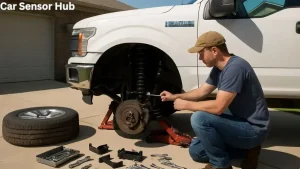
Replacing a tire pressure monitoring system (TPMS) sensor on your Ford F-150 can sound intimidating, especially if you think it always means removing the tire from the wheel. The good news is, that’s not always necessary. With the right approach, you can often swap out a faulty TPMS sensor without taking off the tire saving both time and money.
This guide will walk you through the process, explain what you need, and share practical tips you won’t find in most how-to articles. Whether you’re a hands-on truck owner or just want to better understand your F-150, you’ll find clear answers here.
Understanding F-150 TPMS Sensors
The TPMS sensor is a small device inside each wheel that measures tire pressure and sends data to your truck’s computer. If a sensor fails, you’ll see a warning light on your dashboard. Ford F-150s (from 2007 onward) use direct sensors mounted on the inside of the wheel, usually attached to the valve stem.
Common reasons these sensors need replacing include battery failure (batteries last about 7–10 years), physical damage, or corrosion. When the sensor fails, your truck won’t know your tire pressures—meaning a higher risk of driving on a flat or underinflated tire.
When You Can Replace A Tpms Sensor Without Removing The Tire
Not every situation allows for a tire-on replacement. Here’s when you can:
- The sensor is mounted with a clamp-in valve stem (most F-150s).
- The new sensor matches your wheel and tire setup.
- The tire bead isn’t glued or sealed too tightly to the rim.
If your F-150 uses a snap-in sensor, you’ll need to break the bead (loosen the tire from the wheel edge), but not remove the tire fully.
Tools And Parts You’ll Need
Having the right tools makes the job easier and avoids mistakes. Here’s what you’ll need:
- New TPMS sensor (compatible with your F-150’s year and model)
- Valve core removal tool
- Tire bead breaker (manual or hand-held, not a full machine)
- TPMS programming tool (for sensor syncing)
- Torque wrench (small, inch-pound scale)
- Valve stem puller
- Jack and wheel chocks
- Soapy water spray bottle (for bead lubrication)
- Gloves and safety glasses
Buying the right sensor is critical. Many cheap sensors online claim “universal” compatibility but may not sync with your F-150’s computer. Use OEM or trusted aftermarket brands.
Step-by-step: Replacing F-150 Tpms Sensor Without Removing Tire
1. Park And Prepare
Find a flat spot and secure your truck with wheel chocks. Loosen the lug nuts slightly, then raise the truck with a jack. Remove the wheel from the hub.
2. Deflate The Tire
Remove the valve stem cap. Use the core removal tool to take out the valve core and let all air escape. This step is vital for safely breaking the bead.
3. Break The Bead
Spray soapy water around the edge of the rim to reduce friction. Use a tire bead breaker to gently push the tire bead down about 2–3 inches near the valve stem. Don’t force it too far—just enough to expose the sensor.
4. Access The Sensor
With the bead pushed down, you’ll see the base of the valve stem and the TPMS sensor inside. Use gloves to protect your hands from sharp edges.
5. Remove The Old Sensor
If your sensor is attached with a nut (clamp-in style), use a wrench to loosen and remove it. For snap-in sensors, use a valve stem puller to carefully extract the sensor and stem from the wheel.
6. Install The New Sensor
Lubricate the new sensor’s rubber grommet with a little soapy water. Insert it into the hole and tighten the nut to the manufacturer’s torque spec (usually 35–55 in-lbs). Over-tightening can crack the sensor body or rim.
7. Reseat The Bead
Gently push the tire bead back against the rim. Reinstall the valve core and fill the tire to the recommended pressure. Check for leaks with soapy water—a bubbling leak means the stem isn’t sealed.
8. Reinstall The Wheel
Mount the wheel back onto the truck, tighten the lug nuts by hand, lower the truck, and torque the nuts in a crisscross pattern to spec.
9. Program The Sensor
Use your TPMS programming tool or follow your F-150’s sensor relearn procedure. Usually, this means turning the ignition on, pressing the brake, and using the tool near the valve stem. Your owner’s manual has the exact steps.
10. Verify
Drive for a few miles or use your programming tool to confirm the new sensor is working. The warning light should go out. If not, double-check the installation and programming.

Credit: www.youtube.com
Comparison: Tire-on Vs. Tire-off Sensor Replacement
Understanding the pros and cons helps you pick the best method for your needs.
| Method | Time Required | Tools Needed | Skill Level | Risk |
|---|---|---|---|---|
| Tire-On | 30–45 minutes | Basic hand tools, bead breaker | Intermediate | Low (if careful) |
| Tire-Off | 1–2 hours | Tire machine | Advanced/professional | Higher (rim/tire damage) |
Most DIYers prefer the tire-on method for its speed and cost savings. However, if your tire bead is stuck or the sensor is badly corroded, removing the tire may be unavoidable.
Common Mistakes And How To Avoid Them
Many people make avoidable errors when tackling this job:
- Forgetting to deflate the tire: Skipping this step risks injury from sudden air release.
- Over-tightening the sensor nut: This cracks the rim or sensor.
- Using the wrong sensor: Not all sensors are cross-compatible; always check your F-150’s year.
- Not programming the new sensor: Skipping this leaves your TPMS light on.
A less obvious mistake is reusing the old rubber grommet or seal. Always replace it to prevent slow air leaks.
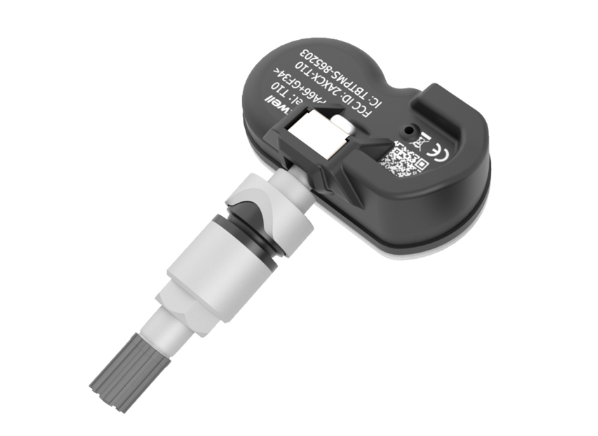
Credit: www.foxwelltpms.com
How Tpms Sensor Data Affects Your F-150
A working TPMS keeps your truck safe and efficient. Here are some real-world impacts:
- Improved fuel economy: Underinflated tires lower gas mileage by up to 3%.
- Longer tire life: Proper pressure reduces uneven wear.
- Safety: You’re less likely to suffer a blowout.
- Resale value: A working TPMS is required by law for vehicles sold in the US since 2008.
If your TPMS system isn’t working, you risk more than just a dashboard light.
How To Choose The Right Replacement Tpms Sensor
Not all sensors are created equal. Here’s what matters most:
- OEM vs. aftermarket: OEM sensors guarantee fit and function but cost more. Trusted aftermarket brands can work but require careful research.
- Frequency: Most F-150s use 315 MHz or 433 MHz sensors. Using the wrong frequency means the system won’t recognize the sensor.
- Programming method: Some sensors are pre-programmed, while others need to be “learned” by your truck. Make sure you have the right programming tool.
- Battery life: Look for sensors rated for 7–10 years.
Compare popular choices before buying:
| Brand | Frequency | Programming Needed | Price Range |
|---|---|---|---|
| Ford OEM | 315/433 MHz | No (plug-and-play) | High ($45–$70) |
| Schrader | 315/433 MHz | Sometimes | Medium ($30–$45) |
| Autel MX-Sensor | 315/433 MHz | Yes | Medium ($28–$40) |
If you’re unsure, ask your local parts store for advice or visit an official Ford resource such as Ford’s official TPMS guide.
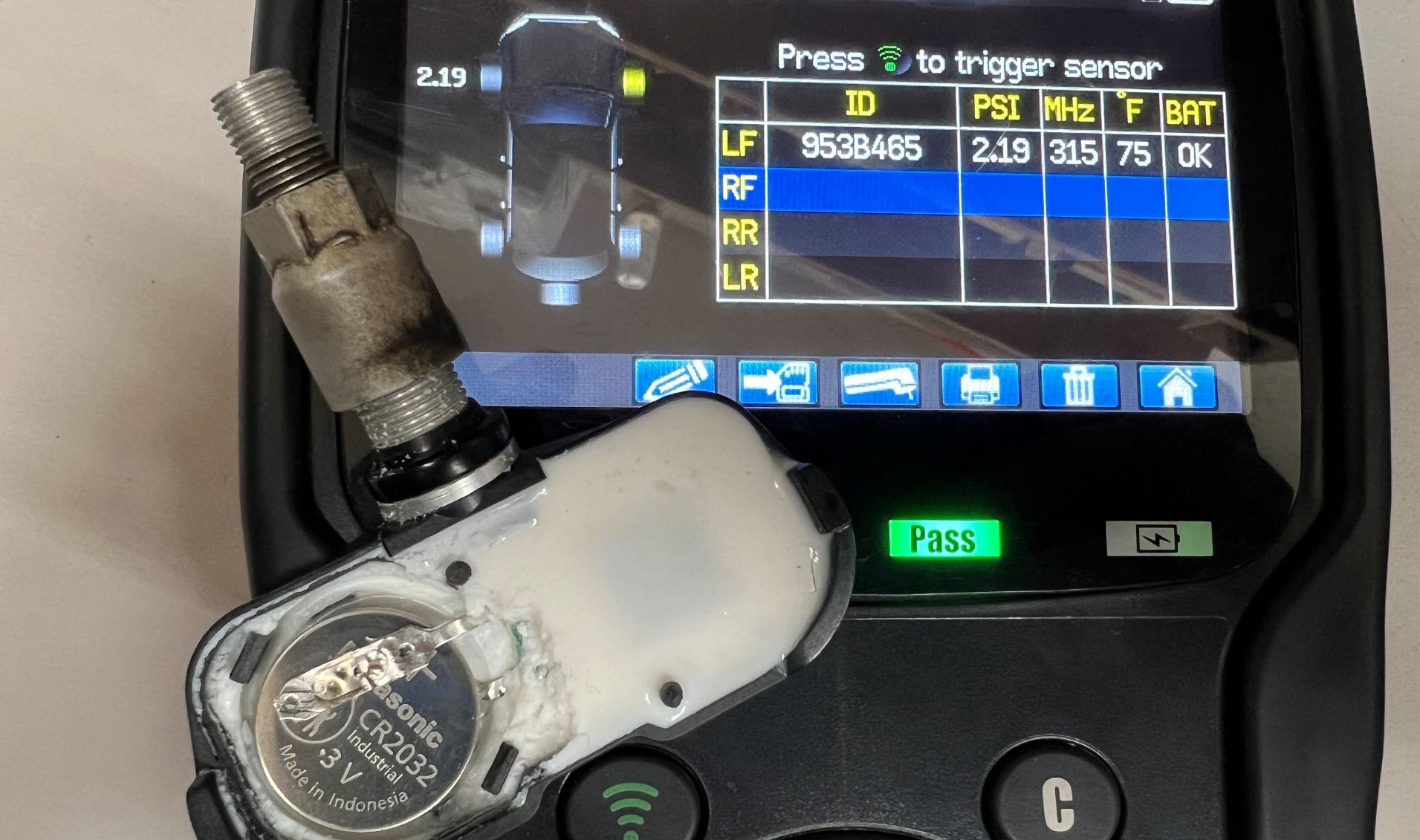
Credit: artsautomotive.com
Practical Tips For A Smooth Sensor Replacement
- Let the tire warm up before working—cold rubber is less flexible and more likely to crack.
- Keep the wheel upright while breaking the bead; this controls the force and prevents rim damage.
- Label each sensor with installation date using a paint pen. This helps track battery life.
- Check all four sensors if one has failed. If one battery died, the others may be close.
- Invest in a good TPMS tool if you have multiple vehicles. It quickly pays for itself.
A smart tip: keep your old, working sensors if they’re not dead. They can be used for temporary spares.
Signs Your Tpms Sensor Needs Replacing
Sometimes it’s clear, but not always. Watch for:
- Flashing TPMS warning light: Indicates a sensor isn’t communicating.
- Constant warning light: Sensor battery is dead or lost signal.
- Erratic pressure readings: If one tire always shows “0” or “—”, that sensor is likely bad.
- Physical damage: Visible corrosion, cracks, or broken stems.
Replacing sensors at the first sign of trouble avoids more expensive repairs down the road.
Frequently Asked Questions of Replacing F-150 TPMS Sensor Without Removing Tire
Can I Drive With A Bad Tpms Sensor?
Yes, but it’s not recommended. You lose automatic pressure alerts, increasing your risk of tire damage or failure.
Do I Need To Replace All Four Sensors At Once?
Not always, but it’s smart if your truck is over seven years old or if more than one sensor is failing.
How Long Does A New Tpms Sensor Last?
Most sensors last 7–10 years or about 100,000 miles, depending on use and climate.
What If The Tpms Light Stays On After Replacement?
Try the relearn procedure again. If it stays on, double-check the sensor frequency and programming. Rarely, the truck’s TPMS module may be faulty.
Do I Need To Rebalance The Tire After This Repair?
If you do not remove the tire completely, rebalancing isn’t required. But always check for vibrations on your first test drive.
Replacing your F-150’s TPMS sensor without removing the tire is a practical task for many owners. With the right tools, a little patience, and these tips, you can keep your truck’s safety features working and save money—no shop visit required.
Disclosure: As an Amazon Associate, I may earn from qualifying purchases at no extra cost to you. Amazon and the Amazon logo are trademarks of Amazon.com, Inc, or its affiliates.
- Amazon, Amazon Prime, the Amazon logo and Amazon Prime logo are trademarks of Amazon. com, Inc. or its affiliates.

I am Sadman, the founder of CarSensorHub.com, where I share my passion for cars and technology. I specialize in writing detailed reviews and helpful guides on car gadgets, accessories, safety tools and many more. My mission is to help car owners discover the best products and tips to improve their driving experience and stay safe on the road.