If you drive a Honda Accord, you probably know how important the tire pressure light is. This light helps you stay safe by telling you if your tires are low on air. But sometimes, the light stays on even after you fix your tires. Or, it comes on for no clear reason. You might wonder what to do next. Resetting this warning is not hard, but many drivers are unsure about the steps.
This guide will help you understand why the light turns on, how to reset it, and how to keep your tires in good shape. Whether you’re a beginner or a car lover, you’ll find everything you need to know about the Honda Accord tire pressure light right here.
Why Tire Pressure Matters
Your tires are the only part of your car touching the road. When they have the right pressure, you get better fuel economy, a smoother drive, and safer handling. If the pressure is too low, the tires wear out faster. Your car also uses more gas and is harder to control. Too much pressure can make your ride bumpy and increase the risk of a blowout. That’s why Honda and other car makers put tire pressure sensors on their vehicles.
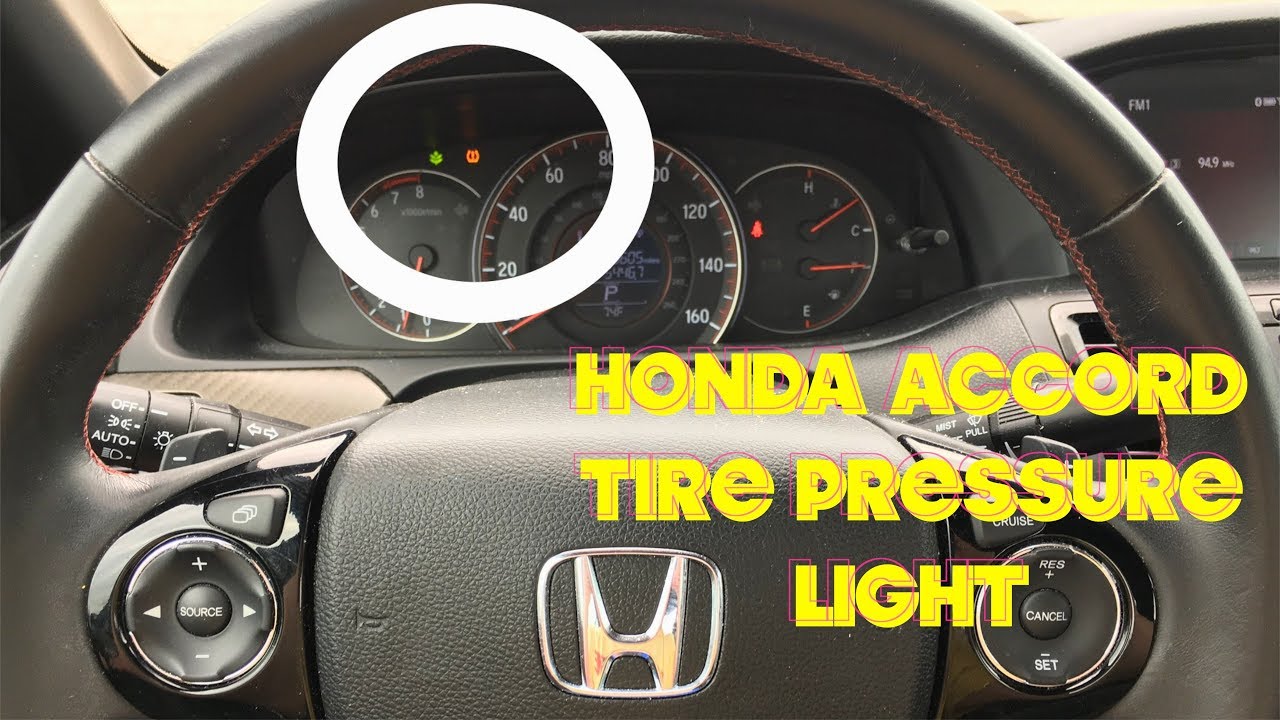
The Honda Accord uses a system called TPMS (Tire Pressure Monitoring System). This system checks each tire and warns you if any tire is underinflated. It’s a legal requirement on all cars sold in the US since 2008. When the TPMS light turns on, you should not ignore it.
What Triggers The Tire Pressure Light
The tire pressure light comes on for a few reasons:
- Low tire pressure: This is the most common cause. If one or more tires drop below the recommended PSI (pounds per square inch), the light will turn on.
- Temperature changes: Cold weather can make the air inside your tires shrink, causing lower pressure. You may see the light more often during winter mornings.
- Faulty sensor: Sometimes the TPMS sensor inside a tire can fail or lose connection.
- Tire replacement or rotation: Changing your tires or rotating them can confuse the system, making the light come on.
- Rapid air loss: If you get a flat tire or a puncture, the TPMS will warn you right away.
Knowing why the light is on is the first step to fixing it. Always check your tires before resetting the light.
Credit: www.bianchihonda.com
Checking Tire Pressure On Your Honda Accord
Before you reset the light, you need to check your tire pressure. This is a simple task, but many people do it incorrectly. Here’s the right way:
- Buy a quality tire gauge. Digital gauges are more accurate than old-fashioned ones.
- Find your recommended PSI. This information is usually on a sticker inside the driver’s door. For most Honda Accords, it’s 32-35 PSI for each tire.
- Check pressure when tires are cold. Wait at least 3 hours after driving, or check first thing in the morning.
- Remove the valve cap and press the gauge onto the stem. Read the number carefully.
- Add air if needed. Use a compressor at a gas station or at home.
- Replace the cap.
Repeat for all four tires. Don’t forget your spare tire if your Accord has one with a sensor.
Typical Tire Pressure For Honda Accord Models
Here’s a quick comparison for popular Accord model years:
| Model Year | Recommended PSI | TPMS Type |
|---|---|---|
| 2010-2012 | 32 PSI | Direct |
| 2013-2017 | 33 PSI | Direct |
| 2018-2026 | 35 PSI | Indirect |
Direct TPMS uses a sensor inside each tire. Indirect TPMS uses ABS sensors to estimate pressure.
How To Reset Tire Pressure Light On Honda Accord
Now that your tires have the correct pressure, it’s time to reset the light. The reset method depends on your Accord’s year and the TPMS system used. Let’s look at each process.
For Older Honda Accords (direct Tpms, 2010–2017)
These models use sensors inside the tires. Here’s how to reset the light:
- Turn on the ignition. Don’t start the engine yet.
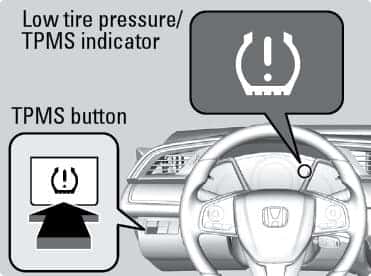
- Locate the TPMS reset button. It’s usually under the steering wheel or near the dashboard.
- Press and hold the button. Hold for about 5 seconds until the TPMS light blinks and goes off.
- Start the car and drive. The light should stay off.
If your car doesn’t have a reset button, try this:
- Turn the ignition ON (not engine).
- Press and hold the “Menu” button on your steering wheel.
- Use the arrows to select “TPMS Calibration.”
- Press “Enter.”
For Newer Honda Accords (indirect Tpms, 2018–2026)
New models use the car’s ABS system to estimate tire pressure. The reset steps are different:
- Inflate all tires to the recommended PSI.
- Turn on your car.
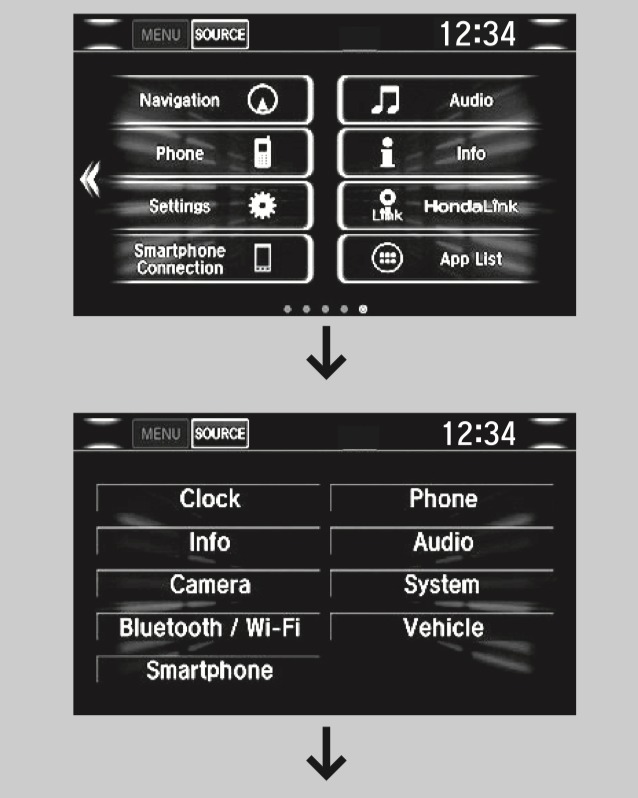
- Go to the Home screen on your dashboard display.
- Select “Settings.”
- Choose “Vehicle.”
- Select “TPMS Calibration.”
- Press “Calibrate.”
You might need to drive for a few miles before the system recalibrates. The light should go off after this process.
Step-by-step For Touchscreen Models
If your Accord has a touchscreen:
- Press “Home.”
- Select “Settings.”
- Choose “Vehicle.”
- Tap “TPMS Calibration.”
- Tap “Calibrate.”
Wait for the system to finish. You’ll get a message when calibration is complete.
Tire Pressure Light Still On? Check Your PSI First
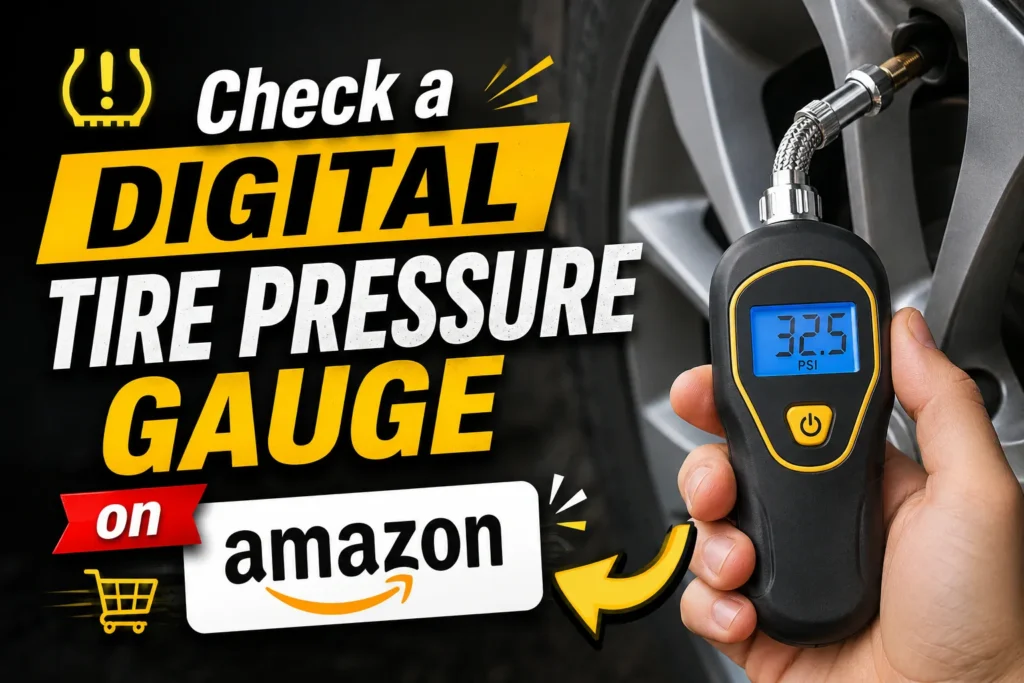
After resetting the tire pressure light on your Honda Accord, a quick pressure check can help you find out whether one tire is still underinflated. A digital tire pressure gauge makes it easy to check each tire at home before visiting a tire shop.
Resetting After Tire Rotation Or Replacement
If you’ve rotated your tires or replaced one, the system may need extra calibration:
- Inflate all tires to the correct PSI.
- Follow the calibration steps above.
- Drive for 20–30 minutes at speeds above 30 mph.
- The light should turn off.
If it stays on, check for damaged sensors or wiring.
When Manual Reset Fails
Sometimes, the light won’t go off even after you follow the steps. Try these tips:
- Check all tire pressures again. Sometimes, a slow leak can cause issues.
- Check the spare tire. If your spare has a sensor, it must be checked too.
- Look for damaged sensors. If you hit a curb or pothole, a sensor can break.
- Disconnect the car battery. Removing the negative cable for a few minutes can reset some systems.
- Visit a Honda dealer. If you can’t fix it, a dealer can use special tools.
Common Mistakes When Resetting Tire Pressure Light
Drivers often make simple errors that keep the light on. Here are some you should avoid:
- Not checking all four tires. Many people check only one tire, but the system monitors all.
- Ignoring the spare tire. Some Accords have sensors in the spare.
- Calibrating with wrong pressure. If you reset the system with low pressure, the TPMS won’t work right.
- Skipping calibration after rotation. Every tire rotation needs a reset.
- Using damaged sensors. Broken sensors can’t send data.
A less obvious mistake is overfilling tires. Some drivers think more air is always better, but this is not true. Too much air makes tires stiff and can lead to uneven wear.
Read More: TMPS Sensor Replacement Kit
How Tpms Works In Honda Accord
Understanding how TPMS works can help you reset it properly. There are two main types:
- Direct TPMS: Uses a sensor inside the tire to measure air pressure. It sends data to the car’s computer.
- Indirect TPMS: Uses the car’s ABS and wheel speed sensors. If a tire spins faster, it’s probably underinflated.
Most older Accords use direct, while newer models use indirect.
Tpms Sensor Comparison
Here’s a look at how the two systems compare:
| Feature | Direct TPMS | Indirect TPMS |
|---|---|---|
| Accuracy | Very high | Moderate |
| Maintenance | Sensor batteries need replacing | No batteries |
| Cost | Higher | Lower |
| Calibration required | Rarely | After pressure change |
Indirect systems need calibration more often, but are cheaper to maintain.
Signs Of Bad Tpms Sensors
If the tire pressure light stays on or flashes, it could be a sign of a bad sensor. Watch for these signs:
- TPMS light flashing: If it flashes before staying on, the system can’t detect a sensor.
- Error messages: Your dashboard may say “TPMS Error.”
- Light stays on after reset: Even after you inflate and calibrate.
Replacing sensors usually costs $50–$100 each, plus labor.
How Often Should You Check Tire Pressure?
Honda recommends checking your tire pressure at least once a month. You should also check:
- Before long trips
- When the weather changes
- After hitting a pothole
Proper tire care saves money and prevents accidents. Studies show that underinflated tires can lower fuel economy by up to 3% and increase crash risk.
Tire Pressure Tips For Every Season
Temperature affects tire pressure more than most people realize. In cold weather, air contracts and pressure drops. In hot weather, air expands and pressure rises.
Winter: Check tire pressure weekly. Expect a drop of 1–2 PSI for every 10°F drop.
Summer: Overinflation is possible. Check pressure after driving to make sure it’s not too high.
Rain: Wet roads need good tire grip. Low pressure can cause hydroplaning.
Here’s a simple table showing how temperature affects tire pressure:
| Temperature Change | Pressure Change |
|---|---|
| -10°F | -1 PSI |
| +10°F | +1 PSI |
Always adjust your tires based on the season.
Why The Tire Pressure Light Sometimes Stays On
Even after resetting, some drivers find the light stays on. Here are some reasons:
- Slow leaks: Nails or cracks can cause leaks that are hard to spot.
- Sensor battery failure: Direct TPMS sensors use batteries that last 5–10 years. When they die, the sensor stops working.
- Software glitches: Sometimes, the car’s computer needs a hard reset.
- Wheel replacement: If you change your wheels, you may need new sensors.
If your light won’t turn off, check your tires again, then see a mechanic.
Credit: www.youtube.com
How To Replace Tpms Sensors
If your sensor is broken, you’ll need to replace it. Here’s how:
- Buy the correct sensor. Use your car’s VIN to find the right part.
- Remove the tire. You’ll need special tools, so it’s best to visit a shop.
- Install the new sensor. The mechanic will mount it and program it.
- Recalibrate the system. Follow the steps above.
Some shops can clone your old sensor, making replacement easier.
Is It Safe To Drive With The Tire Pressure Light On?
Driving with the tire pressure light on is not safe. It means at least one tire is underinflated. This can cause:
- Poor handling
- Longer stopping distance
- Tire blowouts
The National Highway Traffic Safety Administration says underinflated tires are linked to over 11,000 crashes each year. Always fix the issue as soon as possible.
How To Prevent Tpms Problems
Preventing problems is better than fixing them. Here are smart tips:
- Check tire pressure monthly.
- Avoid potholes and curbs.
- Rotate tires every 5,000–7,500 miles.
- Replace sensors every 5–10 years.
- Don’t ignore the light.
A non-obvious tip: don’t use tire sealants unless they’re TPMS-safe. Some sealants can damage sensors.
What To Do If The Light Comes Back Again
If the light returns after a reset:
- Check all tires for leaks.
- Inspect sensors for damage.
- Recalibrate the system.
- Visit a Honda dealership.
Sometimes, the system needs software updates. Dealers can update your car’s computer.
Credit: www.geraldhondacountryside.com
Real-world Examples
Many Accord owners share their stories online. One driver had a tire pressure light that stayed on after every cold night. He learned that his tires lost pressure because of the temperature. After checking and refilling his tires, and calibrating the system, the light stayed off.
Another owner bought new wheels, but the light kept blinking. The shop had forgotten to install sensors in the new wheels. After adding the sensors and recalibrating, the problem was solved.
These examples show that checking all parts and following the right reset steps makes a big difference.
Where To Find More Information
For official details and troubleshooting, visit the Honda Owner’s website or your car manual. You can also find more about TPMS systems at NHTSA Tire Safety.
FAQs Of Reset Tire Pressure Light Honda Accord
Why Does My Tire Pressure Light Come On When It’s Cold?
When it’s cold, air contracts and tire pressure drops. Even a small change can trigger the light. Check your tires and add air if needed.
Can I Reset The Tire Pressure Light Without A Tpms Button?
Yes. On newer Accords, use the touchscreen or dashboard menu. Older models may need a manual button or dealer visit.
How Long Does Tpms Calibration Take?
Calibration usually takes 10–30 minutes of driving. You may need to drive above 30 mph for the system to reset fully.
Is It Okay To Ignore The Tire Pressure Light?
No. Ignoring the light is risky. Low pressure can cause tire failure and accidents. Always check and fix the problem.
Will Changing Wheels Affect The Tpms System?
Yes. If you use wheels without sensors, the system won’t work. Always use compatible sensors and recalibrate after wheel changes.
Resetting the tire pressure light on your Honda Accord is simple once you know the steps. Always start by checking your tires, then follow the correct reset method for your car’s model year. If the light stays on, look for leaks, damaged sensors, or software problems.
Keeping your tires at the right pressure helps your car run better, saves money, and keeps you safe on the road. With these tips, you can handle any tire pressure issue with confidence.
Disclosure: As an Amazon Associate, I may earn from qualifying purchases at no extra cost to you. Amazon and the Amazon logo are trademarks of Amazon.com, Inc, or its affiliates.
- Amazon, Amazon Prime, the Amazon logo and Amazon Prime logo are trademarks of Amazon. com, Inc. or its affiliates.

I am Sadman, the founder of CarSensorHub.com, where I share my passion for cars and technology. I specialize in writing detailed reviews and helpful guides on car gadgets, accessories, safety tools and many more. My mission is to help car owners discover the best products and tips to improve their driving experience and stay safe on the road.


