How faulty fuel injectors cause poor gas mileage is one of those problems that sneaks up on drivers: the tank empties faster, but nothing feels “broken” yet. It’s frustrating, because fuel costs climb while the car still starts and runs—most of the time.
Here’s the context: injectors are supposed to deliver a precise fuel mist at the right time. When they clog, leak, or stick, the engine’s air-fuel mix drifts off target, and the computer often compensates by adding more fuel than necessary.
Technicians see this pattern constantly during diagnostics, especially on higher-mileage vehicles. They’ll confirm it with scan data (fuel trims), misfire counts, and sometimes a balance test, because guessing can get expensive fast.
Look at a real example: a driver notices their commute dropping from 28 mpg to 21 mpg and a faint fuel smell at stoplights. A shop finds one injector seeping after shutdown, which floods a cylinder and forces richer fueling the next start.
Watch for these common clues before mileage tanks:
- Rough idle or intermittent misfires
- Fuel smell, hard starts, or long cranking
- Sluggish acceleration and uneven power
- Check Engine Light (often P0171/P0172 or misfire codes)
Next, they’ll see what injector failures look like, why they waste fuel, and which fixes actually restore mpg—so they can decide whether to clean, test, or replace injectors with confidence.
How fuel injectors affect fuel economy and combustion efficiency
Now, it helps to zoom in on what injectors actually control: how faulty fuel injectors cause poor gas mileage starts with small changes in how fuel is delivered. Modern injectors meter fuel in milliseconds, matching pulse width and spray pattern to engine load, temperature, and airflow. When that delivery is precise, the engine burns cleanly and makes the same power with less fuel.
Combustion efficiency depends on atomization and timing. A fine, cone-shaped mist mixes quickly with air, so the flame front travels predictably and the catalytic converter stays in its happy range. If the spray is coarse or late, the ECU often compensates by adding fuel, and mileage drops.
Look at the main ways injectors support economy:
- Consistent fuel pressure and flow per cylinder for balanced torque
- Correct spray pattern for fast mixing and fewer unburned hydrocarbons
- Accurate pulse timing to match intake valve events and avoid wall-wetting
Practical example: a commuter car that should average 32 mpg may fall to 27–28 mpg after one injector begins dribbling at idle. The driver won’t feel a big misfire, but the fuel trims creep positive and the tank empties sooner.
Read More: Symptoms of a bad mass air flow sensor and low MPG
How faulty fuel injectors cause poor gas mileage: the main failure modes
When mileage drops without a clear driving-change explanation, injector faults are a common culprit. Failures usually don’t happen as a clean “on/off” event; they creep in as deposits, wear, or electrical issues. The ECU can mask the problem for a while, but it often does so by using more fuel.
Typical failure modes that hurt mpg include:
- Clogging/restriction from varnish deposits, reducing flow and causing lean misfires under load
- Leaking or dribbling after shutoff, enriching cold starts and washing cylinder walls
- Poor spray pattern (streaming instead of mist), creating incomplete burn and higher HC
- Electrical faults (coil resistance, connector corrosion), leading to intermittent fueling
Practical example: on a direct-injection engine, one injector with a distorted pattern can trigger rough cold starts and a persistent fuel smell. A scan tool may show one bank’s long-term fuel trim climbing as the ECU tries to stabilize combustion, which translates directly into more fuel per mile.
They’ll often see side effects too: sootier tailpipe, higher idle, or a catalytic converter running hotter from unburned fuel.
Symptoms that point to injector-related fuel waste
Now, the fastest way to spot injector-related fuel waste is to watch for patterns that don’t match normal driving or weather changes. When an injector dribbles, sticks, or delivers an uneven spray, the engine often compensates by adding fuel elsewhere.
Drivers typically notice these injector-linked signs before they ever see a warning light. The key is that the symptoms tend to cluster, not appear alone.
- Fuel mileage drops suddenly (or keeps sliding week after week) with no change in route or load
- Rough idle, light shaking at stops, or a “hunting” idle that comes and goes
- Hard starts, extended cranking, or a brief stumble right after startup
- Surging on steady throttle, especially at low RPM
- Fuel smell near the engine bay or tailpipe, sometimes paired with dark exhaust
A practical example: a commuter notices their range falls from 380 miles per tank to 310, and the car hesitates for a second when pulling away from a stop. A scan later shows fuel trims consistently negative at idle, a common clue that one cylinder is getting too much fuel.
What happens inside the engine when injectors misfuel
Look, injectors don’t just “add fuel”—they shape combustion. When an injector misfuels, the air-fuel mix in that cylinder shifts away from the ideal target, and the burn gets slower, dirtier, or incomplete.
If an injector leaks or flows too much, extra fuel can’t fully vaporize in time. That leaves droplets that quench the flame front, raising hydrocarbon emissions and forcing the engine computer to pull fuel back using feedback signals.
- Rich misfueling: oxygen sensors detect low oxygen, trims go negative, and unburned fuel can overheat the catalytic converter
- Lean misfueling: the cylinder runs hot, power drops, trims go positive, and knock control may pull timing
- Poor atomization: uneven droplets cause partial burns, unstable idle, and soot buildup on valves and plugs
As this continues, the engine wastes fuel in two ways: it burns more to maintain torque, and it loses efficiency from unstable combustion. That’s where How faulty fuel injectors cause poor gas mileage becomes measurable at the pump, not just on a scan tool.
How technicians diagnose injector problems accurately
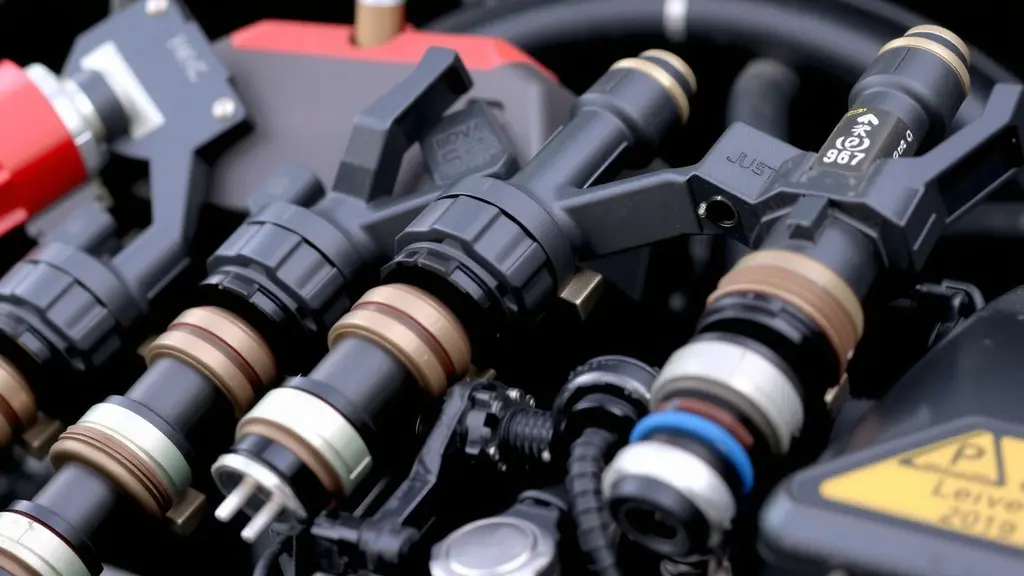
Now, the guesswork stops when a technician verifies injector behavior under the same conditions that trigger the fuel loss. They start by confirming the complaint with a road test and checking fuel trims, misfire counters, and oxygen-sensor activity on a scan tool.
Next comes pinpoint testing to separate injector faults from ignition, vacuum leaks, or fuel-pressure issues. A shop may run a balance test to see whether each injector drops rail pressure evenly, then compare results to factory specs.
Common accuracy checks include:
- Fuel-trim analysis at idle, cruise, and load to spot a cylinder running rich or lean
- Injector balance or cylinder drop tests to measure each injector’s contribution
- Smoke testing and fuel-pressure/volume tests to rule out other causes
- Noid light or oscilloscope checks to confirm proper injector command and current ramp
Look at a practical example: a vehicle shows +18% long-term fuel trim at idle but normal trims at cruise. The technician smoke-tests the intake (no leaks), then performs an injector balance test and finds one injector with minimal pressure drop, pointing to restricted flow rather than a failing pump.
Repair and replacement options and how they impact MPG
Once the faulty injector is identified, the repair choice should match the failure type and the vehicle’s mileage. Cleaning can help if deposits are the root cause, but it won’t fix an electrical short, internal leak, or damaged nozzle.
Shops typically choose from these options:
- On-car fuel-rail cleaning with a pressurized solvent to remove light-to-moderate varnish
- Off-car ultrasonic cleaning with flow testing and new filters/seals for measurable results
- Injector replacement (single or set) when leakage, coil failure, or poor spray pattern is confirmed
MPG impact depends on how badly the injector was misfueling. Restoring correct flow and atomization often normalizes fuel trims, reduces misfires, and improves combustion stability, which is where mileage returns.
Example: a leaking injector on cylinder 3 causes rich trims and fuel smell. Replacing that injector, installing new O-rings, and clearing adaptive fuel trims brings trims back near 0% and typically improves mileage within one to two drive cycles—assuming no other faults remain.
This Article May Help You More: Fuel Filter For Ford F-150 Truck
Prevention tips to protect injectors and maintain gas mileage
Now, the best way to avoid repeat issues is to treat injector health like routine maintenance, not a surprise repair. When drivers understand How faulty fuel injectors cause poor gas mileage, they can prevent the conditions that wear injectors out early.
Start with fuel quality and filtration. Top-tier fuel helps keep deposits from forming, and a fresh fuel filter prevents abrasive particles from scuffing injector internals. If the vehicle uses a serviceable filter, replacing it on schedule is cheap insurance.
Daily habits matter, too. Keeping at least a quarter tank reduces sediment pickup, and avoiding long-term storage with old fuel limits varnish formation. For direct-injection engines, periodic intake and injector cleaning (as recommended by the manufacturer) can keep spray patterns consistent.
- Follow oil-change intervals to reduce blow-by contaminants that can foul tips.
- Fix vacuum leaks early so injectors aren’t forced to compensate.
- Use the right cleaner (OEM-approved) at sensible intervals, not every fill-up.
Example: a commuter who noticed MPG drifting down began buying top-tier fuel, replaced a clogged fuel filter, and ran an OEM-approved cleaner before a highway trip; the next two tanks returned to normal mileage without further work.
What This Means for You
Now, the big takeaway is simple: How faulty fuel injectors cause poor gas mileage usually comes down to fuel delivery drifting away from what the engine expects. When that happens, the vehicle may still run, but it’s quietly burning extra fuel to do the same work. That’s money leaving the tank with no real benefit.
Look at it like a budget problem. If a driver goes from 28 MPG to 22 MPG on a 30-mile commute, they’ll buy noticeably more fuel each month, even if the check engine light never shows up. A small efficiency loss adds up fast.
- Track MPG for two full tanks to confirm a real change.
- Compare costs against recent fuel receipts, not just the dash estimate.
- Act early before a minor issue turns into a bigger drivability problem.
Next step: schedule a qualified inspection and bring your MPG notes so the shop can move straight to a targeted fix.
FAQs Of How Faulty Fuel Injectors Cause Poor Gas Mileage
Why do faulty fuel injectors ruin my gas mileage?
Think of a healthy fuel injector like a high-end perfume sprayer—it should release a perfect, fine mist. When an injector gets dirty or “leaky,” it starts dripping heavy drops of gas instead. These big drops don’t burn easily, so your engine has to work much harder and use way more fuel just to keep you moving. It’s essentially throwing raw gas out the exhaust pipe.
Can a clogged injector really make the car “thirsty”?
It sounds strange, but a clog actually forces your engine to drink more. When one injector is blocked, that cylinder loses power. Your car’s computer noticed this “weakness” and tries to fix it by pumping extra fuel through the other injectors. This over-compensation kills your fuel economy because the engine is constantly over-fueling to make up for that one lazy cylinder.
How can I tell if my injectors are the reason for my poor MPG?
You’ll usually notice more than just a falling fuel needle. If your car feels shaky or “lumpy” while you’re sitting at a red light, that’s a classic sign. You might also notice the engine stumbling for a second when you try to merge onto the highway. In some cases, you might even catch a whiff of raw gasoline around the car, which usually means an injector is stuck open and leaking.
Is a bottle of cleaner enough to fix the problem?
It depends on how far gone they are. if you’ve just noticed a slight dip in mileage, a high-quality fuel system cleaner added to your tank might scrub away the carbon buildup. However, if the injector has an internal electrical short or a mechanical crack, no amount of liquid cleaner will save it. At that point, a full replacement is the only way to get your MPG back to where it belongs.
Disclosure: As an Amazon Associate, I may earn from qualifying purchases at no extra cost to you. Amazon and the Amazon logo are trademarks of Amazon.com, Inc, or its affiliates.
- Amazon, Amazon Prime, the Amazon logo and Amazon Prime logo are trademarks of Amazon. com, Inc. or its affiliates.

Hi, I am AKM Sad. I’m a car enthusiast and reviewer who loves exploring gadgets and accessories. I share honest reviews and practical tips to help you get the best products and enjoy a safer, smoother ride.