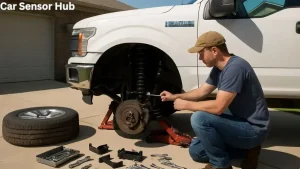
The Ford F-150 is one of the most popular trucks in America. Drivers trust it for power, comfort, and reliability. But when the Tire Pressure Monitoring System (TPMS) sensor battery fails, many owners are left confused. If you own a Ford F-150, knowing how long your TPMS sensor battery lasts and what to do when it dies can save you money, time, and stress. This guide explains the key details, offers real-world examples, and shares tips that even some experienced drivers miss.
What Is A Tpms Sensor And Why Is It Important?
The TPMS sensor watches your tire pressure. If any tire gets too low, it warns you on the dashboard. Driving with low tire pressure can cause poor gas mileage, uneven tire wear, or even a dangerous blowout. That’s why the TPMS sensor is not just a convenience—it’s a safety feature.
Each TPMS sensor has a tiny battery sealed inside. When the battery dies, the sensor stops sending signals. This means your truck can’t warn you about low tire pressure.
How Long Does A Ford F-150 Tpms Sensor Battery Last?
Most Ford F-150 TPMS sensor batteries last about 5 to 10 years or 60,000 to 100,000 miles. Battery life depends on:
- How much you drive
- Extreme hot or cold weather
- Quality of the sensor itself
Some drivers report their original sensors working for over 10 years, while others see failures in as little as 4 years. If you drive often or in rough conditions, expect the battery to drain faster.
Non-obvious tip: TPMS sensors in spare tires often last longer, because they only use battery power when the spare is mounted.
Signs Your Tpms Sensor Battery Is Dying
Your truck will usually show a TPMS warning light if something is wrong. But that light can mean many things: low tire pressure, a faulty sensor, or a dead battery. Here are signs it’s the battery:
- The light comes on, and all tire pressures are normal.
- The warning light stays on, even after resetting.
- A scan tool reports a sensor “not detected.”
Common mistake: Some owners replace perfectly good tires, thinking the tires are the problem. Check the sensor battery first.
What Happens When The Battery Dies?
When the TPMS sensor battery is dead, the sensor stops working. Your F-150 will no longer display real-time tire pressure for that wheel. The TPMS warning light will stay on. You might also notice:
- No pressure updates for one or more tires
- Trouble passing state vehicle inspections (in some states)
- Possible issues with advanced driver assist features
A dead TPMS sensor does not affect how your F-150 drives, but it removes an important safety net.

Credit: www.amazon.com
Can You Replace The Tpms Sensor Battery Only?
Most TPMS sensors in the Ford F-150 are sealed units. You cannot replace just the battery—you need to replace the entire sensor. Some specialty shops might try to open and re-seal a sensor, but this is rarely recommended. It often fails to make the sensor reliable.
Non-obvious insight: Aftermarket TPMS sensors are often cheaper than OEM (original equipment manufacturer) ones, but quality can vary. Always check compatibility before buying.
How Much Does It Cost To Replace A Ford F-150 Tpms Sensor?
The cost to replace a TPMS sensor in a Ford F-150 depends on:
- OEM vs. aftermarket sensors
- Labor rates at your local shop
- Whether you replace just one or all four
You can expect to pay:
- $40–$100 per sensor for parts
- $20–$50 per sensor for installation
Many shops recommend changing all four at once if the batteries are old. This saves on labor costs over time.
Step-by-step: What To Do When Your Tpms Battery Dies
- Check your tire pressures with a manual gauge to rule out a flat.
- If the TPMS light stays on, scan for sensor codes using a compatible tool.
- Decide if you want to replace one sensor or all.
- Buy the correct sensor(s) for your F-150 year and model.
- Have a tire shop install and program the new sensor(s).
- Test the system to make sure the warning light is off.
Extra tip: Some tire shops can “clone” your old sensor’s ID, so you don’t need to reprogram your truck’s computer.
How To Extend Tpms Sensor Battery Life
While you can’t recharge or replace the battery, you can make it last longer:
- Rotate your tires regularly—this keeps the sensors active and balanced.
- Avoid long-term storage with tires mounted, as sensors can slowly drain even when parked.
- Replace leaky valve stems—moisture can damage the sensor’s electronics.
Pro insight: If you buy new wheels or snow tires, consider new sensors at the same time. Swapping sensors between sets can reduce battery life and increase the risk of damage.
Comparing Tpms Sensor Lifespans
Here is a quick comparison of average TPMS sensor battery lifespans for common Ford F-150 sensor brands:
| Sensor Brand | Average Lifespan (Years) | Warranty |
|---|---|---|
| OEM Ford Motorcraft | 7–10 | 3 years |
| Schrader | 5–8 | 2 years |
| Dorman | 5–7 | 1 year |
| Standard Motor Products | 5–8 | 1 year |
Tpms Sensors Vs. Direct Tire Pressure Checks
Some drivers wonder if they can ignore the TPMS sensor and just check their tires manually. Here’s how the two compare:
| Feature | TPMS Sensor | Manual Check |
|---|---|---|
| Real-time alerts | Yes | No |
| Requires effort | No | Yes |
| Legal requirement (US) | Yes | No |
| Accuracy | High | Depends on gauge |
Real-world Example: Ford F-150 2015 Owner Story
Mark, a 2015 Ford F-150 owner from Texas, started seeing the TPMS warning light after 8 years of ownership. All tire pressures were correct, but the warning stayed on. A tire shop scanned his sensors and found two had “no signal”—the batteries were dead.
Mark replaced all four sensors, costing $350 with labor. He noticed the new sensors responded faster, and his dashboard warnings disappeared.
Lesson: Even if only one sensor fails, old batteries in the others may soon follow.
Common Mistakes When Dealing With Tpms Sensor Batteries
- Ignoring the warning light for months—this puts you at risk if a real flat happens
- Buying the wrong sensor for your F-150’s model year—always check part numbers
- Trying to replace only the battery in a sealed sensor—this usually fails
- Forgetting to reprogram the sensor after replacement—your truck won’t recognize new sensors automatically
The Future: Are Tpms Sensor Batteries Improving?
Recent advances in battery chemistry and sensor design are slowly improving TPMS battery life. Some aftermarket sensors now advertise 10+ years, and some can be reprogrammed for different vehicles. Automakers continue to look for ways to make sensors more efficient and easier to service.
Insider tip: Some newer F-150 models have sensors that “sleep” when not in use, which can help extend battery life if you don’t drive every day.
Environmental Impact: What Happens To Old Tpms Sensors?
When TPMS sensors die, they become e-waste. Most shops throw away old sensors, but the batteries inside can be harmful if not handled properly. Check if your local recycling center accepts TPMS sensors, or ask your shop to recycle them.
When Should You Replace All Four Sensors?
If one sensor fails and your F-150 is more than 6 years old, it’s usually smarter to replace all four. This avoids repeat trips to the shop and can save on labor costs. If your spare tire has a sensor, consider replacing that as well.
Diy Vs. Professional Tpms Sensor Replacement
Some experienced owners change their own TPMS sensors using special tools. But for most, it’s safer and easier to use a professional tire shop. They have the right equipment to break the tire bead, install the sensor, and reprogram your system.
DIY risk: Damaging the sensor or valve stem can lead to slow leaks.

Credit: www.ebay.com
How To Find The Right Sensor For Your F-150
Not all sensors are the same. Ford has used different frequencies and designs over the years. Always check:
- Your F-150’s year and trim level
- The sensor frequency (commonly 315 MHz or 433 MHz)
- Whether your truck uses “banded” or “valve stem” sensors
If in doubt, ask your dealer or check your owner’s manual.
Programming And Relearning New Tpms Sensors
After installing new sensors, your F-150 must “learn” them. Some shops do this automatically. If you want to do it yourself, you can use a TPMS tool or follow your owner’s manual. Steps usually include:
- Turning the ignition on (without starting)
- Pressing and holding the TPMS reset button (if equipped)
- Using a scan tool to trigger each sensor in sequence
If you skip this step, the system may not recognize your new sensors.

Credit: www.ebay.com
Warranty Coverage For Tpms Sensors
New Ford F-150s usually have a 3-year/36,000-mile warranty covering TPMS sensors. Aftermarket sensors have their own warranties, usually 1–3 years. If your sensors fail within this time, your dealer may replace them for free.
Frequently Asked Questions Ford F-150 TPMS Sensor Battery Life
How Do I Know If My Ford F-150 Tpms Sensor Battery Is Dead?
If the TPMS warning light stays on and a scan tool shows “no signal” from a sensor, the battery is likely dead. Manual pressure checks will show your tires are fine.
Can I Drive My F-150 With A Dead Tpms Sensor Battery?
Yes, but you lose the safety alert for low tire pressure. In some states, you may not pass inspection with the warning light on.
How Much Does It Cost To Replace All Four Tpms Sensors On An F-150?
Expect to pay $250–$500 for four sensors, installed and programmed. Prices depend on sensor brand and shop rates.
Do Aftermarket Tpms Sensors Last As Long As Oem Ones?
Some do, but quality varies. OEM sensors often last longer, but good aftermarket brands can match them if you buy from a trusted source.
Where Can I Learn More About Tire Pressure Monitoring Systems?
You can read more on the official Wikipedia page about Tire Pressure Monitoring Systems for extra technical details and history.
Taking care of your Ford F-150’s TPMS sensor batteries isn’t complicated. Understanding how the system works, how long the batteries last, and what to do when they fail will keep you safe and save money. Don’t ignore that warning light—your truck, your tires, and your peace of mind all depend on it.
Disclosure: As an Amazon Associate, I may earn from qualifying purchases at no extra cost to you. Amazon and the Amazon logo are trademarks of Amazon.com, Inc, or its affiliates.
- Amazon, Amazon Prime, the Amazon logo and Amazon Prime logo are trademarks of Amazon. com, Inc. or its affiliates.

I am Sadman, the founder of CarSensorHub.com, where I share my passion for cars and technology. I specialize in writing detailed reviews and helpful guides on car gadgets, accessories, safety tools and many more. My mission is to help car owners discover the best products and tips to improve their driving experience and stay safe on the road.