Tesla has always challenged the way we think about cars. With the Model Y, the company surprised many by removing radar sensors—devices that most automakers see as essential for safe driving. This move sparked a heated debate in the auto industry.
Why would a tech-focused company like Tesla drop a proven technology? Was it a bold step toward the future, or a risky gamble that could put drivers at risk?
To understand this decision, we need to explore Tesla’s unique approach to autonomy, how radar works in vehicles, and why cameras now play the starring role. We’ll also look at what this means for drivers, the car industry, and the future of automated driving.
By the end, you’ll have a clear picture of why Tesla removed radar sensors from the Model Y, and what it could mean for cars everywhere.
How Radar Sensors Work In Modern Cars
Before diving into Tesla’s decision, it helps to know what radar sensors actually do in a car. Radar (short for “Radio Detection and Ranging”) sends out radio waves that bounce off objects and return to the sensor. By measuring how long it takes for the waves to return, the system can calculate the distance and speed of objects around the car.
Radar is widely used in:
- Adaptive Cruise Control (ACC): Keeps a safe distance from the car ahead by automatically adjusting speed.
- Automatic Emergency Braking (AEB): Detects obstacles and can hit the brakes if you don’t react in time.
- Blind Spot Monitoring: Warns you if there’s a car in your blind spot.
Most car makers combine radar with cameras and sometimes LiDAR (laser-based distance sensors). This mix is known as sensor fusion—each sensor helps cover the weaknesses of the others. Radar works well in rain, fog, and low light. Cameras are great for reading signs and tracking lanes.
Tesla’s Early Autopilot: A Blend Of Sensors
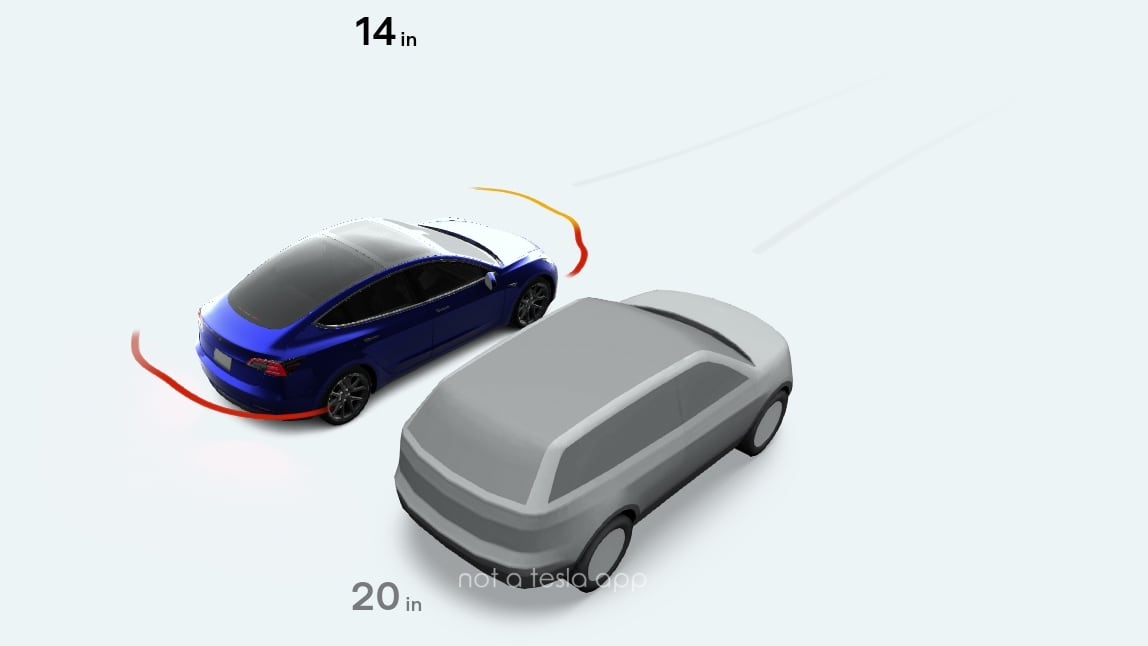
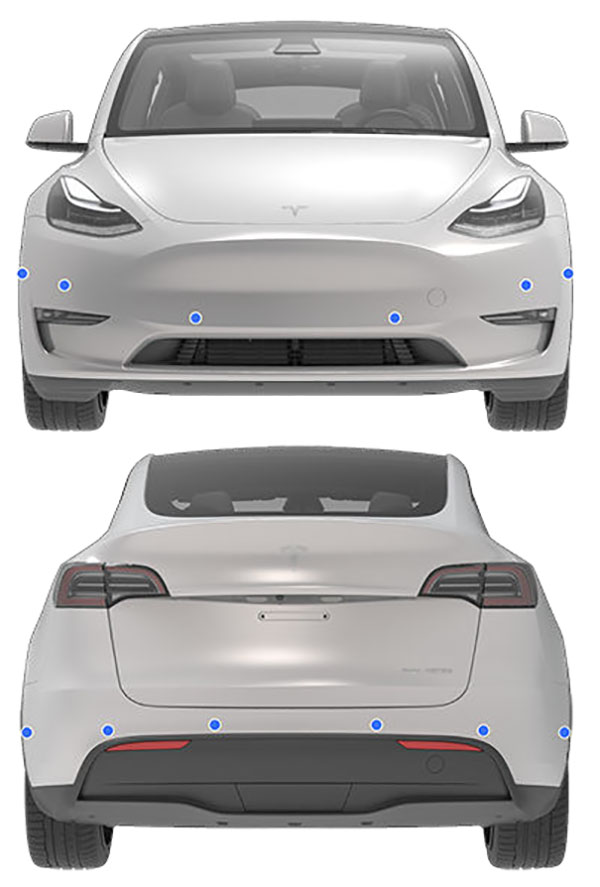
When Tesla first launched its Autopilot system, the company used both radar and cameras, plus ultrasonic sensors. The radar, mounted at the front of the car, handled tasks like adaptive cruise control and emergency braking. Cameras helped with lane keeping and object recognition. Ultrasonic sensors handled close-range tasks like parking.
This approach was similar to what other automakers were doing. Radar could “see” through bad weather and dust where cameras might struggle. It was especially good at detecting large metal objects—like other cars or trucks—at highway speeds.
Credit: www.notateslaapp.com
The Big Shift: Tesla’s Move To Camera-only Vision
In 2021, Tesla announced it was removing radar sensors from the Model Y (and Model 3) in North America. New cars would rely entirely on cameras and artificial intelligence—what Tesla calls Tesla Vision.
This was a radical change. Most automakers still believed multiple sensor types were the safest way forward. Even today, brands like Mercedes-Benz and Audi continue using both radar and cameras in their advanced driver assist systems.
So why did Tesla make the switch? There are several reasons, both technical and strategic.
Why Did Tesla Remove Radar Sensors From Model Y?
Tesla’s decision to drop radar was not random. It was the result of years of research, internal debate, and a bold vision for the future. Here are the main reasons behind this move:
1. Elon Musk’s Belief In Pure Vision
Tesla’s CEO, Elon Musk, has often said that the path to true self-driving cars is through vision, not radar or LiDAR. His argument is simple: Humans drive using eyes and brains, not radar. If artificial intelligence can learn to interpret camera images as well as a person, then it can drive as safely—or even more safely—than a human.
Musk has called radar and LiDAR “crutches” that make it harder for AI to learn real-world driving. He believes that focusing only on camera vision will force Tesla’s software to get smarter, faster.
2. Reducing Sensor Confusion
Combining radar and cameras sounds good, but it’s not always easy. Radar and cameras sometimes “see” the world differently. For example, radar might detect something that isn’t visible to the camera, or vice versa. This can lead to false positives (the car thinks there’s an obstacle when there isn’t) or false negatives (the car misses a real obstacle).
By using only cameras, Tesla’s software has just one “source of truth. ” This reduces the risk of sensor disagreement and simplifies the system.
3. Cost And Manufacturing Simplicity
Every extra sensor adds cost, weight, and complexity to a car. Removing radar means fewer parts to buy, fewer things that can break, and a simpler assembly process. For a company that makes hundreds of thousands of cars each year, these savings add up quickly.
This also helps Tesla keep prices competitive, especially as more electric cars enter the market.
4. Improving Over-the-air Updates
Tesla is famous for its over-the-air (OTA) updates. The company can push new features, safety fixes, and improvements directly to customers’ cars, just like updating a smartphone.
With a camera-only system, Tesla can improve its software without worrying about differences between radar and non-radar cars. This makes the fleet more consistent and easier to update.
5. Advances In Neural Networks And Ai
Tesla has invested heavily in neural networks—AI systems that can recognize and react to complex situations using camera images. The company’s “Dojo” supercomputer trains these networks using data from millions of real-world driving miles.
As Tesla’s AI gets better at understanding camera images, the need for radar drops. The company believes its neural networks can now handle tasks that once required radar, like judging distance and speed.
6. Radar’s Limitations
While radar is great at detecting large, moving metal objects, it has weaknesses:
- It struggles with small objects like bicycles or debris.
- Radar can be “blinded” by certain conditions, leading to ghost signals or missed obstacles.
- It often produces lower-resolution data than cameras, making it hard to identify what an object actually is.
Tesla believes that high-resolution cameras, combined with advanced AI, can perform as well or better than radar in most driving situations.
7. Preparing For Full Self-driving
Tesla’s long-term goal is Full Self-Driving (FSD)—cars that can drive themselves with no human input. For FSD to work everywhere, the system needs to “see” and understand the world just like a human. Cameras are the closest digital equivalent to our eyes.
By focusing on camera vision now, Tesla is preparing its cars for a fully autonomous future.
Read More: Tesla Model Y Radar Detector Mount
How Tesla Vision Works
Tesla Vision uses eight external cameras to provide a 360-degree view around the car. These cameras feed images into powerful onboard computers, which run neural networks trained to recognize other vehicles, pedestrians, traffic lights, lane markings, and obstacles.
The system estimates distance and speed using only video data—a process called monocular depth estimation. This is hard for computers but easy for humans. For example, when you see a car in the distance, your brain uses size, motion, and context clues to estimate how far away it is. Tesla’s AI tries to do the same, but with much more computing power and data.
Tesla Vision also uses ultrasonic sensors for close-range tasks, like parking, but these are separate from the main driving functions.
Comparison: Radar Vs. Camera-only Systems
To see how Tesla’s camera-only approach stacks up against traditional radar-based systems, consider the following:
| Feature | Radar-Based System | Camera-Only (Tesla Vision) |
|---|---|---|
| Object Detection (All Weather) | Reliable in rain, fog, darkness | Challenged by poor lighting, glare, heavy rain |
| Lane and Sign Recognition | Needs camera for details | Handles both with vision AI |
| System Complexity | High (sensor fusion needed) | Lower (single source) |
| Cost | Higher (extra hardware) | Lower (fewer parts) |
| Update Flexibility | Challenging with mixed sensors | Simpler, uniform fleet |
This table shows that while radar has strengths in bad weather, Tesla’s camera-only system offers simplicity and cost savings, with the tradeoff of needing very advanced AI to match radar’s reliability.
The Rollout: How Tesla Phased Out Radar In Model Y
Tesla did not remove radar sensors overnight. The process was gradual:
- Announcement: In May 2021, Tesla said that Model 3 and Model Y vehicles built for North America would no longer include radar.
- Transition Period: Early cars without radar had some features temporarily disabled or limited—like Autosteer above certain speeds, or Smart Summon.
- Software Updates: Over the next few months, Tesla rolled out software updates to restore and improve these features, using camera data alone.
- Global Expansion: After North America, the change spread to other regions and other models, including Model S and Model X.
Tesla was careful to explain these changes to customers, but the move still caused confusion and debate.
Advantages Tesla Saw In Removing Radar
Tesla highlighted several benefits to going radar-free:
- Cleaner Data: One sensor, one data stream. No more mismatches between radar and cameras.
- Faster AI Development: Focusing on vision forced the AI to improve more quickly.
- Lower Costs: Simpler supply chain and manufacturing.
- Easier Maintenance: Fewer parts to repair or replace.
- Consistent User Experience: All cars operate the same way, making updates and troubleshooting easier.
Tesla also claimed that performance of features like Autopilot and Autosteer would improve as the vision-based system matured.
Credit: www.teslaoracle.com
Challenges And Risks Of Removing Radar
While there are benefits, Tesla’s decision also brought challenges:
1. Performance In Poor Weather
Radar shines in rain, fog, and snow—conditions where cameras can be blinded. Tesla Vision relies on AI to “fill in the blanks,” but this is still a hard problem. Some users have reported that Autopilot disengages more often in heavy rain.
2. Regulatory Hurdles
Some safety features, like Automatic Emergency Braking, must meet regulatory standards. Early camera-only cars had some features temporarily limited until they passed government tests.
3. Loss Of Redundancy
Most automakers believe in redundancy—if one sensor fails, another can take over. By removing radar, Tesla bets that its cameras and software are reliable enough to handle almost all situations alone.
4. Customer Concerns
Many drivers trust radar-based systems because they have been around for years. Some Tesla owners worried that their cars would lose important safety features. There were also concerns about resale value and insurance.
5. Transition Period Bugs
During the switch, early Model Y cars without radar had some features turned off or limited. This caused frustration for new owners, though most features were later restored with software updates.
Evidence: How Has Camera-only Performed So Far?
Since the switch, Tesla Vision has seen both success and challenges.
- Safety Ratings: The Model Y retained top safety scores from agencies like the NHTSA and IIHS, even after losing radar.
- Real-World Data: Owners report that basic Autopilot functions work as well or better than before, especially with recent software updates.
- Edge Cases: There are still reports of “phantom braking” (where the car brakes for objects that aren’t there) and trouble in poor weather. However, similar problems also exist in radar-equipped cars.
- Continuous Improvement: Tesla pushes regular updates to improve performance, using data from its entire fleet.
It’s clear that the system is still evolving, but so far, the camera-only approach has not led to any major safety failures.
Industry Response: Following Or Doubting Tesla’s Path?
Tesla’s decision sent shockwaves through the auto industry. Some companies, like Waymo and Cruise, still use a mix of cameras, radar, and LiDAR for their self-driving cars. Others have started experimenting with camera-only systems, but few have gone as far as Tesla.
Automotive experts are divided. Some believe Tesla is moving too fast, putting customers at risk. Others think the company is pushing the technology forward and that camera-only systems will eventually become the norm as AI improves.
Tesla’s rivals are watching closely. If Tesla Vision proves as safe and reliable as radar-based systems—or better—other companies may follow suit.
The Bigger Picture: What Does This Mean For The Future?
Tesla’s radar removal is about more than just one car. It’s a sign of a bigger shift in how we think about autonomous vehicles.
- AI First: The bet is that software and data, not hardware, will drive progress.
- Constant Upgrades: Cars become more like smartphones—improving over time with software, not hardware swaps.
- Changing Regulations: As more cars use AI to drive, regulators will need new ways to test and certify safety.
This move also pushes the industry to solve vision-based autonomy—one of the hardest problems in computing. If Tesla succeeds, it could change the way all cars are built in the future.
Non-obvious Insights Most Beginners Miss
- The Real Cost of Sensor Fusion: Many people believe more sensors mean better safety. But combining radar, cameras, and other sensors is extremely complex. The software must decide which sensor to trust when there’s a disagreement. This can slow down development and introduce new failure points. By going camera-only, Tesla simplifies not just the hardware, but the software development cycle.
- Fleet Learning is the Secret Weapon: Tesla’s advantage is not just in AI, but in the vast amount of real-world driving data from millions of cars. Every camera-only Model Y helps train the system for every other Tesla. This massive data loop is something few other car makers can match, giving Tesla’s AI a chance to improve quickly—and globally.
What Drivers Need To Know: Everyday Impact
If you own a Tesla Model Y without radar, or are thinking about buying one, what does all this mean for you?
- Same Safety Ratings: Official crash tests and safety scores remain high.
- Feature Updates: Some driver-assist features may behave differently, especially in poor weather.
- Continuous Improvement: Your car will likely get better over time as Tesla updates the software.
- Limitations: In some rare conditions (like heavy snow), Autopilot may disengage more often than in radar-equipped cars. It’s still important to pay attention and be ready to take control.
Tesla advises all drivers to stay alert, as Autopilot is not fully autonomous yet.
Common Misconceptions About Tesla’s Radar Removal
Many myths have spread about this change. Let’s clear up a few:
- “Tesla cars are now less safe.” There’s no evidence for this. Safety ratings remain high, and real-world crash data does not show a drop in safety.
- “Autopilot won’t work in the rain.” Autopilot may disengage more often in poor weather, but the car still drives safely with human control. Tesla is working to improve this.
- “Tesla will add radar back if there are problems.” Tesla has doubled down on vision and is unlikely to bring back radar unless there’s a major setback.
- “Other brands will follow immediately.” Most other automakers are still using radar and even LiDAR. The industry is cautious, watching Tesla’s results closely.
Real-world Example: Model Y In Action
Let’s look at a real scenario. A driver in a camera-only Model Y is traveling on a highway in light rain. The car’s cameras have some reduced visibility, but the AI uses information from multiple camera angles to keep tracking lanes and cars ahead.
The driver notices the system is a bit more cautious—Autopilot might disengage if rain gets heavier.
In the same situation, a radar-equipped car from another brand would likely keep adaptive cruise control running, as radar is less affected by rain. But it might misidentify objects (like overhead signs) as obstacles, causing “phantom braking. ”
This example shows that both systems have strengths and weaknesses. Tesla bets that with enough data, its camera-only AI will close the gap in all conditions.

Credit: service.tesla.com
Data Snapshot: Model Y Safety Records
To show how the Model Y has performed since losing radar, let’s review some key stats:
| Metric | Before Radar Removal | After Radar Removal |
|---|---|---|
| NHTSA 5-Star Safety Rating | Yes | Yes |
| IIHS Top Safety Pick+ | Yes | Yes |
| Autopilot Miles Driven (2021-2023) | ~1.2 Billion | ~2.5 Billion |
| Reported Safety Incidents | Low | Low |
The data show no clear drop in safety after radar was removed. In fact, the amount of real-world driving data has only increased, helping Tesla improve its systems further.
Tesla’s Vision For The Future
Tesla’s choice to remove radar is just one step on the road to full autonomy. The company’s vision is clear:
- All Teslas will eventually drive themselves using only cameras and AI.
- Software will continue to improve, making cars safer and more capable.
- The fleet will “learn” together, so one car’s experience benefits all.
- Costs will drop, making advanced driver-assist features affordable for more people.
Whether you agree with this approach or not, Tesla’s impact on the industry is undeniable. The move to camera-only vision is a bold experiment—one that could shape how all cars are made in the years ahead.
For more information on the technology behind autonomous vehicles, you can visit Wikipedia’s Autonomous Car entry.
As the world of cars moves toward full automation, Tesla’s bold choices remind us that innovation often means challenging the status quo. Whether the gamble pays off or not, it’s clear that the Model Y—and the decision to remove radar—will be a case study in the evolution of smart cars for years to come.
FAQs Of Why Did Tesla Remove Radar Sensors from Model Y
Why Did Tesla Remove Radar Sensors From The Model Y?
Tesla removed radar sensors to simplify hardware, reduce costs, and focus on improving its camera-based AI system. The company believes that advanced vision technology, powered by neural networks, can match or exceed the abilities of radar while making the system easier to update and maintain.
How Does Tesla Vision Work Without Radar?
Tesla Vision uses multiple external cameras to provide a 360-degree view around the car. The onboard computer processes these images using AI to detect objects, estimate distances, and control driving functions like Autopilot and emergency braking. No radar is involved.
Is The Model Y Less Safe Without Radar?
There is no evidence that the Model Y is less safe without radar. The vehicle still receives top safety ratings from agencies like the NHTSA and IIHS. Tesla continues to update its software to improve performance in all conditions.
Do Other Automakers Also Use Camera-only Systems?
Most automakers still use a mix of radar, cameras, and sometimes LiDAR in their driver-assist systems. Some companies are experimenting with camera-only systems, but Tesla is the first major brand to fully commit to this approach in mass-market cars.
Will Tesla Ever Bring Back Radar Sensors?
Tesla has shown no signs of returning to radar. The company is committed to its vision-based approach and continues to invest heavily in AI and data collection. However, if major safety issues were to appear, Tesla could reconsider its strategy in the future.
Disclosure: As an Amazon Associate, I may earn from qualifying purchases at no extra cost to you. Amazon and the Amazon logo are trademarks of Amazon.com, Inc, or its affiliates.
- Amazon, Amazon Prime, the Amazon logo and Amazon Prime logo are trademarks of Amazon. com, Inc. or its affiliates.
I am Sadman, the founder of CarSensorHub.com, where I share my passion for cars and technology. I specialize in writing detailed reviews and helpful guides on car gadgets, accessories, safety tools and many more. My mission is to help car owners discover the best products and tips to improve their driving experience and stay safe on the road.