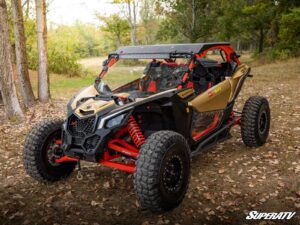
A stock Can-Am Maverick X3 takes 30-inch tires on a 14-inch wheel, and the exact size you need depends on your trim level. Standard Can-Am Maverick X3 models fit 30×10-14 tires on both front and rear axles. If you’ve got the XRS or RR package with wider fenders, the factory fits 32-inch tires instead.
Maverick X3 tire sizes at a glance
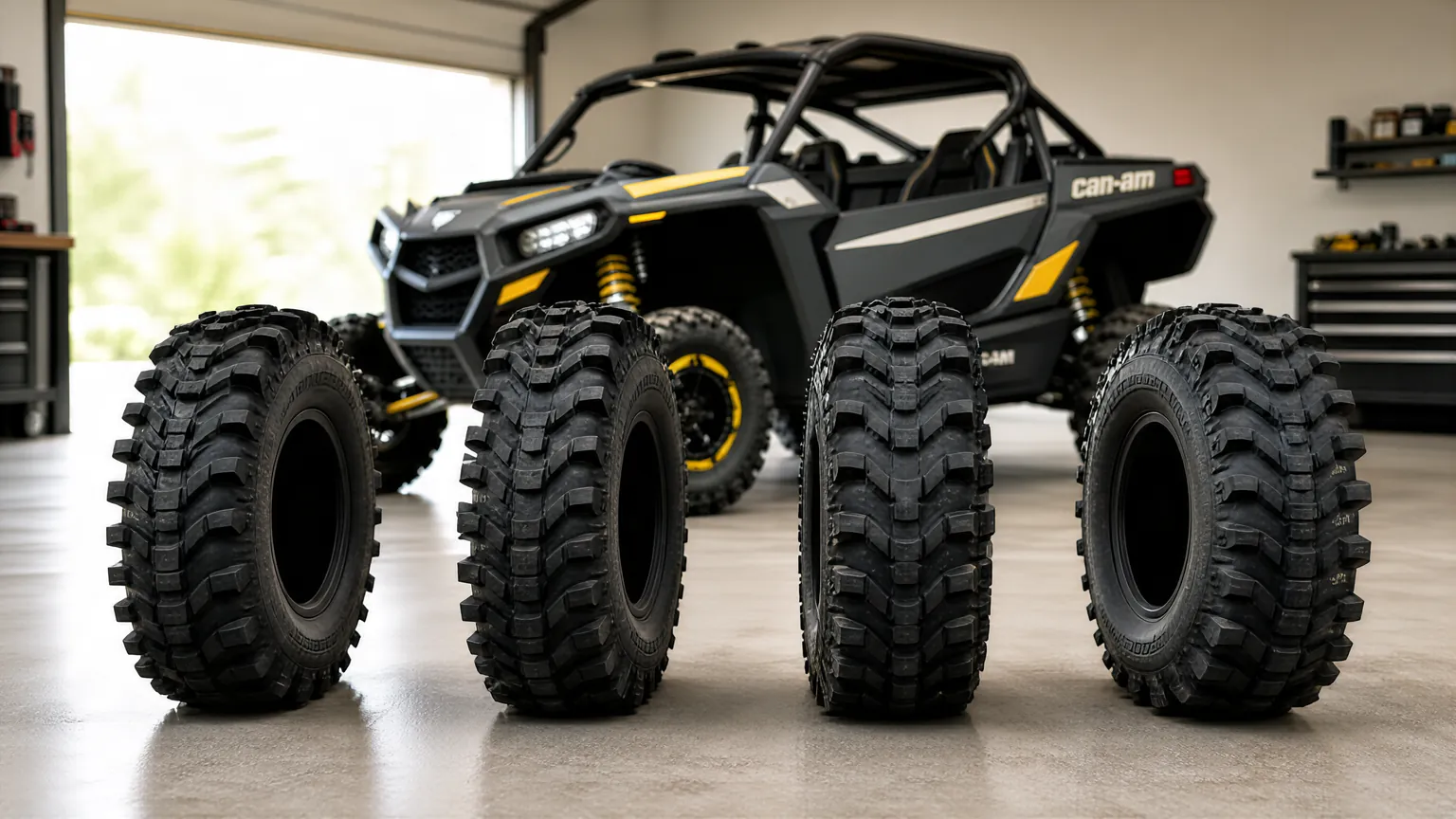
These are the numbers that matter before you buy anything new for your machine. Each line gives you the measurement and the specific model it belongs to.
- Stock base, DPS and XDS trims use 30×10-14 tires on all four wheels.
- Factory XRS and RR models come with 32×10-14 tires straight from the dealer.
- You can safely run 32-inch tires on a base model without changing the suspension.
- Going to 33 or 34 inches requires a lift kit or a portal gear reduction.
- Aftermarket wheels must match the Can-Am 4/137 bolt pattern to mount correctly.
- Check your owner’s manual for the exact tire pressure your trim needs.
Why the X3 uses these tire sizes
The Maverick X3 weighs between 1,400 and 1,600 pounds depending on the model. A 30-inch tire provides enough contact patch to support that weight without overloading the wheel bearings. Can-Am engineers chose this diameter to balance ground clearance with the vehicle’s center of gravity. Taller tires raise that center point, making the side-by-side more likely to roll during hard cornering.
The 14-inch wheel leaves room for the large brake rotors the X3 needs to stop its mass. Smaller wheels wouldn’t clear the calipers, while larger ones would reduce the sidewall height too much. A shorter sidewall transmits every rock strike directly into the suspension components. That extra rubber between the rim and the dirt acts as your first layer of shock absorption.
If your tire rubs the fender at full steering lock, you’ll know you’ve exceeded the safe diameter for your setup. The front control arms swing in an arc that brings the tire closer to the body when you turn. A 32-inch tire clears this arc on stock suspension because Can-Am designed the wheel wells with slight oversizing in mind. Anything beyond that limit contacts plastic or metal under compression.
You can find the exact specifications for your model year on the Can-Am off-road specifications page to verify what shipped from the factory. Matching those baseline numbers keeps your warranty intact and your drivetrain happy.
When stock sizes don’t work
Different riding conditions change what fits safely and what doesn’t. The table below shows where the standard answer fails and how to adjust your setup.
| Situation | What changes | What to do instead |
|---|---|---|
| Running 33-inch tires | Rubs at full turn | Add 2-inch lift kit |
| Deep mud riding | Heavy lugs add weight | Use 32-inch mud-specific tires |
| Hard-packed desert racing | Sidewalls flex too much | Switch to 30-inch stiff ply |
| Added heavy bumpers | Front sags under load | Upgrade to stiffer spring rates |
| Using non-stock wheels | Bolt pattern won’t match | Buy 4/137 pattern rims only |
| Portal gear lift installed | Axles sit higher up | Fit 35-inch tires safely |
How to measure and fit new tires
Follow these steps in order so you don’t buy rubber that won’t clear your fenders or match your hubs.
-
Park the X3 on flat concrete and measure from the ground to the top of your current tire. Write this number down, because it tells you exactly how much taller you can go before rubbing starts.
-
Turn the steering wheel fully to the left, then fully to the right. Look behind each front tire with a flashlight to see how close the rubber gets to the control arm or inner fender liner at maximum travel.
-
Pick your new tire diameter based on that gap. If you have one inch of space at full lock, stay at 32 inches; if you have two inches, you might squeeze in 33s with minor trimming.
-
Verify the wheel bolt pattern is 4/137 before ordering anything. Count the lug nuts and measure across the hub diagonally from one stud center to the opposite stud center to confirm the fitment.
-
Mount the new tires and inflate them to the PSI listed in your owner’s manual. Don’t guess the pressure, because running them too soft tears the bead off the rim during hard cornering.
-
Drive forward slowly in a straight line for about fifty feet, then get out and check the tread. Look for fresh scuff marks on the tire edges or plastic shavings inside the wheel well that prove contact happened.
-
Take the machine for a slow figure-eight test in an open dirt area. Listen for any rhythmic scraping sound that means the tire touches something when the suspension compresses through a turn.
-
Re-torque your lug nuts to 90 foot-pounds after driving the first ten miles. New wheels and tires settle into the hub face, and loose studs will shear off under the X3’s torque if you skip this step.
Fitting mistakes that cost money
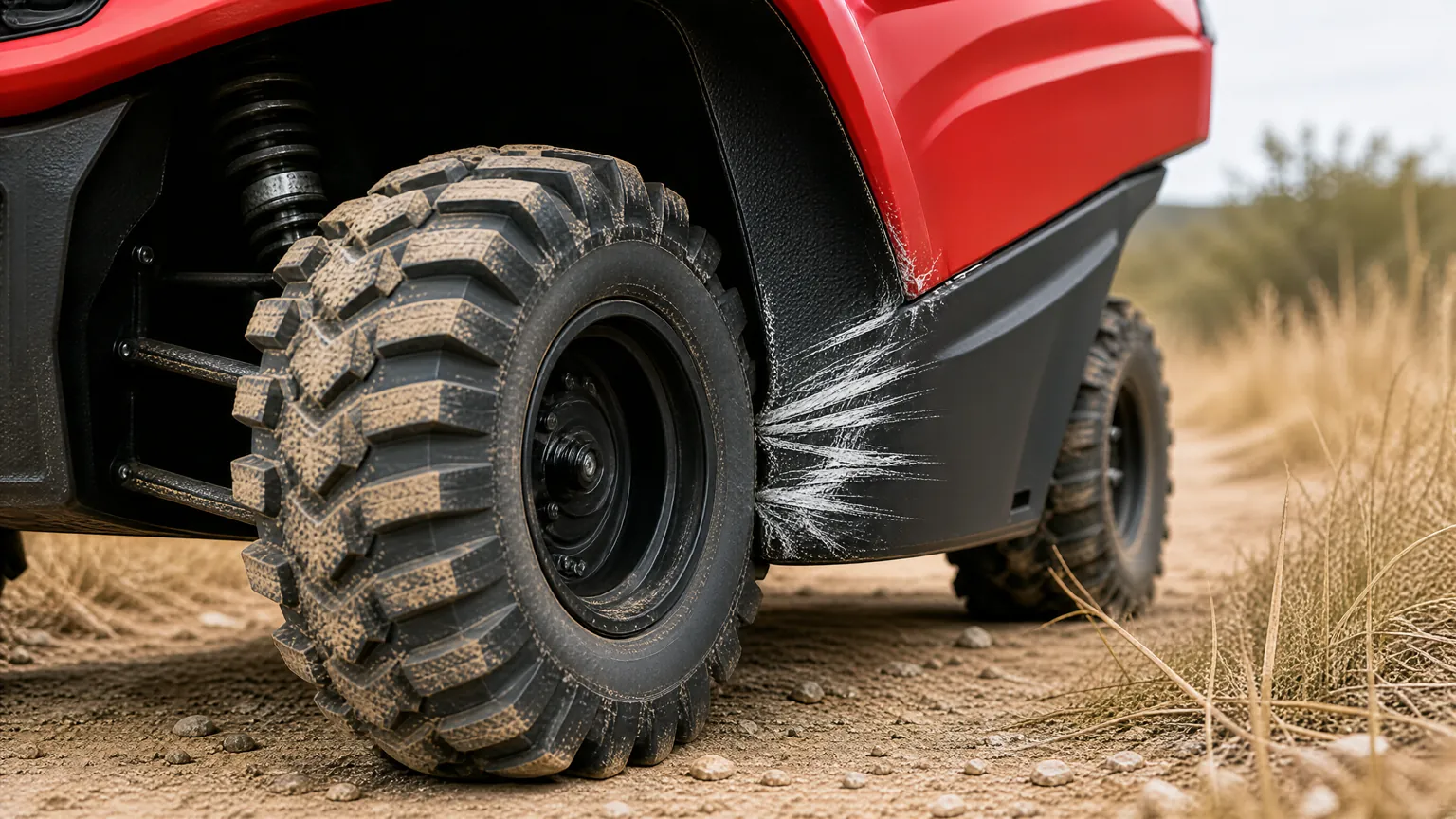
- Buying tires without checking the wheel well gap first. You’ll spend hundreds on rubber that shreds your fender flares on the very first trail ride.
- Mixing different tire heights on the same axle. The drivetrain binds constantly because one wheel spins faster than the other, tearing up your differential gears within weeks.
- Ignoring the load rating printed on the sidewall. A tire rated for lighter ATVs will blow out under the X3’s 1,500-pound weight when you hit a ditch at speed.
- Forgetting to re-torque lug nuts after mounting. Vibration loosens them quickly, and losing a wheel on a rocky trail bends your brake rotor and ruins your afternoon.
- Assuming all 14-inch wheels share the same offset. The wrong offset pushes the tire outward past the fender or inward against the shock spring, causing damage either way.
Related guides
- How to Fit 35 Inch Tires on Stock Ford F250 Super Duty: Ultimate Guide
- How to Rotate Tires on a Ford Maverick at Home: Easy DIY Guide
- How to Calibrate Jeep Wrangler Jl Tire Size After Lift: Easy Guide
FAQs About What Size Tires Fit Can-Am Maverick X3
Can I put 32 inch tires on my stock Maverick X3?
Yes, 32-inch tires fit a stock base or DPS model without a lift kit. They’ll clear the fenders at full steering lock, but you might lose a small amount of acceleration. If your machine has the standard clutch weights, expect the engine to rev slightly higher to reach the same top speed.
Why does my X3 pull to one side with new tires?
Uneven tire pressure causes this pull almost every time. Check all four tires with a gauge when they’re cold, and set them to the PSI specified in your owner’s manual. If pressures match perfectly, the new tires might have a different tread pattern that drags more on one side.
How long do stock Maverick X3 tires last?
Stock tires typically last 2,000 to 4,000 miles depending entirely on the terrain you ride. Sand and smooth dirt push toward the higher end of that range, while sharp rocks and pavement wear them down fast. Check the tread depth bars molded into the grooves to read your own remaining life.
Is it safe to mix tire brands front and rear?
It’s safe as long as the overall diameter matches within a quarter inch on each axle. Never put a taller tire on the front than the rear, because it changes the steering geometry dangerously. Keep the tread style similar too, so one end doesn’t grip while the other slides out.
What happens if I run tires that are too tall?
Tires over 33 inches on stock suspension will rub the inner fenders and overload your CV joints. The added leverage strains the axle shafts every time you accelerate from a stop. You’ll also notice the speedometer reads slower than your actual speed, which matters if you ride regulated trails.
Does wheel offset matter for tire fitment?
Offset changes exactly where the tire sits relative to the hub. A lower offset number pushes the wheel outward, widening your stance but risking fender contact.
How often should I rotate the tires on my X3?
Rotate them every 1,000 miles or once a season, whichever comes first. The rear tires often wear faster because they carry more weight and transmit significant drive power during acceleration. Swap the fronts straight back and cross the rears to the front to even out the tread wear.
Do heavier tires hurt fuel efficiency?
Heavier tires force the engine to work harder to spin the extra rotating mass. You’ll burn noticeably more fuel on long trail days, especially in deep sand or steep hills. Dropping just five pounds per tire makes a real difference in how quickly the clutch engages and the engine responds.
Conclusion
Every Maverick X3 leaves the factory with a specific tire size matched to its suspension geometry and power output. Sticking to 30 or 32 inches keeps the handling predictable and protects your drivetrain from unnecessary stress. Measure your clearance, match your bolt pattern, and torque your lugs before hitting the trail.
Disclosure: As an Amazon Associate, I may earn from qualifying purchases at no extra cost to you. Amazon and the Amazon logo are trademarks of Amazon.com, Inc, or its affiliates.
- Amazon, Amazon Prime, the Amazon logo and Amazon Prime logo are trademarks of Amazon. com, Inc. or its affiliates.

I am Sadman, the founder of CarSensorHub.com, where I share my passion for cars and technology. I specialize in writing detailed reviews and helpful guides on car gadgets, accessories, safety tools and many more. My mission is to help car owners discover the best products and tips to improve their driving experience and stay safe on the road.