A weak battery can leave your car stranded, and an undersized jump starter may waste your money without getting the engine running. The practical rule is simple: choose a jump starter with enough peak amps – sometimes listed as CCA-like or CCA ratings – for your vehicle’s engine and battery size.
Use these ranges as a starting point:
- Most small gas cars and crossovers: about 400-800 peak amps
- V6 gas engines: about 800-1200 peak amps
- Large V8 engines, diesel engines, or larger batteries: often 1200+ peak amps
Confirm the jump starter is made for a 12V starting system, then check its stated compatibility with your engine type. If you are between sizes, choose the higher-rated unit, especially for cold weather, older batteries, or diesel engines.
Key Takeaways
- Match peak amps. Use the jump starter’s peak-amp rating as the first sizing check for your engine.
- Gas vs. diesel matters. Diesel engines and larger batteries usually need more starting power than gas engines.
- Check battery voltage. Most passenger vehicles use 12V systems; a 12V jump starter is not suitable for a 24V truck system.
- Charge condition matters. A fully charged jump starter is more useful than a high-rated unit with a nearly empty internal battery.
- Use the correct connection. Match clamp polarity and connect only to a compatible 12V battery.
How to Match a Jump Starter to Your Vehicle
The right jump starter depends on how much work the starter must do, particularly during a cold start. Engine type, engine size, battery condition, and outside temperature all affect the amount of starting power required.
Manufacturers usually list a jump starter’s output as peak amps, sometimes alongside a CCA-like rating. That number is the closest practical sizing guide, but ratings are not perfectly consistent between brands. One company’s peak-amp claim may be measured or marketed differently from another company’s “instant start” figure.
Treat the peak-amp number as a starting point, then check the manufacturer’s compatibility information. Look for clear statements covering:
- 12V starting batteries
- Gas or diesel engine compatibility
- Recommended engine sizes
- Maximum jump-start attempts
- Use limits and recharge requirements
A 12V gas-powered passenger car usually does not need an industrial-size pack. A diesel vehicle generally benefits from more capacity because diesel engines often require more energy to turn over, particularly in cold weather.
The Checks to Make Before You Buy
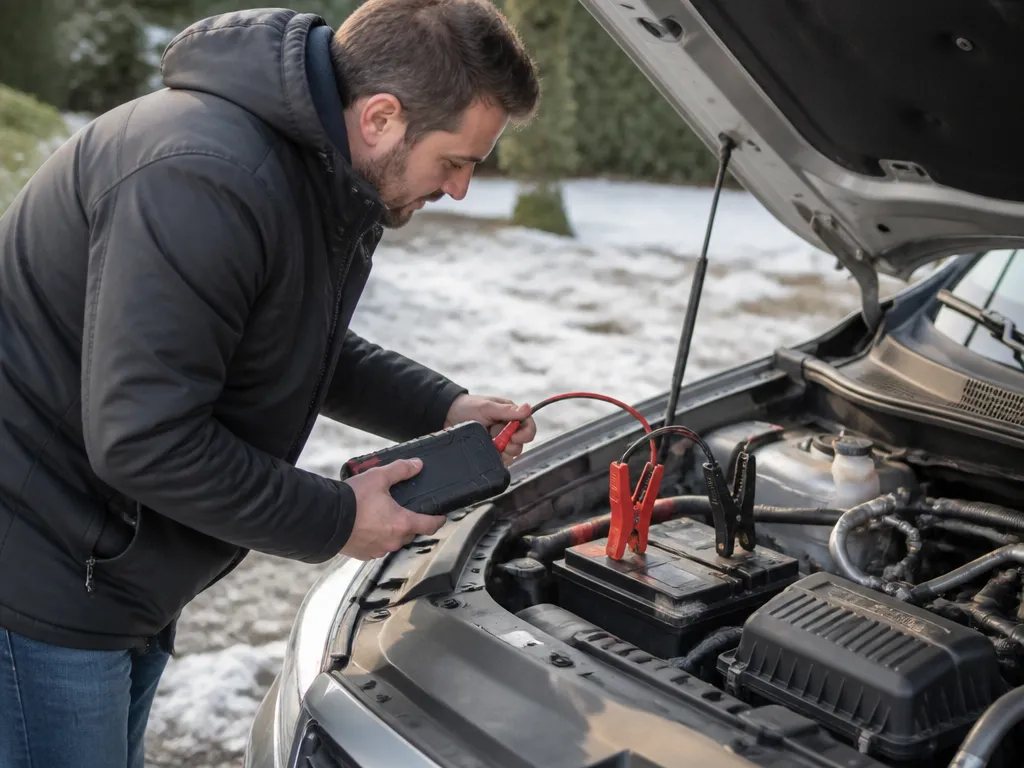
Confirm your vehicle’s electrical system first. Most passenger cars and light trucks in the United States use 12V systems, but some medium-duty trucks and fleet vehicles do not. A 12V jump starter will not work correctly with a different system. If the battery label says 12V, you are looking in the right category.
Next, identify the engine type. Gas engines generally need less starting power than diesel engines, while larger engines usually need more than smaller ones. Freezing temperatures reduce battery output, so drivers in cold climates should account for that reduced margin.
Look beyond the peak-amp figure. A useful jump starter may specify its maximum number of cranking attempts, jump-start cycles, or rest and recharge requirements. If the product only advertises a best-case peak number and says little about actual use limits, choose a model with more headroom.
Your likely use also matters. A moderate-size unit may be enough for occasional emergency coverage on one gas car. If you expect to help family members, restart more than one vehicle, or deal with repeated weak-battery situations, higher capacity and dependable clamps are worth more than the lowest purchase price.
Choosing the Right Jump Starter in Practice
For a basic gas sedan used in a moderate climate, a jump starter in the car-to-midrange category is usually a sensible choice. Prioritize a reputable unit with clear 12V compatibility rather than chasing the largest number on the package.
Charge the jump starter as soon as you buy it and follow its maintenance-charging instructions. The pack must hold enough charge to deliver the required surge. Many people ignore storage and recharge guidance, then discover that the unit is nearly empty during an emergency.
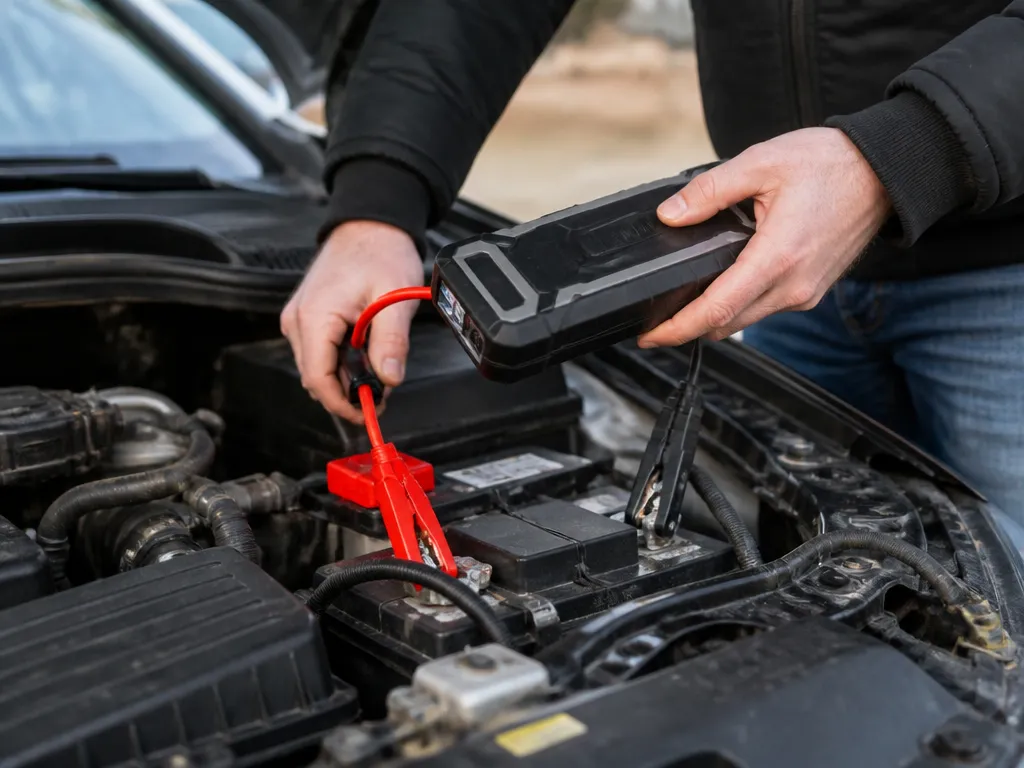
Check the setup before connecting anything. Confirm that the voltage mode matches the battery – 12V vs. 24V – and make sure the clamp leads can reach the battery terminals or approved connection points. Some vehicles place the battery in an awkward part of the engine bay, where short cables make the job harder.
Plan for winter use. A vehicle that cranks normally at 60°F may struggle at 20°F. Cold weather can turn a borderline jump starter into an unreliable one.
Avoid repeated attempts without a pause. If the first attempt fails, follow the jump starter’s recommended wait time and attempt limits. Repeated surges can drain the pack quickly or trigger its protection system.
Why Correct Sizing Improves Reliability
The wrong size creates two predictable problems. A jump starter that is too small may require several attempts or fail to start the engine at all. A much larger unit usually costs more, weighs more, and takes up more trunk space than necessary.
Correct sizing improves the odds of a first-attempt start when conditions are poor. Failures often result from insufficient surge power, a nearly empty jump starter, poor clamp contact, a severely depleted vehicle battery, or cold temperatures. A suitable unit gives you more room for those variables.
Larger jump starters may also support more starting attempts and include stronger protection systems, although those features do not replace safe connection practices. An undersized unit can feel fragile when the battery is weak; a properly sized one is less likely to shut down after one difficult attempt.
Convenience is part of the decision. A jump starter that is too heavy to carry or buried in an inaccessible storage compartment may not help when you need it. The best size is one that fits your vehicle, stays charged, and is easy to use under stress.
Jump Starter Size Categories
You typically have three practical size categories to choose from:
| Jump Starter Size Category | Peak Amps Guidance (Typical) | Best For | Trade-Off |
|---|---|---|---|
| Compact car backup | ~400-800 peak amps | Most small gas cars and crossovers | Less margin in cold or weak batteries |
| Midrange multi-use | ~800-1200 peak amps | V6 gas vehicles, SUVs, frequent personal use | Slightly heavier, costs more |
| High-output / diesel-ready | ~1200+ peak amps | Diesel, larger engines, winter-heavy regions | Heavier, bulkier, higher price |
The internal battery and output options also deserve attention. Lithium jump starters are common because they are portable, but confirm that the unit is designed for engine starting rather than only phone charging. An air compressor or USB ports can be useful, but the starting rating should drive the purchase.
Watch for marketing traps. Some products advertise impressive peak numbers while limiting the number of jump attempts or offering little information about performance under load. Favor models that clearly state their intended engine types, 12V use, and operating limits.
Buying Advice for Diesel, Winter, and Multiple Vehicles
Do not treat “maximum boost” as a guarantee. Peak amps describe surge capability, while actual results also depend on the jump starter’s charge level, temperature, clamp contact, and the condition of the vehicle battery. Slow cranking or dim lights indicate that the battery may create a higher-demand starting event.
A jump starter is emergency equipment, not a repair. If you use it repeatedly, investigate the vehicle. A failing battery, alternator problem, parasitic drain, or loose connection may be causing the repeated no-starts.
Storage affects whether the equipment is useful. If the unit is buried under a seat or hidden in a hard-to-reach trunk corner, you may delay using it. A slightly larger jump starter that you can carry and access quickly is a better choice than a theoretically ideal model that is inconvenient to keep with you.
Practice the process once before an emergency. Make sure you can open the hood, identify the positive terminal and approved ground point, position the clamps safely, and understand how your unit handles an initial attempt and a second attempt.
Jump Starter Size
A 2012-2018 gas sedan with a typical battery in a moderate climate usually fits the compact car backup range. If the starter already sounds slow during winter, move up to the midrange category for more starting margin. I would rather overshoot by one category than gamble on a borderline peak rating.
A V6 SUV used for road trips or parked outside benefits from a midrange multi-use jump starter. That category provides useful surge headroom for a moderately weak battery without the extra weight of a high-output unit. If you need one jump starter for several family vehicles, this is often a practical compromise.
A diesel pickup in cold weather calls for a different approach. Diesel engines often need more cranking energy, and low temperatures reduce the available margin. A high-output / diesel-ready jump starter is the realistic choice even when it costs more and weighs more, because it is sized for the hardest conditions you expect.
If you own multiple vehicles, one midrange or high-output unit may cover most of them, provided the jump starter’s stated compatibility includes your diesel vehicle if you have one. When you own both gas and diesel vehicles, size the unit for the diesel; it will generally provide ample capacity for the gas vehicles as well.
FAQ Of What Size Jump Starter Do I Need
What size jump starter do I need for a typical gas car?
Most gas cars in the United States use 12V systems, and a jump starter in the compact car backup category – roughly 400-800 peak amps – is often enough for emergency starts. If the battery is frequently weak, the engine cranks slowly, or you live in a cold climate, choose the next category up at about 800-1200 peak amps.
How many jump starts can one jump starter do?
The number depends on the unit’s internal battery capacity, the condition of the vehicle battery, and how depleted it is before each attempt. Manufacturers usually provide guidance such as a maximum number of attempts or a charging and restart cycle limit. If you expect repeated use, prioritize a higher-capacity category and follow the recommended rest and recharge intervals.
Are higher peak amps always better?
The trade-offs are greater weight, bulk, and cost. Choose a higher category when you need it for a diesel, winter use, or multiple vehicles; choose a moderate category when you only need occasional emergency backup.
How do I avoid damaging my car with a jump starter?
Confirm that the jump starter matches your battery’s voltage – 12V for most cars. Connect red to the positive terminal and black to a safe ground point as directed by your vehicle manual, and keep the clamps from touching each other. If the first attempt fails, wait as instructed before trying again. Stop if the jump starter enters protection mode.
Is there an alternative to a jump starter for road emergencies?
A tow-start or roadside assistance plan can help, but both depend on location and availability. A portable battery pack designed for vehicle starting is another option, although it is still essentially a jump starter. If you often drive in remote areas, a dedicated jump starter that you keep charged is usually the most dependable option.
Disclosure: As an Amazon Associate, I may earn from qualifying purchases at no extra cost to you. Amazon and the Amazon logo are trademarks of Amazon.com, Inc, or its affiliates.
- Amazon, Amazon Prime, the Amazon logo and Amazon Prime logo are trademarks of Amazon. com, Inc. or its affiliates.

Hi, I am AKM Sad. I’m a car enthusiast and reviewer who loves exploring gadgets and accessories. I share honest reviews and practical tips to help you get the best products and enjoy a safer, smoother ride.


