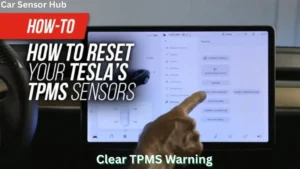
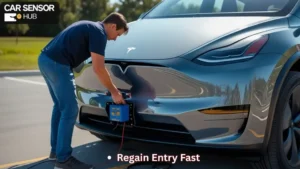
Replacing the ABS sensor on your Tesla Model Y can sound intimidating, especially if you are not used to working on electric vehicles. But with the right approach and information, it is a task that many car owners can tackle at home.
The ABS sensor, also known as the wheel speed sensor, plays a key role in your Tesla’s safety system. It helps the car detect wheel speed and prevents the wheels from locking up during sudden braking. If this sensor fails, you might see warning lights, experience reduced brake performance, or even risk losing important safety features.
Modern Teslas are packed with advanced electronics, and their design is a bit different from traditional cars. This means changing an ABS sensor is not exactly the same as on other vehicles. However, understanding the process can save you both time and money, and help you maintain your car’s safety.
This guide explains everything you need to know—from identifying a faulty sensor to replacing it step by step. You’ll also learn what tools you need, how to avoid common mistakes, and how to make sure the repair is successful. Whether you’re a DIY car enthusiast or just trying to save on repair costs, this article will walk you through the process in clear, simple language.
Understanding The Abs Sensor In Tesla Model Y
Before you start, it helps to know what the ABS sensor does and why it matters. The ABS sensor monitors the speed of each wheel and sends this information to the car’s computer. If one wheel slows down faster than the others, the system knows it might lock up, and the ABS will pulse the brakes to prevent a skid.
In a Tesla Model Y, the ABS sensor is also important for other systems. It feeds data to the traction control, stability control, and even autopilot features. That’s why a faulty sensor can trigger several warning lights or errors on your dashboard.
Types Of Abs Sensors
Tesla Model Y uses active wheel speed sensors, which are more sensitive and accurate than older passive types. They detect magnetic fields and send digital signals to the computer. This means they are less likely to be affected by dirt but can still fail due to physical damage, wiring problems, or moisture.
Common Symptoms Of A Bad Abs Sensor
A failing ABS sensor in your Model Y might cause:
- ABS warning light on the dashboard
- Traction control or Autopilot errors
- Unusual brake behavior
- Noisy or uneven braking
- The car won’t enter “Drive” mode (rare)
If you notice these signs, it’s important to check the sensor right away. Driving with a bad ABS sensor can reduce your car’s safety and disable important features.
Read More: Tesla Model Y Reverse Parking Sensor Beep
Tools And Parts You Need
To replace the ABS sensor on your Tesla Model Y, you’ll need some basic tools. Some are common for most cars, but a few are specific to Tesla’s design.
- Replacement ABS sensor (make sure it fits your Model Y and the correct wheel)
- Socket set (metric, usually 10mm and 13mm)
- Torque wrench
- Flathead screwdriver
- Trim removal tool (plastic is best)
- Jack and jack stands (or Tesla-approved lifting pads)
- Wheel chocks
- Gloves and safety glasses
- OBD-II diagnostic tool (optional, to clear codes)
- Contact cleaner (for electrical connections)
- Rag or towel
Choosing The Right Replacement Sensor
Always buy your replacement sensor from a trusted source. Check the part number to make sure it matches your Tesla Model Y and the specific wheel (front or rear, left or right). Tesla service centers and some online retailers offer genuine parts.
Using a wrong or low-quality sensor can cause more problems or even damage the car’s systems.
Preparing Your Tesla Model Y
Safety is very important when working on electric cars like the Tesla Model Y. These cars have high-voltage systems, but the ABS sensor runs on low voltage. Still, you should take precautions to avoid any injury or damage.
Steps Before Starting
- Park on a flat surface and engage the parking brake.
- Turn off the car and let it sit for at least 10 minutes. This allows all systems to power down.
- Open the Tesla app and disable “sentry mode” and “cabin overheat protection,” if enabled.
- Chock the opposite wheels to prevent rolling.
- Put on gloves and safety glasses.
Lifting The Car Safely
Tesla recommends using approved lifting pads to protect the battery and chassis. Place the jack under the designated lift point (check your manual or the sticker on the rocker panel). Raise the car and secure it with jack stands. Never rely on the jack alone.
Quick Safety Tip:
Never work under the car unless it is supported by jack stands. The Model Y is heavy, and improper lifting can damage the battery or frame.
Removing The Wheel
Replacing the ABS sensor requires removing the wheel for clear access.
- Use a socket wrench to loosen the lug nuts while the car is still on the ground (just break them loose, don’t remove).
- Lift the car and place it on jack stands.
- Fully remove the lug nuts and take off the wheel. Place it aside safely.
This exposes the brake assembly and makes it easier to reach the ABS sensor.
Locating The Abs Sensor
The ABS sensor is usually mounted behind the brake disc, near the wheel hub. In the Tesla Model Y, you’ll find it attached with a small bolt and a wiring harness that runs along the suspension arm.
- Front sensor: Typically mounted on the steering knuckle.
- Rear sensor: Mounted on the rear hub assembly.
Look for a small, cylindrical sensor with a wire leading to a plastic connector.
How To Identify The Faulty Sensor
If your diagnostic tool or Tesla’s on-screen alerts show which wheel is affected, focus on that sensor. If you don’t have a code reader, check for visible damage, corrosion, or loose wires. Sometimes the sensor itself looks fine, but the wire is cut or the connector is dirty.
Removing The Old Abs Sensor
Now comes the careful part. Removing the sensor without damaging nearby parts is important. Here’s a step-by-step guide:
- Locate the sensor mounting bolt (usually 10mm).
- Use a socket wrench to remove the bolt.
- Gently wiggle the sensor. If it’s stuck, use a plastic trim tool or flathead screwdriver to pry it out. Avoid using metal tools directly on the sensor or hub to prevent scratches.
- Follow the sensor wire to the connector. It might be clipped along the suspension arm. Use your trim tool to unclip any fasteners.
- Disconnect the wiring connector. Press the tab and pull it apart.
- Remove the old sensor completely.
Pro tip: If the sensor is stuck due to rust, spray a little penetrating oil and wait a few minutes. Do not use excessive force, or you could damage the hub.
This Guide May Help You More: ABS Brake Sensor Replacement
Cleaning The Sensor Mounting Area
Before installing the new sensor, clean the area where it sits. Dirt or rust can cause the new sensor to sit unevenly or give false readings.
- Use a rag or towel to wipe away dust.
- If there is rust, gently clean with a small brush.
- Spray a little contact cleaner into the connector to remove any moisture or dirt.
This step is often skipped but makes a big difference in long-term reliability.
Installing The New Abs Sensor
You’re now ready to fit the new sensor.
- Insert the new sensor into the mounting hole. Make sure it sits flush and is not forced.
- Secure the bolt and tighten it to factory specs (usually 7–10 Nm, check your manual). Don’t overtighten, as it can crack the sensor.
- Route the wire along the same path as the old one. Clip it into place using the same fasteners.
- Connect the wiring harness. Press until you hear a click.
- Double-check that the wire is not twisted or pinched.
Torque Spec Comparison
Here is a comparison of typical torque specs for the Tesla Model Y ABS sensor mounting bolts (always check your specific manual):
| Location | Torque Spec (Nm) | Notes |
|---|---|---|
| Front ABS sensor | 7–9 Nm | Do not overtighten |
| Rear ABS sensor | 8–10 Nm | Hand-tight plus 1/4 turn |

Credit: www.youtube.com
Reinstalling The Wheel And Lowering The Car
- Place the wheel back onto the hub and thread the lug nuts by hand.
- Lower the car slowly, then tighten the lug nuts in a criss-cross pattern to the correct torque (usually 129 Nm for Tesla Model Y).
- Remove the jack stands and lower the car fully.
Never over-tighten the lug nuts. This can warp the brake rotor or damage the studs.
Reconnecting And Powering Up
With the sensor replaced, it’s time to power up the car and test the repair.
- Sit in the car and press the brake pedal.
- Turn on the Tesla and check for warning lights or errors.
- If you have a diagnostic tool, clear any stored ABS codes.
- Take the car for a short drive at low speed. Make a few gentle stops to ensure the ABS and traction control systems function normally.
If the warning light stays off and no errors appear, the repair is successful. If you still see errors, double-check the sensor connection and the wiring.
Common Mistakes And How To Avoid Them
Replacing an ABS sensor is not very difficult, but these mistakes are common:
- Forgetting to disconnect the battery: Not needed for low-voltage sensors, but always power off the car before starting.
- Using the wrong sensor: Always match the part number and wheel location.
- Damaging the connector: Be gentle when disconnecting and reconnecting.
- Overtightening bolts: This can crack the sensor or strip threads.
- Skipping cleaning: Dirt or rust in the mounting area can cause false readings.
- Routing the wire incorrectly: If the wire is stretched or pinched, it can fail quickly.
How Tesla Model Y Abs Sensors Differ From Other Cars
Tesla’s ABS system is more integrated than in most cars. The ABS sensors also support Autopilot, regenerative braking, and advanced safety features. This means a single sensor failure can trigger multiple warnings or even limit the car’s driving functions. Unlike some traditional vehicles, you cannot simply “ignore” the sensor or use a cheap universal replacement.
Here’s a comparison of sensor integration:
| Vehicle | ABS Sensor Function | Impact of Failure |
|---|---|---|
| Tesla Model Y | ABS, traction, Autopilot, regenerative braking | Multiple warnings, limits Autopilot, possible limp mode |
| Traditional EV | ABS, traction | ABS warning, minor impact on stability control |
| Gasoline car | ABS only | ABS disabled, standard brakes work |

Credit: service.tesla.com
How To Diagnose Abs Sensor Problems
If you’re not sure which sensor is failing, try these steps:
- Check dashboard alerts: The Tesla Model Y will often show which wheel has a problem.
- Use a scan tool: Some third-party OBD-II tools can read Tesla codes.
- Inspect the sensor and wire: Look for cuts, corrosion, or loose connections.
- Test the sensor: With a multimeter, you can check resistance (usually 1–2 kΩ for active sensors).
When To Call A Professional
If you find broken wires, water inside the connector, or repeated sensor failures, it’s best to visit a Tesla service center. Some repairs, like fixing control modules, require special tools and software only Tesla provides.
What To Do After Replacement
Once you’ve installed the new ABS sensor:
- Clear error codes (if you have a scan tool).
- Drive the car to let the system recalibrate.
- Watch for any new or returning warning lights.
- Listen for unusual noises or changes in braking feel.
In many cases, the warning light will go out on its own after a few miles. If not, double-check your work or schedule a service appointment.
Practical Tips For A Safe And Successful Replacement
- Take photos of each step. This makes reassembly easier.
- Label the old sensor so you don’t mix it up with the new one.
- Keep all bolts and clips in a small container to avoid losing them.
- Work in a well-lit area to spot any problems early.
- Check tire pressure before finishing, as lifting the car can sometimes affect the sensors.
Insight: Tesla’s Over-the-air Updates
Tesla can sometimes change how ABS sensors communicate with the car’s computer through software updates. After replacing a sensor, check for any available updates in your Tesla app or on the car’s screen. This can help avoid future compatibility issues and ensure all systems work as intended.
Cost Of Replacing Tesla Model Y Abs Sensor
The cost can vary depending on where you buy the parts and if you do the labor yourself.
- Genuine Tesla ABS sensor: $80–$120 per wheel
- Aftermarket sensor: $50–$90 (quality varies)
- Labor at Tesla service: $150–$250 per sensor
If you do the work yourself, you can save on labor costs. However, using a non-genuine sensor may void some warranties or cause compatibility issues.
Here is a quick cost breakdown:
| Option | Parts Cost | Labor Cost | Total |
|---|---|---|---|
| DIY, Genuine Part | $100 | $0 | $100 |
| DIY, Aftermarket | $70 | $0 | $70 |
| Service Center | $100 | $200 | $300 |
Environmental And Safety Considerations
Properly disposing of the old ABS sensor is important. Most auto parts stores will recycle electronic parts. Do not throw the sensor in the trash, as it may contain materials harmful to the environment.
Also, always double-check that tools and parts are clear of the brake assembly before driving. A loose tool can cause expensive damage.
When You Should Not DIY
Some situations are best left to professionals:
- Multiple ABS errors: May indicate a control module problem.
- Water or corrosion in the wiring: Needs expert repair.
- Physical damage to the hub or brake system: Can affect safety.
- No experience with car repairs: Consider getting help.
Electric vehicles have unique risks, including high voltage. While the ABS system is low voltage, other nearby systems may not be.
Additional Resources
If you want to see the process before starting, look for Tesla-specific repair videos or check the official Tesla service manual. Some online communities, like the Tesla Motors Club, offer helpful guides and advice from owners who have done this repair.
You can also refer to the official Tesla website or trusted sources like Wikipedia for a deeper understanding of ABS technology.
Replacing the ABS sensor on your Tesla Model Y is a task many owners can handle with the right preparation and care. Remember to follow each step closely, double-check your work, and don’t hesitate to ask for help if you’re unsure.
Taking the time to do this repair properly will keep your car safe and performing at its best for years to come.
FAQs Of Replace ABS Sensor on Tesla Model Y
How Long Does It Take To Replace An Abs Sensor On A Tesla Model Y?
For most DIYers, replacing one ABS sensor takes about 30 to 60 minutes if you have the right tools and follow the steps carefully. If it’s your first time, allow a bit more time to avoid mistakes.
Can I Drive My Tesla Model Y With A Bad Abs Sensor?
It’s not recommended. A faulty ABS sensor can disable ABS, traction control, and even Autopilot. You may also lose some braking safety features. It’s best to replace the sensor as soon as possible.
Do I Need Special Tools To Replace A Tesla Model Y Abs Sensor?
You need basic hand tools like a socket set, torque wrench, and jack stands. Tesla-specific software or scanners are only needed if you want to clear codes, but most owners can do the job with regular tools.
Will A Warning Light Go Away Automatically After Replacing The Abs Sensor?
Often, yes. Once the system detects the new sensor and sees normal readings, the warning light should go off after a short drive. If not, you may need to clear codes with a scan tool, or check for wiring issues.
Is It Safe To Use Aftermarket Abs Sensors In A Tesla Model Y?
Aftermarket sensors can work, but genuine Tesla parts are best for reliability and compatibility. Some aftermarket sensors may trigger errors or not work with software updates. Always match the part number exactly and buy from a trusted supplier.
Disclosure: As an Amazon Associate, I may earn from qualifying purchases at no extra cost to you. Amazon and the Amazon logo are trademarks of Amazon.com, Inc, or its affiliates.
- Amazon, Amazon Prime, the Amazon logo and Amazon Prime logo are trademarks of Amazon. com, Inc. or its affiliates.

I am Sadman, the founder of CarSensorHub.com, where I share my passion for cars and technology. I specialize in writing detailed reviews and helpful guides on car gadgets, accessories, safety tools and many more. My mission is to help car owners discover the best products and tips to improve their driving experience and stay safe on the road.