If you’re deciding between the Ford F250 and F350 Super Duty, you probably want to know which truck fits your needs best. Both are powerful and built tough, but there are key differences that can impact your daily work or weekend plans.
Understanding these differences can save you time, money, and frustration. You’ll get clear, straightforward explanations that help you make the right choice. Ready to find out which Super Duty truck is truly right for you? Let’s dive in.
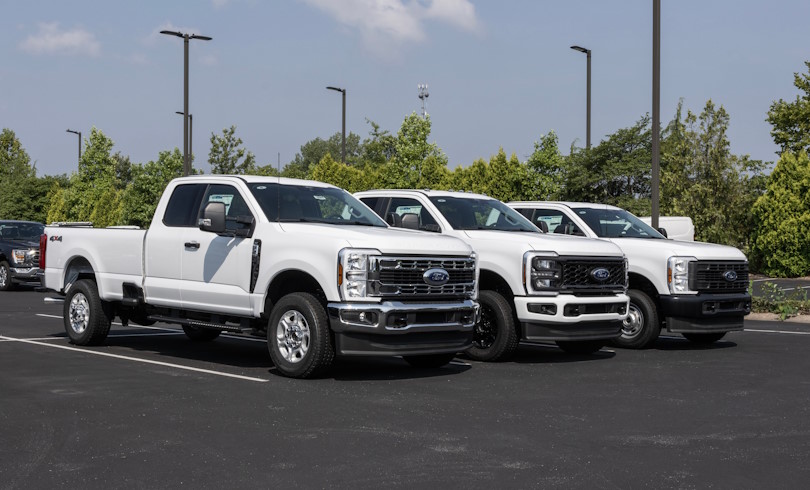
Credit: www.paulsautorepair.com
Engine Options
The Ford F250 and F350 Super Duty trucks offer strong engine options. These powertrains suit different needs and workloads. Knowing the engine choices helps pick the right truck. Both trucks provide gasoline and diesel engines. Each engine type has unique strengths for power and efficiency.
Gasoline Engines
The F250 and F350 use a 7.3-liter V8 gasoline engine. It delivers solid horsepower and torque. This engine is reliable for daily tasks and light towing. The gasoline engine runs smoothly and starts easily. It suits drivers who want strong power without diesel upkeep.
Diesel Engines
Both trucks offer a 6.7-liter Power Stroke V8 diesel engine. This diesel engine produces high torque for heavy loads. It is designed for tough jobs and long-distance towing. Diesel engines use less fuel under heavy strain. They last longer with proper care and fuel.
Performance And Towing
The F350’s engine tuning allows for higher towing capacity than the F250. Diesel engines in both models provide excellent low-end torque. This helps move heavy trailers and cargo smoothly. Gasoline engines offer quicker acceleration but less towing power. Choose based on the type of work and load size.
Towing And Payload Capacity
Towing and payload capacity are crucial for truck buyers. These features decide how much weight the truck can pull or carry safely. The Ford F250 and F350 Super Duty trucks are both strong, but they have differences in these areas. Understanding these differences helps pick the right truck for work or play.
Maximum Towing Limits
The F250 can tow up to 20,000 pounds with a fifth-wheel hitch. The F350 increases this limit to 24,200 pounds. This higher limit suits heavier trailers and large loads. More towing power means better control and safety on the road. The F350 handles larger trailers with less strain.
Payload Ratings
Payload capacity measures how much weight the truck bed can carry. The F250 has a payload rating around 3,300 pounds. The F350 boosts this to about 4,200 pounds. The extra capacity lets you haul heavier tools or materials. This makes the F350 a better choice for heavy-duty jobs.
Trailer Brake Systems
Both trucks come with trailer brake controllers. These systems help stop trailers smoothly. The F350 offers upgraded brake systems for larger loads. Good trailer brakes reduce wear on the truck brakes. They also improve stopping distance and safety while towing.
Chassis And Suspension
The chassis and suspension define how a truck handles weight and road conditions. Ford F250 and F350 Super Duty models share many features but differ in key areas here. These differences affect towing ability, stability, and ride quality.
Frame Strength
The F350 has a stronger frame than the F250. It uses thicker steel and more reinforcements. This makes the F350 better for heavy-duty work. The stronger frame supports higher towing and payload capacities. The F250 frame suits moderate tasks well but is less rugged than the F350’s.
Suspension Differences
The F350 features heavier suspension parts. It includes larger springs and upgraded shock absorbers. These changes help the F350 carry heavier loads. The F250 has lighter suspension designed for everyday use. The F350’s suspension also reduces body roll under heavy weight.
Ride Comfort
The F250 offers a smoother ride on regular roads. Its lighter suspension absorbs bumps better. The F350’s ride feels firmer due to the heavy-duty setup. It is built for stability over comfort. Drivers choosing comfort may prefer the F250 for daily driving.
Dimensions And Weight
Understanding the differences in dimensions and weight between the Ford F250 and F350 Super Duty models helps in choosing the right truck. These factors affect how the trucks perform, carry loads, and handle on the road. Let’s break down what sets these two trucks apart in size and weight.
Curb Weight Comparison
The Ford F250 typically weighs less than the F350. The F250’s curb weight ranges from about 6,000 to 7,200 pounds. The F350 starts around 6,900 pounds and can go higher, depending on the configuration. This weight difference reflects the F350’s stronger build and higher capacity for heavy-duty tasks.
Overall Size
The F350 is generally larger in size than the F250. Its frame is more robust to support bigger engines and heavier loads. The length and width of both trucks are close, but the F350 often has a taller stance. This extra size gives the F350 more ground clearance and better towing ability.
Impact On Maneuverability
The heavier weight and larger size of the F350 affect its maneuverability. The F250 is easier to drive in tight spaces and urban areas. The F350 needs more room to turn and park. Drivers who need a truck for city driving may prefer the F250 for its better handling.
Interior Features
The interior features of the Ford F250 and F350 Super Duty trucks offer comfort and convenience for drivers and passengers. Both trucks focus on a practical and functional cabin. Small differences affect space, technology, and seating comfort. This section explains those differences clearly.
Cabin Space
The Ford F350 provides slightly more cabin space than the F250. This extra room is noticeable in rear-seat legroom. Both trucks have spacious front seats, but the F350 feels a bit airier in the back. The difference is small but useful for passengers on long trips.
Technology And Infotainment
The F250 and F350 come with advanced infotainment systems. Both models include touchscreen displays with smartphone integration. Apple CarPlay and Android Auto are standard in both. The F350 may offer a larger screen option. Audio systems are similar, with clear sound quality for music and calls.
Seating And Comfort
Seating in both trucks is designed for long drives and workdays. The F250 and F350 offer cloth or leather seats depending on the trim. Both have adjustable seats with lumbar support. The F350 often includes more premium options like heated and ventilated seats. Both trucks provide durable and comfortable seats for daily use.
Price And Value
Understanding the price and value differences between the Ford F250 and F350 Super Duty is important for buyers. Both trucks offer strong performance and durability. However, their costs and features vary. This section breaks down the price details and what you get for your money.
Base Price Comparison
The Ford F250 starts at a lower price than the F350. The base model F250 costs around $40,000. The F350 begins closer to $45,000. This difference reflects the F350’s higher towing and payload capabilities. Buyers should consider what they need from the truck before deciding.
Trim Levels
Both trucks come in several trim levels. These range from basic work models to luxury versions. The F350 trims usually have more heavy-duty features. Premium trims on both trucks include advanced tech and comfort options. Prices rise as more features are added.
Cost Of Ownership
Owning a Ford F350 can be more expensive over time. Higher fuel consumption and maintenance costs add up. The F250 generally has lower running costs. Insurance rates may also differ between the two. Consider long-term expenses, not just the purchase price.
Fuel Economy
Fuel economy is a key factor for many truck buyers. It affects how far you can drive and how much you spend on gas. The Ford F250 and F350 Super Duty trucks have different fuel economy ratings. Understanding these differences helps you choose the right truck for your needs.
City Vs Highway Mileage
The Ford F250 usually gets slightly better fuel mileage in city driving than the F350. This is because the F250 is lighter. On the highway, both trucks perform closer in fuel economy. The F350’s larger engine and heavier weight lower its city mileage. Expect about 1 to 2 miles per gallon less in city driving for the F350 compared to the F250.
Fuel Tank Capacity
The F350 often has a larger fuel tank than the F250. This means it can hold more gas. A bigger tank helps with longer trips or heavy work days. The F250 has a smaller tank but still offers good range. Choosing the right tank size depends on how far you drive and your work needs.
Efficiency Technologies
Both trucks use modern technology to improve fuel economy. Features like turbocharged engines and direct fuel injection help burn fuel more efficiently. The F250 and F350 also have auto start-stop systems to save gas at idle. These technologies make both trucks more efficient than older models.

Credit: www.youtube.com
Safety And Driver Assistance
Safety and driver assistance are key factors in choosing a heavy-duty truck. Both the Ford F250 and F350 Super Duty offer strong safety features. They help protect drivers and passengers on the road. These trucks also include technologies that assist the driver in difficult conditions. Understanding their safety and driver aid differences helps in making a smart choice.
Standard Safety Features
Both trucks include important safety basics. They come with airbags for front and side protection. Anti-lock brakes help keep control during sudden stops. Stability control reduces the risk of skidding on slippery roads. Tire pressure monitoring alerts drivers about low tire pressure. These features come standard in both the F250 and F350 models.
Advanced Driver Aids
The F350 offers more advanced driver aids than the F250. It includes adaptive cruise control to maintain safe distances. Blind-spot monitoring warns about vehicles in hard-to-see areas. Lane-keeping assist helps prevent drifting out of lanes. The F250 has some of these aids but fewer than the F350. These aids reduce driver stress and increase road safety.
Crash Test Ratings
Both trucks perform well in crash tests by safety organizations. The F250 and F350 earn strong marks for front and side impacts. The F350 shows slightly better ratings in rollover resistance. These ratings reflect the sturdy design and safety engineering of both trucks. Choosing either model means choosing a truck built to protect.
Customization And Upgrades
Customization and upgrades make the Ford F250 and F350 Super Duty trucks fit your needs. Both models offer many ways to change and improve. You can add features for work, comfort, or adventure. These trucks adapt to different jobs and lifestyles with many options to choose from.
Available Packages
Ford offers several packages for both the F250 and F350. These packages include towing, technology, and off-road features. For example, the Lariat package adds luxury touches like leather seats. The FX4 Off-Road package adds skid plates and off-road shocks. These packages help build a truck that matches your use.
Aftermarket Options
Many companies sell parts to upgrade your Ford Super Duty. You can add bigger tires, lift kits, or better exhaust systems. These parts improve power, style, and durability. Aftermarket options let you make your truck unique. They also help your truck handle tough jobs better.
Off-road Enhancements
Off-road upgrades make the F250 and F350 ready for rough terrain. You can add heavy-duty suspension, skid plates, and all-terrain tires. These upgrades protect your truck and improve its grip. Off-road lights and winches add safety and utility. These features help you drive confidently off the beaten path.
Credit: www.prestoncommercial.com
Best Use Cases
The Ford F250 and F350 Super Duty trucks serve different needs. Each model fits certain jobs better than the other. Choosing the right truck depends on how you plan to use it. This section explains the best use cases for both trucks.
Work And Commercial Use
The F250 is strong enough for many work tasks. It handles heavy tools and equipment with ease. Ideal for contractors and small business owners.
The F350 offers extra strength and durability. It suits larger jobs and tougher conditions. Great for hauling heavy loads on construction sites.
Both trucks have powerful engines. The F350 has higher towing and payload limits. This makes it better for demanding commercial tasks.
Recreational Towing
The F250 works well for towing boats or small campers. It offers good control and power for most trailers.
The F350 excels in towing heavier trailers and fifth wheels. It provides more stability and safety on the road.
Choose the F350 for large RVs or heavy horse trailers. The F250 fits better with lighter recreational gear.
Daily Driving Considerations
The F250 is easier to drive daily. It feels lighter and more agile in traffic.
The F350 is bigger and heavier. It may be harder to park and maneuver in tight spaces.
Fuel economy is better in the F250. The F350 uses more fuel due to its size and power.
For daily use, the F250 suits most drivers. The F350 is better if you need extra strength regularly.
Frequently Asked Questions
What Are The Main Differences Between Ford F250 And F350?
The Ford F350 offers a higher towing capacity and stronger suspension than the F250. It also has a heavier-duty frame, making it better for extreme hauling and commercial use.
Which Truck Has Better Towing Capacity, F250 Or F350?
The Ford F350 has a superior towing capacity, often exceeding 20,000 pounds. The F250 is strong but best suited for moderate towing needs.
Is The Ford F350 More Expensive Than The F250?
Yes, the F350 generally costs more due to its enhanced capabilities and heavier-duty features designed for tougher work.
Can The Ford F250 Handle Heavy-duty Tasks Like The F350?
The F250 handles many heavy-duty tasks well but falls short of the F350’s maximum payload and towing limits.
Conclusion
Choosing between the Ford F250 and F350 depends on your needs. The F250 handles tough jobs well. The F350 offers extra power and capacity. Both trucks deliver strong performance and reliability. Think about how much weight you tow or carry.
Consider the size and features that suit you best. Each truck has its own strengths. Your choice should match your work and budget. Either way, you get a solid, hardworking truck. Simple, clear, and ready for the job.
Disclosure: As an Amazon Associate, I may earn from qualifying purchases at no extra cost to you. Amazon and the Amazon logo are trademarks of Amazon.com, Inc, or its affiliates.
- Amazon, Amazon Prime, the Amazon logo and Amazon Prime logo are trademarks of Amazon. com, Inc. or its affiliates.

I am Sadman, the founder of CarSensorHub.com, where I share my passion for cars and technology. I specialize in writing detailed reviews and helpful guides on car gadgets, accessories, safety tools and many more. My mission is to help car owners discover the best products and tips to improve their driving experience and stay safe on the road.