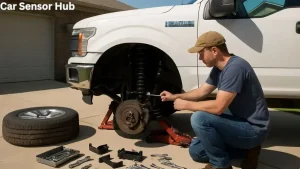
If you own a Ford F-150 or work on them, you may eventually deal with O2 sensors. The O2 sensor bank 1 sensor 1 is especially important because it controls how the engine runs and helps maintain fuel economy. But many DIY mechanics and even some professionals get confused about where this sensor is actually located. Understanding its position, why it matters, and how to work with it can save you time, money, and frustration.
This article explains everything you need to know about the F-150’s O2 sensor bank 1 sensor 1 location, how to identify it, and what steps to follow when inspecting or replacing it.
What Is An O2 Sensor And Why Does It Matter?
Oxygen sensors, or O2 sensors, are small devices that measure the amount of oxygen in your truck’s exhaust system. The F-150 uses these sensors to tell the engine control unit (ECU) how much fuel to use. This helps your truck run efficiently, keeps emissions low, and prevents damage to the engine.
The “bank” refers to which side of the engine the sensor is monitoring. “Bank 1” is always the side of the engine with cylinder number 1. “Sensor 1” is the first sensor in the exhaust stream (before the catalytic converter). The F-150’s V6 or V8 engines often have multiple O2 sensors, but bank 1 sensor 1 is the one that matters most for fuel trimming.
Many drivers do not realize that a bad O2 sensor can cause poor fuel economy, rough running, and even make your truck fail an emissions test. Some O2 sensors last over 100,000 miles, but others wear out earlier because of oil leaks, coolant leaks, or poor fuel quality.
Understanding Bank 1 Sensor 1: Location And Function
What “bank 1 Sensor 1” Means
- Bank 1: The side of the engine with cylinder 1.
- Sensor 1: The upstream (pre-catalytic converter) sensor.
So, bank 1 sensor 1 is the oxygen sensor located in the exhaust manifold or just downstream, before the catalytic converter, on the same side as cylinder 1.
Where Is Cylinder 1 On A Ford F-150?
On most F-150 engines, cylinder 1 is on the passenger side (right side, facing forward from the driver’s seat). But always check your specific model’s engine diagram—some older models or special engines may be different.
For the most common engines (like the 5.0L V8 and 3.5L EcoBoost):
- Passenger side = Bank 1
- Driver side = Bank 2
Exact Location Of Bank 1 Sensor 1
The bank 1 sensor 1 O2 sensor is usually screwed into the exhaust manifold on the passenger side, right before the exhaust pipe meets the catalytic converter. It’s the first sensor you’ll see as the exhaust gases leave the engine.
On the F-150:
- Look under the truck on the passenger side.
- Find the exhaust manifold (where the exhaust pipes meet the engine).
- The first O2 sensor you see screwed into the exhaust manifold or the pipe right after is bank 1 sensor 1.
It is not the sensor after the catalytic converter—that one is sensor 2.
How To Identify Bank 1 Sensor 1 On Your F-150
Many F-150 owners get confused because there are often four O2 sensors:
- Bank 1 sensor 1 (pre-cat, passenger side)
- Bank 1 sensor 2 (post-cat, passenger side)
- Bank 2 sensor 1 (pre-cat, driver side)
- Bank 2 sensor 2 (post-cat, driver side)
Bank 1 sensor 1 is always upstream (before the catalytic converter) on the passenger side.
Here’s a practical way to confirm:
- Use a flashlight and look at the exhaust manifold on the passenger side.
- The first sensor you see, before the catalytic converter, is bank 1 sensor 1.
If you are still not sure, use a scan tool that can display live O2 sensor data. Unplug one sensor at a time (engine off!) And see which one’s readings disappear on the scan tool. This can confirm the exact location.
Signs Your Bank 1 Sensor 1 Needs Attention
A faulty bank 1 sensor 1 can cause:
- Check Engine Light (often with code P0131, P0133, P0135, etc.)
- Poor fuel economy
- Rough engine idle
- Failed emissions test
- Hesitation or stalling
If you see any of these, it’s time to inspect or replace the sensor.

Credit: www.reddit.com
How To Replace Bank 1 Sensor 1 On A Ford F-150
Replacing this sensor is a common DIY job if you have the right tools. Here’s how to do it:
- Let the engine cool completely.
- Disconnect the negative battery terminal.
- Raise the front of the truck with jack stands for safety.
- Find the sensor on the passenger side exhaust manifold (as described above).
- Unplug the sensor’s electrical connector.
- Use an O2 sensor socket or a 7/8” (22mm) wrench to loosen the sensor. If it’s stuck, use some penetrating oil.
- Remove the old sensor and compare it with the new one.
- Install the new sensor (don’t overtighten—check the torque spec in your manual).
- Plug in the sensor’s connector.
- Lower the truck, reconnect the battery, and clear any error codes.
Tips For Success
- Always use anti-seize on the new sensor’s threads (unless it’s pre-applied).
- Do not pull on the sensor wires.
- Double-check that you bought the correct sensor—F-150s often use different sensors for upstream and downstream positions.
Common Mistakes When Working With O2 Sensors
- Mixing up sensor positions: Always confirm if you are replacing the correct sensor.
- Not disconnecting the battery: This can cause electrical shorts or error codes.
- Overtightening: Sensors can strip threads in the exhaust manifold.
- Forgetting to clear codes: After replacement, reset the ECU with a scan tool.

Credit: www.ebay.com
Comparison: F-150 O2 Sensor Locations
Below is a simple comparison of all four O2 sensor positions for a typical F-150:
| Sensor | Side of Truck | Position | Before/After Catalytic Converter |
|---|---|---|---|
| Bank 1 Sensor 1 | Passenger | Upstream | Before |
| Bank 1 Sensor 2 | Passenger | Downstream | After |
| Bank 2 Sensor 1 | Driver | Upstream | Before |
| Bank 2 Sensor 2 | Driver | Downstream | After |
Real-world Example: 2015–2020 Ford F-150
On a 2015–2020 F-150 with the 5.0L V8, the bank 1 sensor 1 is located just where the exhaust manifold meets the exhaust pipe on the passenger side. Owners have reported that the sensor can be reached from under the truck, but it may be easier with the wheel removed.
Older F-150s, like 2004–2008 models, have a similar layout, but the engine bay is more crowded. Always check a repair manual or a reliable online diagram if you are unsure.
How O2 Sensors Affect Fuel Economy And Emissions
Many drivers overlook how much a single O2 sensor can change engine performance. If bank 1 sensor 1 fails, the truck’s ECU cannot adjust the fuel mixture correctly. This can cause the engine to run rich (using too much fuel) or lean (not enough fuel), both of which damage the engine over time and increase emissions.
A healthy O2 sensor helps:
- Improve miles per gallon (MPG)
- Reduce harmful emissions
- Extend catalytic converter life
Comparing Oem Vs. Aftermarket O2 Sensors
Should you buy a Ford (OEM) sensor or an aftermarket one? Here’s a quick comparison:
| Feature | OEM Sensor | Aftermarket Sensor |
|---|---|---|
| Fitment | Perfect | May vary |
| Price | Higher | Lower |
| Warranty | Often longer | Varies |
| Service Life | Consistent | Can vary |
OEM sensors often last longer and communicate better with the truck’s ECU, but many quality aftermarket brands also work well if you match the part number exactly.
Can You Drive With A Bad Bank 1 Sensor 1?
Technically, yes, the truck will run. But you will notice:
- Poor fuel economy (sometimes 10–20% worse)
- Check Engine Light always on
- Possible engine damage over time
Replacing this sensor quickly is always best for your truck’s health.
Professional Vs. Diy Replacement
Many F-150 owners can replace bank 1 sensor 1 with basic tools. However, if the sensor is rusted or the exhaust manifold is hard to reach, a professional mechanic can do the job quickly. Labor costs usually range from $50–$150, plus the cost of the sensor.
Non-obvious Insights For Beginners
- Heat shields can block access: Some F-150s have metal shields around the exhaust manifold. These may need to be removed to reach the sensor.
- O2 sensor wire routing is important: Always route the new sensor wire in the same way as the old one. If it touches the exhaust, it can melt and cause a short.
Maintenance Tips For Longer O2 Sensor Life
- Fix oil or coolant leaks quickly—fluids can damage the sensor.
- Use high-quality fuel to avoid buildup on the sensor.
- Let your truck’s engine fully warm up on cold days. Short trips cause moisture buildup, which hurts sensor life.

Credit: www.youtube.com
When To Check Your O2 Sensors
- Every 60,000 to 100,000 miles, depending on driving conditions.
- If you notice a sudden drop in MPG or engine performance.
- Whenever a related check engine code appears.
For more technical details, you can always check the official Ford service documentation or a trusted source like Wikipedia.
FAQs About F-150 O2 Sensor Bank 1 Sensor 1 Location
Where Is Bank 1 Sensor 1 Located On A Ford F-150?
Bank 1 sensor 1 is on the passenger side exhaust manifold, before the catalytic converter. It’s the first O2 sensor you’ll see on that side as the exhaust gases leave the engine.
How Do I Know If My Bank 1 Sensor 1 Is Bad?
Look for a check engine light, poor fuel economy, rough idle, or codes like P0131 or P0135. A scan tool can show if the sensor is not switching voltage as it should.
Can I Drive My F-150 With A Faulty Bank 1 Sensor 1?
Yes, but it’s not recommended. The truck will use more fuel and can cause long-term engine or catalytic converter damage.
What Tools Do I Need To Replace Bank 1 Sensor 1?
You’ll need a 7/8” (22mm) O2 sensor socket or wrench, a ratchet, and possibly some penetrating oil for stuck sensors. Always disconnect the battery before starting.
Is There A Difference Between Upstream And Downstream O2 Sensors?
Yes. Upstream (sensor 1) controls fuel mixture. Downstream (sensor 2) checks catalytic converter function. Always use the correct sensor for each position.
Taking care of your F-150’s O2 sensors, especially bank 1 sensor 1, will keep your engine running smoothly and efficiently. By knowing the exact location and how to replace it, you save time and avoid expensive repairs down the road.
Disclosure: As an Amazon Associate, I may earn from qualifying purchases at no extra cost to you. Amazon and the Amazon logo are trademarks of Amazon.com, Inc, or its affiliates.
- Amazon, Amazon Prime, the Amazon logo and Amazon Prime logo are trademarks of Amazon. com, Inc. or its affiliates.

I am Sadman, the founder of CarSensorHub.com, where I share my passion for cars and technology. I specialize in writing detailed reviews and helpful guides on car gadgets, accessories, safety tools and many more. My mission is to help car owners discover the best products and tips to improve their driving experience and stay safe on the road.