Black Friday jump starter deals can look amazing, then disappoint when they cannot crank your engine. A reliable choice comes down to engine size, battery rating, cold-weather conditions, clamp quality, and a charging method you will actually use. Match the starter’s cranking power to your vehicle, then check the specs and return policy before checkout.
Plan for enough capacity to crank the engine once reliably in your coldest typical temperatures. If a listing offers only vague claims or mixes peak, max, and boost numbers without explaining them, skip it.
Key Takeaways
- Match power to engine. Use the vehicle’s engine size and your cold-weather expectations to choose cranking capability.
- Check peak vs rated output. Prioritize manufacturer specs that clearly indicate cranking output, not inflated peak numbers.
- Confirm battery type. Lithium jump starters usually recharge faster and weigh less than many lead-acid models.
- Inspect clamps and cables. Solid clamps, properly gauged cables, and compatible ports reduce failed starts.
- Plan for recharging. Make sure you can recharge the unit easily with the included charger or built-in charging options.
- Buy for reliability. Choose brands with real warranty terms and clear instructions, not the lowest price alone.
Start with Your Vehicle and Storage Conditions
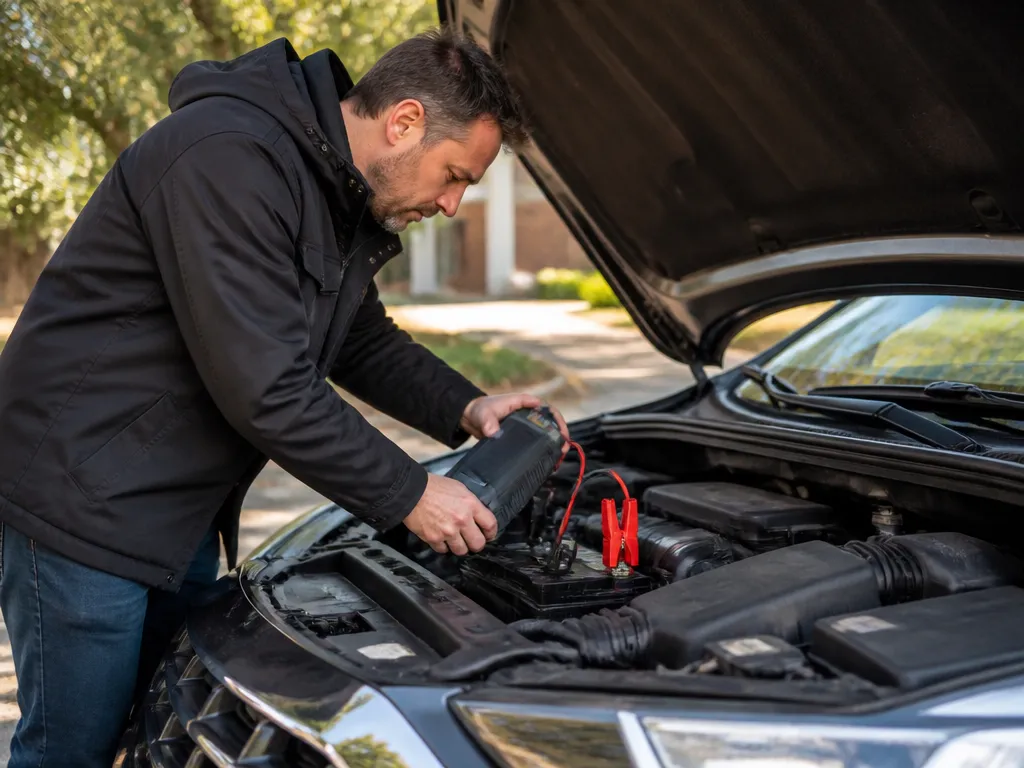
A jump starter should crank your engine reliably, not merely “work sometimes.” Price alone is a poor buying filter, and a vague “boosts any car” claim tells you very little. Start with your vehicle’s needs, then confirm that the listing provides useful specifications and clear compatibility information.
Before Black Friday deals disappear, collect three details: your vehicle’s fuel type and approximate engine size, how cold it gets where you park, and where you will store the jump starter. If you can provide only one detail to a clerk or product filter, use the engine type and rough size.
Check Ratings, Battery Chemistry, and Hardware
Jump starters deliver a high-current burst long enough to crank an engine. “Peak” numbers may be marketing figures, while “cranking” or “starting” ratings provide a more useful basis for comparison. If a listing does not clearly distinguish among these figures, you are gambling on the deal.
Lithium and lead-acid models also involve different trade-offs. Lithium jump starters tend to be lighter and often recharge more conveniently, but you still need to follow the charging instructions and temperature guidance. Lead-acid models can cost less, but they are usually heavier and more sensitive to storage conditions between uses.
Check the details people often ignore until the unit fails: clamp fit, cable length, charging method, and safety features such as reverse polarity protection. Confirm whether the package includes an AC wall charger, USB-C cable, or car adapter. Missing information is a reason to move on, not a reason to assume the product will be fine.
Seven Steps to Choose a Jump Starter
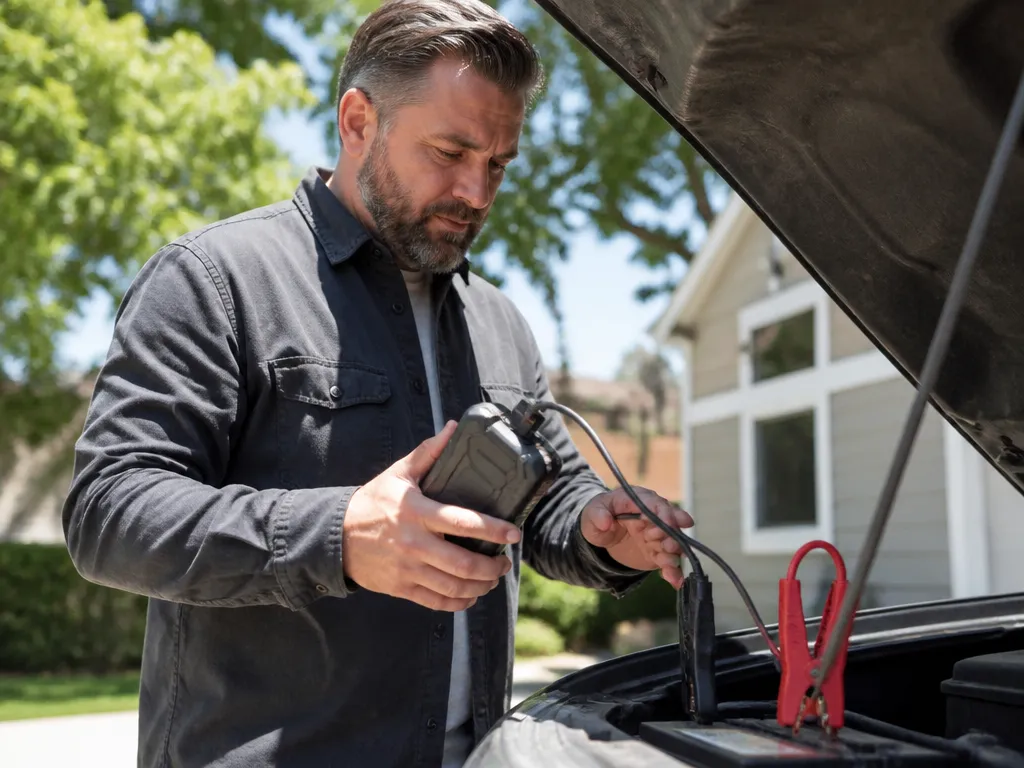
Follow this sequence and you will avoid 90% of bad deals.
- Find your vehicle’s engine and fuel type. Look for the engine displacement in your owner’s manual, such as 2.0L or 3.5L, and confirm whether the vehicle uses gasoline or diesel. Diesel typically needs more starting power than a comparable gasoline engine.
- Account for cold weather. If your area regularly drops below freezing, choose conservatively. Cold reduces a battery’s ability to deliver current, so a jump starter that works in mild weather may struggle in winter.
- Compare starting or cranking ratings. Use the clearly explained specifications identified above when comparing products.
- Verify the battery type and charging method. Choose lithium if you want a lighter unit and convenient recharge cycles, provided the manufacturer’s instructions are clear. Confirm whether you will use a wall outlet, USB connection, or car port, and check whether the necessary charger is included.
- Inspect the clamps and cables. Look for sturdy clamps, substantial cable construction, and enough lead length to reach the vehicle’s battery without forcing you to park awkwardly. Listings sometimes identify the cable gauge, but vague cable details should lower your confidence.
- Check safety and usability features. A clear power indicator, reverse polarity protection, and an on-device flashlight, if included, can make roadside use easier. They should support the starting function, not distract you from an undersized unit.
- Confirm the warranty and return policy. Black Friday deals may be final-sale purchases or have short return windows. If the warranty terms are unclear, treat that uncertainty as part of the price.
Example: Match the Starter to a Cold-Weather SUV
A gasoline 3.0L SUV in a region with regular sub-freezing temperatures needs more than the smallest jump starter that claims to “start most cars.” Choose a model whose stated cranking capability is comfortably above what that engine category requires, and confirm that it includes a charger or uses one you can easily obtain.
Screen Black Friday Listings for Usable Specifications
Treat the product page as a checklist rather than a sales pitch. Review the specifications, compatibility information, charger details, and return terms together instead of judging the discount alone.
Avoid one-size-fits-all claims. Vehicles differ in engine compression, starter load, and the condition of the installed battery. A jump starter that handles a compact sedan in spring may fail on a worn battery in a cold parking lot.

Helpful pick
NexCyber Car Battery Jump Starter with Air Compressor 6000A 160PSI, 12V Car Battery Booster Portable (10L Gas/8L Diesel), Jump Box with Tire Inflator, Jumper Cables, LED Light, User Manual
NexCyber lists clear 10L gas and 8L diesel limits, a manual, and charger details you can actually verify.
Use these filters while comparing deals:
- Readable specifications only. If the listing hides key details behind vague explanations, skip it.
- Lithium for lighter, quicker access. Lithium models suit people who want a unit they can store in a drawer and grab quickly, provided they follow the charging guidance.
- A realistic cold-weather fit. Do not assume “works in any weather” means the unit is ready for freezing conditions. Check the manufacturer’s temperature guidance when it is available.
- Convenient charging. If recharging is inconvenient, you may eventually store the unit uncharged. An uncharged jump starter cannot help during an emergency.

Helpful pick
TREKURE Portable Car Battery Jump Starter 4000A 16800mAh Jump Box, Car Battery Jumper Starter Portable Jumper Cables for car(8.0L Gas/6.5L Diesel), Fast Charge, Lights, Compact
A compact lithium unit with 16800mAh that suits drawer storage and quick grab-and-go access.
Keep the Jump Starter Ready After Buying
Buying the deal is only half the job. The unit must still be charged, stored correctly, and usable when your vehicle needs it.
Test the jump starter before the return window ends. Use the device’s lights or app status, depending on the model, to confirm that it is not already at a low charge. If it has a charge-level indicator, check it as soon as it arrives rather than waiting until an emergency.
Match storage habits to the battery chemistry. Lithium models usually benefit from periodic recharging according to the manufacturer’s guidance. Lead-acid models often need more attention to their storage state. Decide where the unit will live and how you will keep it charged before you put it away.
Keep expectations realistic. A jump starter is designed to start a vehicle, not to support repeated long cranks when the battery is deeply depleted. If the engine will not start after reasonable attempts, stop and reassess instead of overheating the unit or straining the starter.
| Option | What to prioritize | Best for | Common reason people regret it |
|---|---|---|---|
| Lithium jump starter | Clear cranking/starting rating, fast recharge | Most people who want lighter weight and quick readiness | Buying the cheapest option with vague peak-only specs |
| Lead-acid jump starter | Clear voltage and real starting capability, storage expectations | Budget-focused shoppers | Heavy unit that sits uncharged because it’s annoying to maintain |
| “Ultra-compact” portable boosts | Confirm real starting output and included charger | Compact storage needs | Underpowered units for cold weather or larger engines |
| Multi-functional models (USB, air compressor, etc.) | Safety features plus starting power first | Car owners who want one kit | Paying extra for extras while under-sizing cranking power |
Avoid These Black Friday Jump Starter Mistakes
The biggest mistake is choosing by headline price. A Black Friday discount helps only when the unit’s cranking capability and charging method suit your vehicle and routine. If the specifications are vague or inconsistent, do not assume the unit will work.
Do not ignore cold-weather readiness. A jump starter stored in a garage may face nearly the same cold as one stored outside. If your area gets hard freezes, the unit needs to remain suitable for that environment, not just for room temperature.
Check how the unit recharges before buying. A jump starter that requires a charger you do not have, or that arrives without a necessary part, can become useless on day one.
Finally, do not treat the jump starter as a permanent repair for a failing battery or alternator. It can get you moving, but repeated jump starts may hide the underlying problem and leave you stranded later.
Make the Final Pre-Purchase Check
Buy for the way you will handle a real emergency. If you expect to use the unit during winter storms, choose one that is easy to grab and recharge without complicated steps. If you park in a garage, keep it somewhere accessible with a straightforward charging routine.
Before clicking Buy, ask:
- Does the product explain how to recharge it, and is that charger included?
- Is the stated capability appropriate for your engine type – gasoline or diesel – and rough size?
- Are the safety and protection features described clearly?
- Can you return the unit if it fails your first readiness check?
Read reviews for the specific failure mode you want to avoid: “won’t crank in cold weather,” “weak clamps,” “won’t hold charge,” or “charger missing.” General praise is less useful than complaints about starting power and reliability.
Store the unit away from heat sources and secure it so it cannot bounce around and damage the clamps or cables. A jump starter that works on day one can become unreliable if its connectors bend or the clamps lose good contact.

Helpful pick
Portable Jump Starter with Air Compressor – 4000A Winter Car Battery Booster for SUVs & Trucks, Road Trip Essential with Tire Inflator & Power Bank for Interstate Travel
This winter-focused booster targets SUVs and trucks with a tire inflator, ideal for cold-weather emergency readiness.
FAQ About Best Jump Starter Black Friday Deals 2026
What should I look at first when choosing a jump starter Black Friday deal?
Start with your vehicle’s engine type and approximate size, then consider the temperatures where you park and how you will recharge the unit. Verify the charger, safety features, warranty, and return policy before buying.
How much starting power do I need for my car?
Use the vehicle’s fuel type – gasoline or diesel – and engine size from the owner’s manual as your baseline. Choose a jump starter with cranking capability comfortably above what you think you need, especially if temperatures reach freezing. Match the manufacturer’s stated capability to those vehicle and storage conditions.
Are lithium jump starters better than lead-acid ones?
Lithium jump starters are often lighter and easier to keep ready, which makes them appealing for home and emergency use. Lead-acid models can cost less, but they tend to be heavier and need more attention during storage and maintenance. In either case, the cranking rating and recharge method matter more than the battery label alone.
How do I use a jump starter safely for the first time?
Read the instructions for the exact model, then connect the clamps in the order the manual specifies, typically positive first and then ground. Make sure the clamps have solid metal contact, and keep the cables away from moving parts. Start the vehicle, disconnect the clamps in the reverse order listed, and recharge the jump starter before storing it.
What’s a common mistake people make when buying a jump starter?
A common mistake is choosing an inexpensive unit that arrives with an inconvenient or missing charger, so it sits uncharged. Another is failing to consider storage temperature or the return window. Check the included accessories, maintenance guidance, and return terms before purchase.
Disclosure: As an Amazon Associate, I may earn from qualifying purchases at no extra cost to you. Amazon and the Amazon logo are trademarks of Amazon.com, Inc, or its affiliates.
- Amazon, Amazon Prime, the Amazon logo and Amazon Prime logo are trademarks of Amazon. com, Inc. or its affiliates.

Hi, I am AKM Sad. I’m a car enthusiast and reviewer who loves exploring gadgets and accessories. I share honest reviews and practical tips to help you get the best products and enjoy a safer, smoother ride.


