Buying a tire inflator on Black Friday is simple until the fine print hits you. Some models top out at 100 PSI, some are built for car tires only, and a few “deal” inflators are slow enough that you will start rethinking your weekend. Narrow the choice down to four specs and most of the confusion disappears.
Tire inflator Black Friday deals compare best by matching (1) pressure range to your tire needs, (2) inflation speed for your tire sizes, (3) power source and hose length for your parking setup, and (4) accuracy and safety features like an auto shutoff. If you can’t confirm those four items from the listing, skip the deal.
Key Takeaways
- Match PSI range first. Pick an inflator rated above your max tire pressure, usually 40-60 PSI for passenger cars.
- Prioritize accuracy. A good gauge and stable readings matter more than a high “max PSI” number.
- Check power and reach. Use the right connector (12V car port or wall) and confirm the hose plus cord reach every tire.
- Look for real auto shutoff. Auto stop prevents overinflation and cuts the risk of heat buildup.
- Compare inflation time by size. A speed rating means nothing if it ignores your tire type and target PSI.
- Avoid vague listings. If specs like max PSI, flow rate, or duty cycle are missing, assume risk.
Write Down Your Tire Targets First
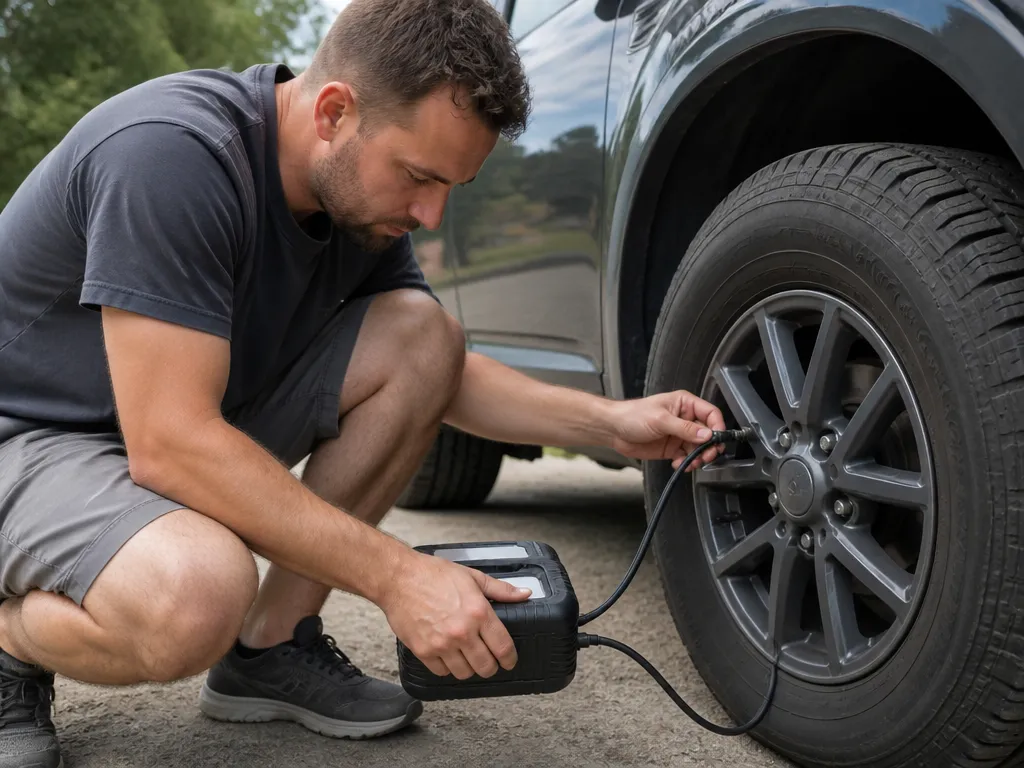
A Black Friday tire inflator deal is only a deal if it can reliably reach and hold the pressure you need on the tires you actually drive on. Start by writing down your tire requirements from the sidewall or the sticker in your car door jamb – the recommended PSI and the tire size (for example, 235/65R17).
Next, decide where you will use it. If you expect to inflate at home in a garage, cord length and storage matter. If you need roadside use, you care more about 12V compatibility, hose length, and how quickly you can reach target pressure without overheating.
Shopping online, treat every listing as incomplete until you confirm the key specs yourself. No exact current prices or model-specific deal numbers are available here, so verify today’s specs and warranty terms on each product page before you buy.

Helpful pick
AIRSURE Tire Inflator Portable Air Compressor, 150PSI Fast Inflation | Cordless Air Pump for Car Tires, Bikes, Motorcycles, Auto Shut-off, Digital Gauge & LED Light, Rechargeable Battery
Match its 150 PSI ceiling and auto shut-off against the exact target pressure you wrote down for each tire.
Max PSI Is Only Half the Pressure Story
Pressure capability is the first comparison point, because tires need a specific range and a high “max PSI” number alone can mislead. An inflator rated for 100-150 PSI might still be too slow or too inaccurate to get you reliably to, say, 38 PSI on a properly inflated tire.
Inflation method and speed come next. Some inflators are true-portable with built-in batteries, while others run off a car’s 12V outlet (cigarette lighter socket) for continuous power. If you drive an EV, a hybrid, or a car with limited outlet power, confirm the inflator’s power requirements and whether it can run long enough to fill larger tires.
Then compare the measuring and control features, because those decide safety and convenience. Look for an auto shutoff at a set PSI, a clear digital readout, and a way to stop inflation if the tire pressure does not climb as expected.
How to Compare Two Deals in Ten Minutes
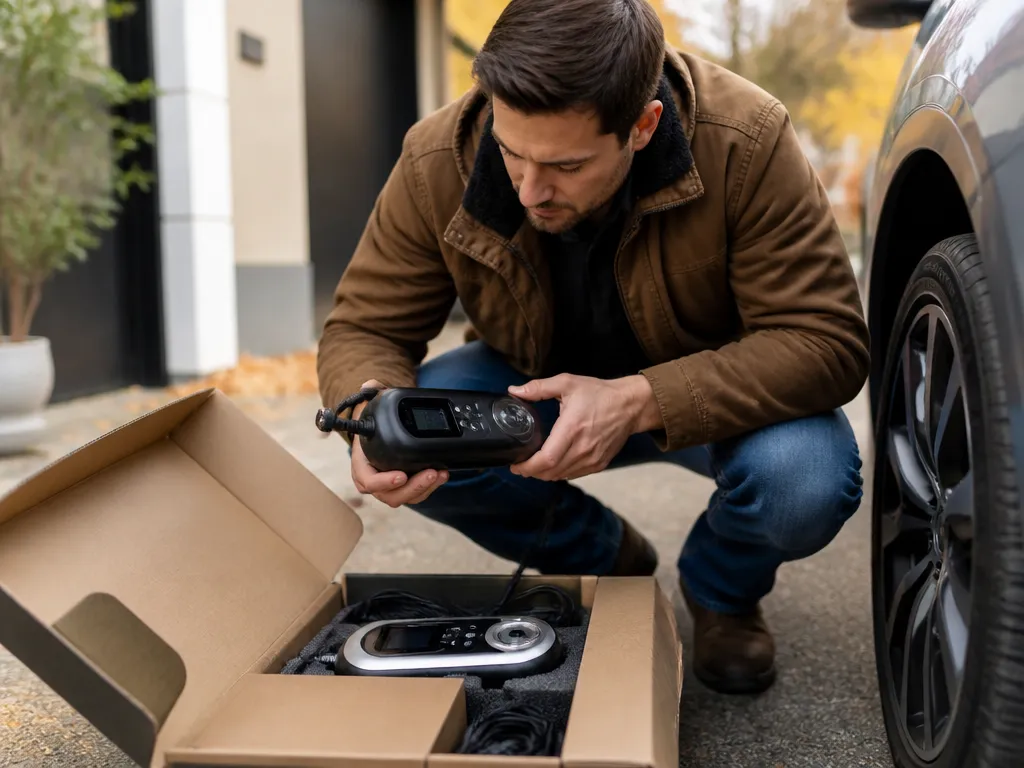
- Write down your tire targets. Find the recommended PSI and note your tire size for each vehicle you will inflate.
- Filter by pressure range. Only shortlist inflators whose max PSI rating comfortably exceeds your target pressure.
- Confirm power compatibility. Match the inflator to your available power: 12V car outlet, AC adapter, or battery system.
- Check hose and cord reach. Measure how far the connector and hose can reach from the outlet location to each tire.
- Verify accuracy and auto shutoff. Look for adjustable set-and-stop behavior, plus a reliable gauge (digital readout is common).
- Compare inflation performance honestly. Prefer listings that state inflation speed or airflow, and confirm those numbers apply to your tire size.
- Assess safety and durability. Look for thermal protection, sealed components, and a warranty long enough to matter.
- Price the whole setup. Compare what actually arrives – hose length, attachments, storage bag, warranty – not the sale price on the box.
Two inflators might both say “110 PSI max.” One offers accurate digital targeting and auto shutoff. The other shows a basic gauge and stops manually. That gap is the gap between “I fixed a flat in five minutes” and “I am guessing and hoping.”
Compare by Scenario, Not by Marketing
Skip the marketing phrases like “fast,” “heavy duty,” and “professional grade.” They tell you nothing. Compare every candidate against the same two targets: the PSI you need and the tire size you have.
Then compare by scenario. A roadside inflator for a compact sedan needs quick fills from a 12V outlet, stable readings, and enough reach to handle all four tires without repositioning the car. A home inflator for a large SUV or truck needs more run-time capacity and better heat handling if you are topping off multiple tires in one session.
Watch how the inflator behaves near the target PSI. Many units slow down as they approach the set point to avoid overshoot, and good ones keep readings stable while they do it. If the listing never explains the control behavior, assume you may have to check and correct manually.
Here is a comparison framework you can use while shopping:
| Inflator Type | Key Spec to Verify | Best For | Common Tradeoff |
|---|---|---|---|
| 12V car outlet (corded) | Supported tire PSI + auto shutoff | Quick roadside top-offs for one car | Outlet access, and longer run time can heat the unit |
| Battery-powered portable | Battery capacity and max PSI | When outlets are hard to access | Filling larger tires can drain the battery fast |
| AC plug inflator (wall) | Power requirements + long hose | Home use in a garage | Useless on the roadside with no power source |
| Hybrid (battery + 12V) | Both modes’ max PSI and runtime | Mixed use (home and travel) | Usually costs more, more components to manage |
Pick the right inflator by matching it to your environment, not by comparing raw max PSI. The deal that saves you time in your real life is the winner.
What to Require Before You Buy
Work through at least two options side by side with the same checklist, then verify the details in the specifications panel and the manual if it is posted. Skipping the first listing you find will usually pay off.
Set a minimum bar for safety and control. Require an adjustable set-to-PSI feature (or at least a clear auto shutoff) and thermal protection, because inflators often run for several minutes under load. Require a pressure gauge that updates clearly and is easy to read while you are kneeling at the tire.
Treat digital readouts as helpful, not automatically trustworthy. If the listing mentions calibration or an accuracy tolerance, that is a good sign. If it is silent, you can still buy the unit – just plan to cross-check with a separate tire gauge when you want hands-off certainty.
Read the warranty and return policy the way a rushed customer would. For roadside safety gear, coverage that matches your risk matters more than the few dollars you save upfront.

Helpful pick
Amazon Basics Portable Tire Inflator Air Pump Compressor, 12V, Digital Gauge, Auto Shut-Off, 9.8-Foot Cord, Universal Valve Connector, for Cars, Bikes, Sedans, Midsize SUVs
Sets a solid baseline for auto shut-off, digital gauge, and cord length before you compare any pricier inflators.
Mistakes That Ruin Black Friday Inflator Buys
Choosing on the highest “max PSI” number is the most common error. If the inflator reaches high PSI but fills your tire slowly or holds pressure inaccurately, you will still struggle at the exact moment you need it most.
Ignoring hose and cord reach runs a close second. Many inflators list a hose length but never show whether it reaches all four tires from your outlet location. Move the inflator between tires and you lose time – and roadside, you sometimes cannot move it safely at all.
Over-trusting vague “fast inflation” claims is another trap. Without measurable details like airflow or inflation speed at common target pressures, “fast” is just an adjective.
Do not skip the power reality check. If you plan to run a 12V inflator, confirm your vehicle’s outlet type and whether the unit’s expected runtime is realistic before it overheats.

Helpful pick
ZUZEE Tire Inflator Portable Air Compressor with Digital Gauge 150 PSI | 4X Faster Inflation, Air Pump for Car Tires with LED Light, Tire Inflator for Car, Moto, Bike, Ball, etc Black
Its 4X faster inflation and digital gauge directly counter the slow-fill and inaccurate-pressure mistakes this section warns about.
Faster Comparisons: Score Every Candidate
Score each shortlisted inflator out of 5 for the categories that matter most: pressure capability, control and accuracy, inflation time for your tire size (or at least airflow evidence), hose and cord reach, and safety features. Total the scores and the ranking sorts itself out.
For roadside use, weigh ergonomics too. A gauge that washes out in sunlight or a nozzle that is awkward to connect burns the minutes you were trying to save. Product pages that show the included adapters and how they fit your valve types are the ones worth trusting.
The inflator worth buying is the one you can use without frustration: enough reach to hit every tire, stable digital readings, and an auto shutoff so you do not overshoot while rushing.
FAQ Of Best Tire Inflator Black Friday Deals 2026
What should I compare first in a tire inflator Black Friday deal?
Start with the vehicle’s recommended tire pressure and the inflator’s performance at that target. A high maximum rating is not enough if the unit is slow or inaccurate at normal passenger-car pressures.
Are battery-powered tire inflators worth it for roadside flats?
Battery-powered inflators are worth it when you cannot rely on a 12V outlet, but you must verify runtime for your tire size. Many struggle on larger tires because the battery drains as the inflator works harder to reach higher pressures.
How do I know if a listing is accurate or just marketing?
Look for specific measurable details, like airflow or inflation time tied to pressure targets, plus clear auto shutoff behavior. If the listing only says “fast” and carries no meaningful specs like max PSI, airflow, or control features, assume you are taking an accuracy and performance gamble.
What’s the fastest way to compare two inflators side by side?
Put the candidates in a simple scorecard, check the specifications and manual, and compare their warranty and return terms before choosing the cheapest option.
What common mistake causes people to regret a Black Friday inflator purchase?
Buying on the lowest price or the highest max PSI alone. The regret usually comes from inadequate reach, no reliable auto shutoff, slow inflation on larger tires, or power compatibility issues that stop the unit from performing where you need it most.
A good next step: copy your tire PSI target and tire sizes into a short note, then shop by the confirmed specifications. Once two or three contenders pass that bar, compare warranty and total accessories – and only then pick the Black Friday deal.
Disclosure: As an Amazon Associate, I may earn from qualifying purchases at no extra cost to you. Amazon and the Amazon logo are trademarks of Amazon.com, Inc, or its affiliates.
- Amazon, Amazon Prime, the Amazon logo and Amazon Prime logo are trademarks of Amazon. com, Inc. or its affiliates.

Hi, I am AKM Sad. I’m a car enthusiast and reviewer who loves exploring gadgets and accessories. I share honest reviews and practical tips to help you get the best products and enjoy a safer, smoother ride.


