If you’re shopping Black Friday motor oil deals, you’re really choosing between high-mileage blends, full synthetics, and conventional oils. The listings below split on three things: what the oil is built to protect, how many miles it claims between changes, and which engine age it’s made for. Here’s how they land.
Best overall: Valvoline MaxLife 10W-30 — a synthetic blend with seal conditioners for engines past 75,000 miles, plus extra detergents that fight deposits and corrosion. Best full synthetic: Valvoline Advanced 0W-20 — built around cold-start flow and heat protection, with approvals covering Ford, Chrysler, and GM dexos 1 Gen 3. Best for heavy-duty protection: Castrol EDGE 5W-30 — the listing claims 20,000 miles between oil changes, or one year, whichever comes first.
The rest of this guide walks through each pick, who it suits, and what to check before you order.
How We Picked
Vague listings that leaned on marketing words without naming a single API or ILSAC standard didn’t make the cut.
High-mileage engines, cold climates, and older conventional-oil engines each ask something different from a motor oil, so the list follows those needs.
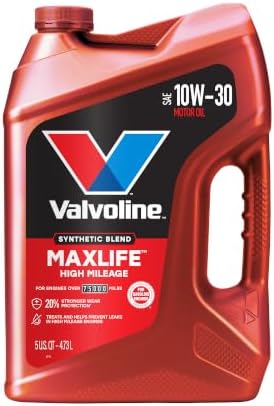
- For engines with 75,000 miles or more
- Seal conditioners help [prevent oil leaks
- 20% better](https://carsensorhub.com/how-to-change-oil-on-a-ford-f-250/) wear protection than industry standards
- 15% better sludge defense than industry standards

- Protects against wear, friction, heat and deposits
- 40% stronger wear protection than industry standards
- 15% better deposit defense vs. industry standards
- Up to 2.5X better heat protection vs. industry standards

- For vehicles with 75,000 miles or more
- Seal conditioners help prevent oil leaks
- 50% stronger wear protection than industry standards
- 20% stronger sludge defense than industry standards

- Phosphorus Replacement Technology helps extend emission system life
- Dispersancy fights sludge build up
- Oil burn-off protection exceeding industry standards
- Seal conditioners help reduce leaks

- 3X stronger than the leading full synthetic
- 10X better high stress performance
- 20,000 miles between oil changes

- 6X better wear protection than industry standards
- 1.3X better sludge protection than industry standards
- 3X stronger against viscosity breakdown than leading full synthetic
- Protection for 10,000 miles between oil changes

- Protection against viscosity and thermal breakdown
- Protection against engine sludge
- Premium base oils and anti-wear additives
- Helps minimize oil consumption
1. Valvoline MaxLife High Mileage 10W-30 Synthetic Blend Motor Oil 5
Best for: High-mileage engines past 75,000 miles
This is Valvoline’s synthetic blend built specifically for engines with 75,000 miles or more. The listing says it uses seal conditioners to help prevent leaks and reduce oil consumption — the two things that usually show up first on an aging engine. It also claims 20% better wear protection and 15% better sludge defense than industry standards.
In daily use, that means an engine that’s already burning a little oil between changes gets help holding on to it. The extra detergents target friction, corrosion, and deposits, which matters more on an engine that’s been running for years. It meets ILSAC GF-7A, API SQ, and API SP, plus Chrysler MS-13340.
This isn’t the pick for someone with a brand-new engine under warranty that calls for a specific full synthetic. The listing notes it works for new and rebuilt engines too, but the seal conditioners are aimed at older seals. If your car is still under a factory spec, check your manual first.
Pros
- Seal conditioners target leaks and oil consumption
- Meets ILSAC GF-7A and API SQ standards
- Works for high-mileage, new, and rebuilt engines
Cons
- Synthetic blend, not a full synthetic formula
- Aimed at 75,000+ mile engines, not new ones
2. Valvoline Advanced Full Synthetic SAE 0W-20 Motor Oil 5 QT
Best for: Cold-climate drivers wanting full synthetic protection
This is a full synthetic 0W-20 built around the four causes of engine breakdown the listing names: wear, friction, heat, and deposits. It claims 40% stronger wear protection, 15% better deposit defense, and up to 2.5X better heat protection than industry standards.
The 0W-20 grade is engineered for low-temperature flow, which cuts metal-to-metal contact during cold starts — the point where the listing says most engine wear happens. If you park outside in winter, that’s the number that matters most. It carries Ford WSS-M2C962-A1, Chrysler MS-13340, and GM dexos 1 Gen 3 approvals.
The listing doesn’t mention seal conditioners, so a car old enough to be seeping or burning oil is better served by the MaxLife line. Match the grade to your owner’s manual before anything else.
Pros
- Up to 2.5X better heat protection claimed
- Low-temperature flow for cold starts
- Meets Ford, Chrysler, and GM dexos 1 Gen 3 specs
Cons
- Only offered in the 0W-20 grade here
3. Valvoline MaxLife High Mileage Full Synthetic 5W-20 Motor Oil 5
Best for: High-mileage engines in colder weather
This is the full synthetic version of the MaxLife formula, aimed at the same 75,000+ mile engines but in a 5W-20 grade. The listing claims 50% stronger wear protection and 20% stronger sludge defense than industry standards, plus 2.5X better heat protection.
Compared with the 10W-30 blend above, this one steps up on the wear and heat figures and adds full synthetic base oil. The seal conditioners still target leaks, oil consumption, and fuel economy. It meets ILSAC GF-7A and API SQ, with Ford WSS-M2C960-A1 and Chrysler MS-13340 listed.
The 5W-20 grade flows better in cold weather than a 10W-30, so this suits a high-mileage car driven in winter. It’s not for a vehicle that specifies 10W-30 or 0W-20 — grade comes before brand. Check the cap or the manual first.
Pros
- 50% stronger wear protection claimed
- Full synthetic with seal conditioners
- Better cold-weather flow than a 10W-30
Cons
- Only suits engines calling for 5W-20
- No Ford WSS-M2C962-A1 approval listed
4. Castrol GTX High Mileage 5W-30 Synthetic Blend Motor Oil
Best for: Older engines with emissions concerns
This is Castrol’s high-mileage synthetic blend in 5W-30. Its standout claim is Phosphorus Replacement Technology, which the listing says helps extend emission system life — a real consideration on older cars where catalytic converters are already aging.
The rest of the formula targets the usual high-mileage problems: dispersancy that fights sludge, oil burn-off protection that exceeds industry standards, and seal conditioners to help reduce leaks. It also lists improved fuel economy in the 5W-20, 5W-30, and 10W-30 grades versus industry specifications.
In daily use, this suits a car with a tired engine and an emissions test on the horizon. It’s not the pick for someone chasing the longest drain interval — the listing makes no mileage-between-changes claim, so follow your manual. It meets API SP and ILSAC GF-6, plus Ford WSS-M2C946-B1 and WSS-M2C961-A1.
Pros
- Phosphorus Replacement Technology for emission systems
- Seal conditioners help reduce leaks
- Meets Ford WSS-M2C946-B1 and WSS-M2C961-A1
Cons
- No mileage interval stated on the listing
- Synthetic blend rather than full synthetic
5. Castrol EDGE 5W-30 Advanced Full Synthetic Motor Oil
Best for: Drivers who want long drain intervals
This is Castrol’s advanced full synthetic 5W-30, and its headline claim is 20,000 miles between oil changes, or one year, whichever comes first. That single figure changes how you own the product — fewer changes, fewer jugs, less time under the car.
The listing backs it with 3X stronger resistance to viscosity breakdown than the leading full synthetic, measured in the Kurt Orbahn test, and 10X better high-stress performance in the Seq IX test under high load. It exceeds API SQ, SP, SN PLUS, and SN, plus ILSAC GF-7 and GM dexos1 Gen 3.
That long interval only holds if your engine is in good shape and your driving isn’t all short trips. A high-mileage engine with leaks is better served by the MaxLife line, which lists seal conditioners. It also meets Chrysler MS 6395 and Ford WSS-M2C946-B1 requirements.
Pros
- 20,000 miles between oil changes claimed
- 3X stronger against viscosity breakdown
- Meets GM dexos1 Gen 3 and ILSAC GF-7
Cons
- Long interval suits healthy engines, not tired ones
6. Castrol GTX Full Synthetic 5W-30 Motor Oil
Best for: Budget-minded drivers wanting full synthetic
This is Castrol’s full synthetic GTX in 5W-30, and the listing leans on wear and sludge numbers rather than a long drain interval. It claims 6X better wear protection on critical engine parts than industry standards, plus 1.3X better sludge protection.
It also claims 3X stronger resistance to viscosity breakdown than the leading full synthetic, and protection for 10,000 miles between oil changes. That’s a shorter interval than the EDGE above, so if you drive a lot of miles each year, the difference shows up in how often you’re buying oil.
This suits a driver who wants full synthetic protection without paying for an extended-drain formula. It meets API SQ, SP, SN PLUS, and SN, plus ILSAC GF-7.
Pros
- 6X better wear protection claimed
- 10,000 miles between oil changes
- Full synthetic at the GTX level
Cons
- Shorter drain interval than Castrol EDGE
7. Castrol GTX 10W-30 Conventional Motor Oil
Best for: Older engines running conventional oil
This is the conventional oil on the list, in a 10W-30 grade. The listing keeps it simple: advanced protection against viscosity and thermal breakdown, superior protection against engine sludge, and premium base oils with anti-wear additives to help extend engine life.
It also says it helps minimize oil consumption. For an older engine that’s been running conventional oil its whole life, this is the straightforward choice — just the basics done well. It meets API SP, SN PLUS, SN, and SM, plus ILSAC GF-6.
This isn’t the pick for a modern engine that specifies a full synthetic, or for anyone chasing a long interval between changes. The listing states no mileage figure, so follow your owner’s manual. It’s for the car that’s been on conventional oil and is staying there.
Pros
- Conventional formula for older engines
- Anti-wear additives to help extend engine life
- Meets API SP and ILSAC GF-6
Cons
- No mileage interval stated on the listing
- Conventional oil, not a synthetic formula
Also Worth Considering
Valvoline 5W-30 Synthetic Blend Motor is the 5W-30 version of the MaxLife high-mileage blend. Same seal conditioners and the same focus on worn, leak-prone engines, just in a different grade — worth a look if your engine calls for 5W-30 rather than 10W-30.
Valvoline 5W-30 Synthetic SAE Motor is the Advanced full synthetic line in 5W-30. It carries the same wear, deposit, and heat claims as the 0W-20 above, so it suits a car that specifies 5W-30 and wants full synthetic protection.
Valvoline 10W-30 Full Synthetic Motor is the MaxLife high-mileage formula as a full synthetic in 10W-30. It pairs the seal conditioners with the stronger wear and heat figures, for a high-mileage engine that calls for 10W-30.
How to Choose Black Friday Motor Oil Deals
Which viscosity grade do I actually need?
Start with your owner’s manual or the oil cap — that number comes before brand, formula, or marketing. A 0W-20 engine and a 10W-30 engine need different oils, and no amount of marketing changes that. Once you know the grade, you can compare within it. The Valvoline Advanced 0W-20 and the Castrol GTX 10W-30 sit at opposite ends of this list, and neither is right for the other’s engine. Grade first, everything else second.
Does a high-mileage oil really help an older engine?
If your engine is well worn and uses oil or seeps a little, the seal conditioners in the MaxLife listings are aimed at exactly that. Both Valvoline MaxLife 10W-30 and Valvoline MaxLife 5W-20 list seal conditioners to help prevent leaks and reduce consumption. If your engine is newer and dry, you’re paying for a feature you don’t need. Match the oil to the engine’s condition, not to its age on paper.
What do the API and ILSAC standards on the label mean?
Those letters are the approvals your engine’s maker expects the oil to carry. API SQ and ILSAC GF-7A are the current gasoline categories named across these listings, and some oils add manufacturer specs like GM dexos1 Gen 3 or Ford WSS-M2C946-B1. The API’s engine oil licensing guide explains how the program works. Check your manual for the spec it requires, then confirm the jug lists it.
Is a conventional oil still good enough?
For an older engine that’s run conventional oil its whole life, yes — Castrol GTX 10W-30 covers the basics with anti-wear additives and sludge protection, and it meets API SP and ILSAC GF-6. What it doesn’t give you is a long drain interval or seal conditioners. If you want fewer oil changes, Castrol EDGE 5W-30 claims 20,000 miles. If your engine seeps, the MaxLife picks are the better fit.
Frequently Asked Questions
How much oil does a 5-quart jug actually cover?
Most four-cylinder and many six-cylinder engines take between four and five quarts with a filter change, so a 5-quart jug covers a typical fill. Larger V6 and V8 engines can take more, which means you may need a second container. Check your owner’s manual for the capacity with filter, and buy accordingly. Every pick on this list comes as a 5-quart jug, so plan around your engine’s listed capacity.
Do I need to change the filter at the same time?
Yes — a new filter goes in with every oil change, and it’s not included with any of these jugs. The filter traps the debris the oil carries, so leaving an old one in place undoes much of what fresh oil does. Buy the filter that matches your engine when you order the oil. It’s a small extra step that protects the engine the oil is meant to safeguard.
What happens if I use the wrong viscosity?
Using a grade your engine wasn’t designed for can affect oil pressure, fuel economy, and cold-start protection. A thicker oil than specified may not flow fast enough on a cold morning; a thinner one may not protect under load. The Valvoline Advanced 0W-20 and the Castrol GTX 10W-30 are built for different engines. Check the cap or manual, and don’t substitute.
Can I mix two different oils if I’m low?
Topping off with a different brand or grade in an emergency is generally better than running low, but it’s a short-term fix. The blend of two formulas won’t match either one’s claims, and the specs on the jug apply to that oil alone. Get to the correct grade at your next change. If your engine is using oil between changes, that’s a sign to look at a high-mileage formula with seal conditioners.
Conclusion
If you want one pick to start with, the Valvoline MaxLife 10W-30 covers the most common high-mileage case with seal conditioners and current API approvals. If your engine is newer and calls for full synthetic, the Valvoline Advanced 0W-20 is the one to check against your manual. Confirm your grade and spec first, then order.
Disclosure: As an Amazon Associate, I may earn from qualifying purchases at no extra cost to you. Amazon and the Amazon logo are trademarks of Amazon.com, Inc, or its affiliates.
- Amazon, Amazon Prime, the Amazon logo and Amazon Prime logo are trademarks of Amazon. com, Inc. or its affiliates.

I am Sadman, the founder of CarSensorHub.com, where I share my passion for cars and technology. I specialize in writing detailed reviews and helpful guides on car gadgets, accessories, safety tools and many more. My mission is to help car owners discover the best products and tips to improve their driving experience and stay safe on the road.


