Ford Ranger parking sensors are ultrasonic transducers mounted in the front and rear bumper covers, and they’re most useful when you’re creeping forward or reversing. If you’re trying to spot them for cleaning, troubleshooting, or replacement, you’ll find the sensors in the same places across most 2019-2023 trucks. This guide answers where they are on the Ranger and what to do next when one stops working.
Parking sensors on a Ford Ranger are installed in the front bumper cover and rear bumper cover, usually as small round “button” sensors. With the truck in reverse, the rear sensors are active, and at low speed moving forward, the front sensors are active. Most issues start from a sensor covered by grime, a damaged connector, or bumper changes like a grille guard.
Key Takeaways
- Front sensors location. They are mounted in the front bumper cover, typically aligned in a row.
- Rear sensors location. They are mounted in the rear bumper cover, also usually in a row of small round sensors.
- How they trigger. Reverse activates rear sensing, and slow forward driving activates front sensing.
- What blocks them. Bumper guards, modifications, or heavy dirt can stop sensors from reading.
- Calibration may matter. After replacement or body work, sensor alignment and calibration can be needed.
- Use the dash button. A parking aid button can toggle the system off and confuse diagnosis.
What to Know About where are parking sensors on F
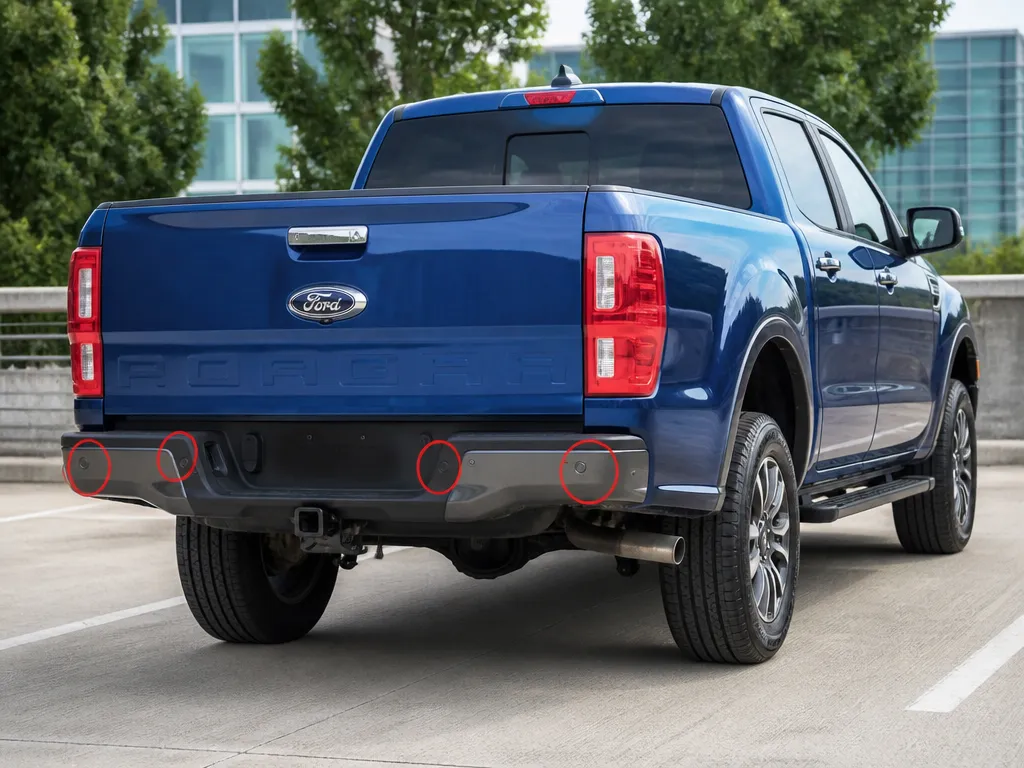
Parking sensors on a Ford Ranger are mounted in the bumper covers, not on the doors, tailgate, or frame rails. On 2019-2023 Rangers, you’re looking for small ultrasonic “dots” set into the plastic of both the front bumper and the rear bumper.
Functionally, the system is split by axle. When you shift into reverse, the rear sensors are the ones that matter, and when you drive slowly forward, the front sensors provide distance warnings.
In practice, the sensors themselves are easy to identify once you know what you’re scanning for. They look like small round faceplates flush with the bumper skin, often darker than the painted plastic depending on trim and sensor housing design. If your Ranger has been modified, those locations may still be the same, but the sensor field can be partially blocked.
Here’s the quick mental map I use: front bumper cover equals forward warnings, rear bumper cover equals backup warnings. If a problem only happens while reversing, don’t waste time inspecting the front sensor row.
💡 If your ultrasonic dots are damaged, these replacement sensors are a direct fit for 2019-2023 Ford Ranger bumper covers. REPAIROCK 4 Pcs Bumper Backup Parking Sensor for Ford for Ranger 2019-2023 Reverse Parking Assist Sensor No.HU5Z15K859CAPTM Black.
Things that matter most
If your Ranger isn’t warning you at all, the location is only half the story. A sensor can be physically present but still misread due to grime, moisture intrusion, a damaged wiring harness, or a blocked detection area.
A common real-world case is a grille guard or front protection that changes what the sensors “see.” Even when the sensor itself isn’t directly covered, the guard can alter the sensor’s line of sight or create false readings depending on how it sits relative to the bumper contours.
Tips for where are parking sensors on F
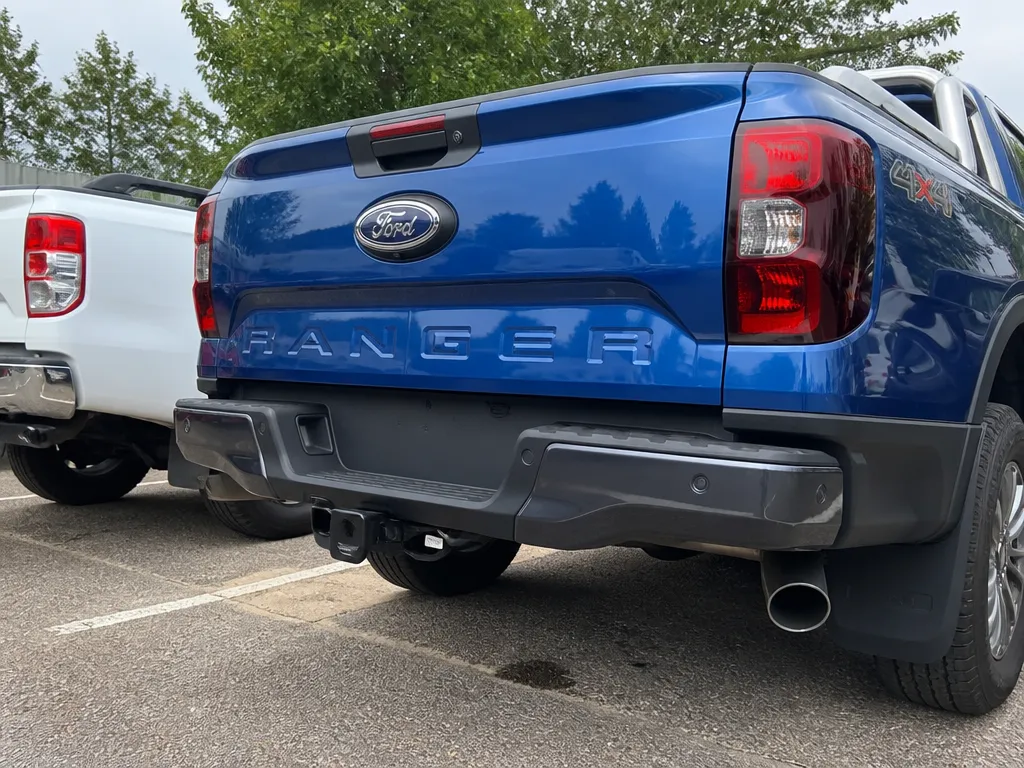
Use good lighting and inspect both bumper covers before you assume the system is broken. Park on level ground, turn the wheels straight, and look for small round sensor faces spaced along the bumper.
For cleaning, start gentle. Wipe the sensor faces with a clean microfiber cloth and mild soap, then dry them fully. Don’t scrub aggressively or use harsh solvents because you can haze the sensor surface or loosen grime further into the housing.
If you’re troubleshooting, verify the system is actually on before you start pulling anything apart. Many Rangers have a parking aid button on the instrument panel area near the hazard triangle region, and you can toggle the sensors off by pressing that button until the system shuts down.
Also, check for bumper modifications and alignment changes. For example, if you installed a grille guard, bull bar, or aftermarket bumper cover, compare the installed sensor positions against the factory bumper skin, especially the spacing and angles.
Here’s a practical way to diagnose “dead sensor vs blocked system” without guesswork. Clean all sensors, then do a slow test: back up toward a wall and watch if every spot near center and outer edges triggers. If only one area fails, that points back to that sensor or its wiring much more than to a system-wide setting.
- Carry out a quick sensor sweep. Wipe every visible front and rear sensor face, then test again.
- Confirm the parking aid mode. Press the parking sensor button until the system toggles off, then back on, and re-test.
- Inspect for physical damage. Look for cracks, pushed-in sensors, or bumper covers that were replaced poorly.
- Check harness wear points. Follow wiring along the bumper edge for pinch points after any repair.
- Don’t ignore calibration. If you replaced sensors or the bumper, recalibration helps avoid distance errors.
Benefits of where are parking sensors on F
Knowing where the sensors are helps you fix the right problem fast. Instead of guessing, you can visually inspect the actual ultrasonic “dots” in the front and rear bumper covers for dirt, damage, and misalignment.
It also helps you decide what to do about false alarms. If the warnings trigger only when something is nearby, the problem is often that a guard, accessory, or bumper contour is interfering with the sensor’s detection zone.
For day-to-day driving, the placement is what makes the system reliable. Front and rear sensor rows give the Ranger coverage across the most common parking situations, from parallel parking clearance to backing into a driveway.
It’s also useful for owners who modify trucks. If you install tow hardware, guards, or aftermarket bumpers, you can plan around the sensor locations so you don’t end up with permanently blocked sensing surfaces.
Finally, clear sensor location knowledge reduces repair costs. Shops charge less when you can confirm the likely sensor row and the affected corner, and you avoid replacing the whole module when a single sensor is the culprit.

Helpful pick
A-Premium 4-Pack Front Inner & Outer Parking Assist Sensor Retainer Bezels
If you are inspecting your sensors for misalignment, these retainer bezels help secure the sensors properly within the bumper cover.
Options for where are parking sensors on F
When you’re trying to solve a “where are they, and what do I do” problem, your options fall into two buckets: visual inspection and system-level troubleshooting. Where the sensors are mounted determines which tools and parts you need.
Option 1 is owner-level inspection. You clean the sensor faces, check for obvious damage, and confirm the parking aid button mode. This is usually enough if the issue is dirt, temporary blockage, or a changed accessory fitment.
Option 2 is targeted replacement of a sensor or harness section. If one corner of the bumper never triggers, you often end up replacing only the affected sensor rather than the entire sensor kit. Replacement guides for 2019-2023 Rangers typically focus on matching the correct sensor for the bumper location so wiring and connector type match.
Option 3 is repair of the bumper cover or mounting points. If the bumper was removed for body work and reinstalled with slight misfit, the sensors can end up angled or spaced differently than expected. That’s where sensor alignment and calibration become relevant after repair.
Option 4 is professional diagnosis with scan tools or wiring checks. If cleaning and obvious inspection don’t solve it, a tech can test sensor circuits, identify shorted or open connectors, and confirm whether the parking aid control unit is reading inputs correctly.
Here’s how I’d pick between those options based on what you’re seeing:
| What you notice | Most likely issue | Best option to try first |
|---|---|---|
| No warnings at all (front or rear) | System toggled off or control issue | Confirm parking aid button state |
| Warnings work forward but not reverse | Rear sensor row issue | Inspect and clean rear sensors |
| Warnings work except one corner | One sensor or harness | Replace that sensor, then retest |
| Warnings start after grille guard or bumper install | Blocked detection zone | Adjust accessory fitment or replace incompatible parts |
| Warnings are erratic after repair | Sensor alignment/calibration | Have calibration/alignment checked |

Helpful pick
A-Premium 4-Pack Rear Inner and Outer Parking Assist Sensor Retainer Bezels
When troubleshooting your parking system, replacing damaged retainer bezels ensures your sensors remain correctly positioned for accurate obstacle detection.
Expert Advice on where are parking sensors on F
If you want the fastest path to “it works again,” treat sensor location like an investigation, not a scavenger hunt. On the Ranger, the sensors are on the front and rear bumper covers, so your first step is always a visual and tactile inspection of both rows.
When you find a sensor face that looks different, don’t assume it’s fine. Look for cracks, paint overspray, dents around the sensor pocket, and anything that changes the smooth bumper contour around it. A sensor that sits slightly proud or recessed can read differently.
Second, isolate whether the issue is front-only, rear-only, or system-wide. Shift into reverse for rear testing, then perform a slow forward approach for front testing. That simple split saves hours of unnecessary parts swapping.
Third, don’t ignore modifications. If you have a grille guard, bull bar, or aftermarket bumper, compare clearance around the sensor faces to the factory bumper reference. A guard can change how the ultrasonic wave reflects, especially if it sits too close.
Last, after any sensor replacement or bumper work, get the system checked for correct behavior. Sensor calibration and alignment matter because the Ranger is trying to interpret distance using known sensor positions and angles. If you skip that step, you can end up with warnings that are consistently off.

Helpful pick
XQSMWF Front Parking Aid Sensor Compatible with Ford Ranger 2019 2020-2023
During your visual inspection, if you identify a failed front sensor, this compatible replacement part is designed specifically for your Ranger.
where are parking sensors on F?
In practice, most owners find their Ranger’s rear sensors first because they’re obvious when you stand behind the truck. They’re placed in the rear bumper cover in a small row of sensor faces, and you’ll typically feel them by running a fingertip along the bumper skin where the dots are embedded.
For example, if your reverse warnings fail only when backing into a tight spot, start by cleaning the rear sensor faces and testing again. Dirt can stick around the sensor pocket area, and once the sensors are clean, the system often returns to normal without any parts.
Another common scenario is a sensor that reads incorrectly after an accessory install. For instance, after installing a grille guard, some drivers report uneven behavior where only certain front sensors appear to trigger differently. In that case, the sensor location is still correct, but the guard is likely interfering with the sensor field.
For a “repair shop” scenario, imagine you replaced a rear bumper cover after a scrape. If the sensors were reinstalled but the warnings became noisy or inaccurate, calibration and alignment are the next place to look, because the sensor positions relative to the bumper surfaces matter for consistent distance readings.
FAQ
Where are the parking sensors on a Ford Ranger?
Parking sensors on a Ford Ranger are mounted in the front bumper cover and rear bumper cover as small round ultrasonic sensor faces. When you shift into reverse, the rear sensor row is the one that’s active for distance warnings. When you drive slowly forward with the system enabled, the front sensor row is active.
What year Ford Ranger has these same sensor locations?
The bumper-mounted front and rear sensor layout is common across 2019-2023 Ford Rangers. If you have a later or earlier model, the exact number of sensors and their spacing can vary by trim and package, but the sensors still mount into the bumper cover rather than the door or bed.
How do I turn off the Ford Ranger parking sensors?
You can toggle the parking aid system using the parking sensor button on the dashboard area near the hazard triangle region. Press and hold or press repeatedly until the system turns off, then confirm by the instrument display behavior. If it’s off, the warnings won’t respond even if the sensors are physically intact.
Do parking sensors need calibration after replacement?
Yes, sensors may need calibration after sensor replacement or bumper repair so their positioning and detection readings match the expected setup. If you replaced a sensor, did bumper work, or changed bumper covers, have the system checked rather than assuming it will self-correct perfectly.
Why do my Ford Ranger parking sensors stop working after adding a grille guard?
A grille guard or bumper accessory can block or alter the sensor’s detection zone even if the sensor faces are still visible. The guard can change how ultrasonic reflections return to the sensor, causing missing warnings or false alerts. Test again after cleaning and, if needed, adjust or refit the accessory for clearance.
A Ranger’s parking sensors are right where you’d expect them, in the front and rear bumper covers. Clean the sensor faces, verify the parking aid button is on, and use reverse-only vs forward-only testing to pinpoint whether the problem is front sensors, rear sensors, or a blocked detection zone.
Disclosure: As an Amazon Associate, I may earn from qualifying purchases at no extra cost to you. Amazon and the Amazon logo are trademarks of Amazon.com, Inc, or its affiliates.
- Amazon, Amazon Prime, the Amazon logo and Amazon Prime logo are trademarks of Amazon. com, Inc. or its affiliates.

Hi, I am AKM Sad. I’m a car enthusiast and reviewer who loves exploring gadgets and accessories. I share honest reviews and practical tips to help you get the best products and enjoy a safer, smoother ride.