BMW Park Distance Control (PDC) uses ultrasonic sensors in the front and rear bumpers. A “parking sensor fault” usually means one sensor is dirty, misaligned, damaged, or unable to communicate because of a wiring problem. A software glitch or reset may also be responsible, especially after battery work or electrical maintenance.
Start by cleaning the sensor faces, then reset the PDC using the button or iDrive sequence for your BMW. Test the system while reversing at low speed. If the warning remains or the car produces no beeps, scan the PDC system before replacing parts. A sensor replacement often costs $100 – $300 per sensor in the United States.
Key Takeaways
- Clean the sensor faces first. Dirt around the sensor edge can distort ultrasonic readings and trigger false alerts.
- Reset the PDC system. A reset can clear software glitches or misreadings after battery work or electrical maintenance.
- Use OBD-II when the fault persists. A scan can identify the affected sensor or wiring circuit instead of leaving you to guess.
- Read the symptom pattern. Continuous beeping often points to misalignment, while no alerts can indicate a failed sensor or circuit.
- Plan for repair costs. Sensor replacement commonly runs $100 – $300 per sensor, depending on the BMW model and parts pricing.
- Escalate when needed. If cleaning and resetting do not help, wiring repair is a frequent next step and often costs $50 – $150.
What a BMW PDC Fault Means
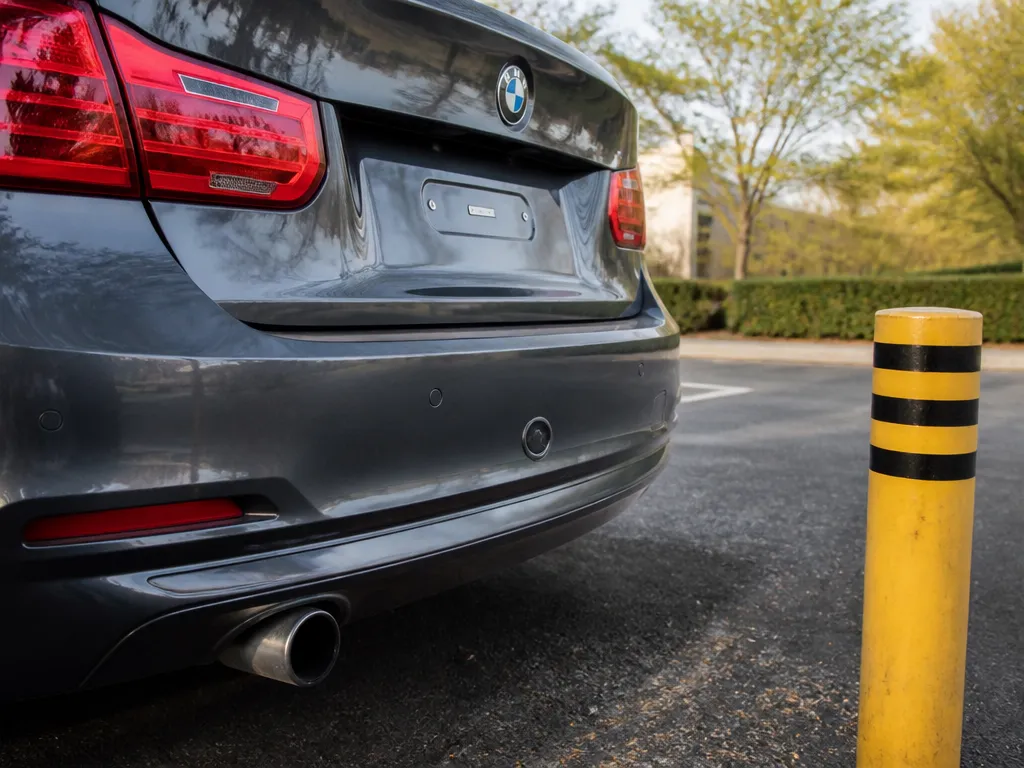
A BMW parking sensor fault appears when the Park Distance Control system cannot get accurate distance readings from one or more ultrasonic sensors. The sensors send and receive sound waves through the front and rear bumpers, and the car turns the returning echoes into warning tones and distance graphics. If one sensor reports an implausible reading, BMW may warn you, disable the alerts, or produce inconsistent beeps.
The most common symptoms are continuous beeping, random warnings, or no warnings at all while reversing. Continuous beeping with no nearby obstacle often points to a sensor that has shifted or become misaligned. No alerts at all can indicate a failed sensor, damaged wiring, or a PDC system that has shut itself down.
Physical conditions also affect PDC. A light bumper impact can move a sensor without leaving obvious damage. Road grime, wax, or residue around the sensor rim can distort the ultrasonic signal. If the fault appeared after body work, bumper removal, a battery replacement, or other electrical work, that timing provides a useful clue.
A warning does not automatically mean a hardware failure. BMW PDC can also develop a software-related fault after electrical maintenance.
Match the Symptom to the Likely PDC Fault
The first decision is whether the problem looks like contamination or misalignment, or whether it points to a sensor, wiring, or module fault. Dirt around the sensor edge is common, and even a minor bumper contact can change the sensor angle enough to cause trouble.
| Symptom | Primary Suspect | Likely Difficulty (1-5) |
|---|---|---|
| Continuous beeping | Sensor misalignment | 3 |
| Inconsistent alerts | Wiring issues | 4 |
| No alerts | Faulty sensor | 5 |
| Dashboard warning | Software glitch | 2 |
A dashboard warning with otherwise unusual beeps makes a reset a reasonable first step. Continuous beeping with no nearby object calls for an inspection of sensor alignment and the bumper for impact damage. Random or inconsistent alerts make wiring more suspicious, especially after bumper work, a wash that left water near the sensors, or battery and electrical service.
No alerts is the symptom most likely to lead to unnecessary parts replacement. An OBD-II scan can help identify whether the problem involves a sensor signal, range, wiring continuity, or the PDC module.
Test under consistent conditions. PDC responds at low vehicle speeds, and ultrasonic sensors behave differently around angled, wet, muddy, or highly reflective surfaces. Reverse slowly in an open area toward a solid object, such as a post, rather than testing immediately after a rough wash cycle or against a complicated wall of obstacles.
How to Clean and Reset BMW Parking Sensors
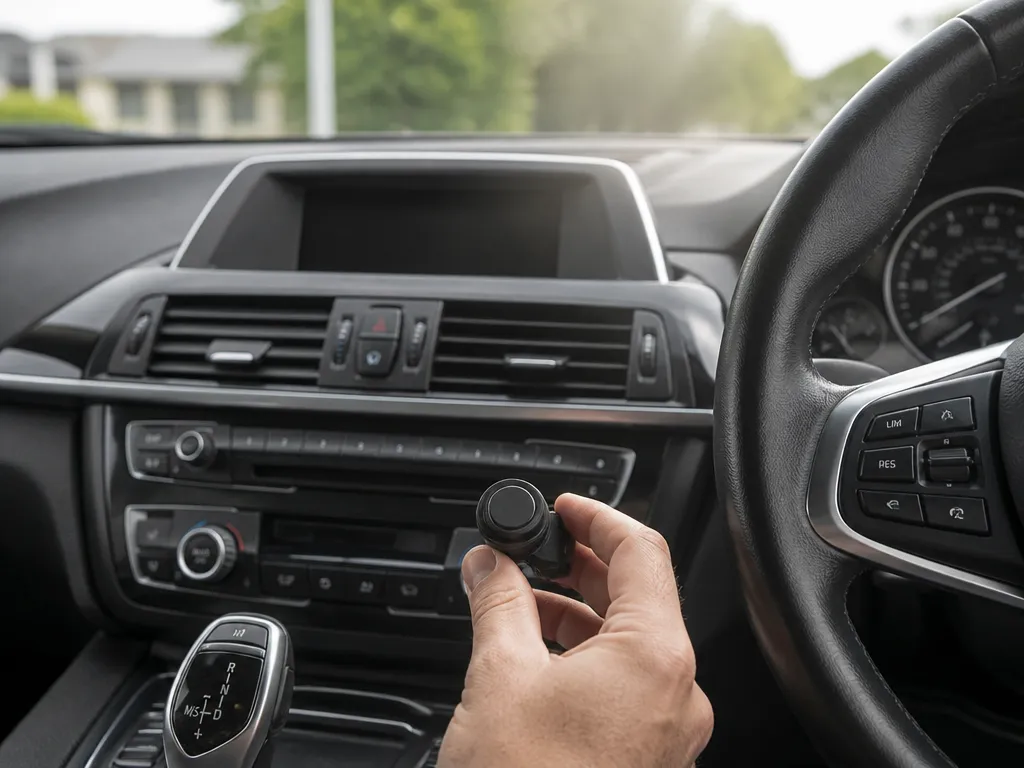
Cleaning fixes some real-world PDC faults quickly. Use a clean microfiber cloth and gentle, car-safe cleaner on the sensor faces at both ends of the vehicle if the fault is not limited to the front or rear. Wipe around the sensor rim as well as the center. If the problem started after a car wash, remove any residue that may have collected along the edge.
Next, perform a reset that matches your BMW’s equipment. A commonly used button procedure is:
- Turn the vehicle on and activate the PDC system.
- Press and hold the PDC button for about 10 seconds.
- Wait for the PDC indicator to begin flashing.
- Release the button when the flashing stops.
- Turn the ignition off and back on.
- Reverse slowly and check for normal warning tones and indicator behavior.
The exact procedure can vary by model and equipment. Vehicles with iDrive may provide a PDC reset sequence through the parking-assistance menus. A typical workflow is to power the system down, open the PDC controls, perform the reset, confirm the reset status, and then test the car. Do not skip the confirmation step. Some BMWs briefly clear the warning and then display it again when the underlying sensor reading remains faulty.

Helpful pick
4Pcs Front and Rear Bumper Parking Assist Aid Sensor for BMW
Replace dirty or damaged sensors with this complete set of front and rear bumper parking assist aids.
Use this order when testing:
- Clean the sensors again if residue or moisture is still present.
- Reset the PDC system.
- Reverse slowly in an open area toward a consistent nearby object, such as a post.
- Repeat the test after one drive cycle if the fault appears intermittently.
If the warning returns, stop repeating the reset. Scan for PDC-related codes and record the sensor position identified by the scanner. If the tool does not provide a location, the code may still indicate whether the problem involves a sensor signal, range, wiring continuity, or a module-side fault.
For continuous beeping, inspect each sensor from the front and side. Look for a cracked face, an uneven gap, or a sensor that sits at a different angle from the others. A sensor may be re-seated if it has shifted, but a cracked or internally damaged unit will usually need replacement.
Why a Methodical PDC Check Saves Money
Recording the exact symptom makes diagnosis more precise. Continuous beeping, inconsistent alerts, no alerts, and a dashboard warning do not point to the same repair. That distinction helps a technician focus on the correct sensor, connector, wiring circuit, or module instead of testing or replacing components at random.
A working PDC system also gives you more dependable low-speed parking assistance. A failed sensor can remove or distort warnings near obstacles, changing how you judge a gap. PDC is an aid rather than a substitute for mirrors, camera views, and direct observation, but it still needs all of its sensors operating correctly to be trustworthy.
The likely cost categories are straightforward:
- Sensor replacement: $100 – $300 per sensor
- Wiring repair: $50 – $150
- Diagnostic service: $100 – $200
If the warning began after a battery replacement or electrical work, a reset may clear the fault without further repair. If cleaning and resetting fail, paying for a targeted diagnosis is usually better than ordering several sensors and hoping one fixes the problem.
Four Ways to Fix a BMW Parking Sensor Fault
DIY cleaning and reset
This is the best first step for a dashboard warning, false alerts, or a problem that appeared after a wash or battery work. Clean the relevant sensor faces, complete the PDC reset, and test while reversing. If the warning clears and the beeps behave normally, no further action is needed.
Visual inspection
Inspect the sensors yourself when one looks cracked, sits unevenly, or may have been struck with the bumper. You can also look for an obvious connector problem if access is straightforward. This check will not replace a wiring diagnosis, but it can tell you whether a sensor has visible damage or has shifted in its mount.
OBD-II diagnosis and targeted repair
If the fault remains after cleaning and resetting, scan for PDC-related codes. A useful code can identify the failed sensor or narrow the problem to a wiring circuit. This approach is particularly valuable when alerts are inconsistent, because wiring faults can be intermittent and may not be obvious from the outside.
Professional diagnosis and replacement
A shop is usually the efficient choice when there are no alerts at all, the warning returns after every reset, or scan results point to wiring or a module fault. Typical estimates include:
| Service Type | Estimated Cost |
|---|---|
| Sensor replacement | $100 – $300 per sensor |
| Wiring repair | $50 – $150 |
| Diagnostic service | $100 – $200 |
For many BMW owners in the United States, the practical compromise is to clean and reset the system at home, then pay for diagnosis only if the fault persists. That keeps the repair bill connected to a confirmed cause rather than guesswork.

Helpful pick
A-Premium Parking Assist Sensor Compatible with BMW
A reliable and compatible parking assist sensor option to help resolve common BMW PDC system errors.
BMW PDC Faults That Deserve Extra Attention
Intermittent faults deserve a written note about when they occur. Record whether the warning begins after a car wash, during cold or damp conditions, or after driving over bumps. That timing can point toward sensor contamination, moisture near a connector, or a wiring break that opens when the car vibrates.
Use the symptom to choose the next repair step. No alerts raises the likelihood of a failed sensor or circuit. Inconsistent alerts make wiring more suspicious, particularly when the problem began after bumper work or electrical service. Continuous beeping with no obstacle makes sensor alignment and bumper damage worth checking first.
Avoid testing in a cluttered parking area. Ultrasonic sensors may respond poorly to angled surfaces, thin objects, or sound-absorbing materials. A straight-line test toward a solid post or wall at a consistent distance produces a clearer result.
BMW Parking Sensor Fault
A 2018 BMW owner may find that the rear sensors beep continuously while backing out of a driveway, even though nothing is close. Cleaning the sensor faces makes no difference. An inspection then reveals that one sensor sits slightly off-center after a minor bumper impact. Re-seating or correcting the alignment can restore normal PDC operation, which fits the continuous-beeping symptom.
Another BMW owner may see a dashboard warning after a battery replacement while the PDC beeps remain inconsistent for a day. A proper reset using the PDC button sequence – pressing and holding for about 10 seconds until the flashing behavior changes, then cycling the ignition off and on – may clear the warning and restore consistent alerts. That pattern fits a software-related fault rather than a failed sensor.
False warnings that appear after washing the car and return in damp weather point toward moisture, residue, or contamination around the sensor edges. Thoroughly cleaning and drying the sensors may restore stable readings. If the fault returns quickly, the connectors and wiring deserve inspection.
If the rear PDC produces no alerts at all after cleaning and resetting, a failed sensor or rear wiring circuit becomes more likely. An OBD-II scan can identify the affected sensor position before you order parts or pay for replacement.
Inconsistent alerts after bumper or electrical work also point toward wiring. If one side warns early, the other warns late, and the behavior changes with vibration, a shop should check connector integrity and wiring continuity before replacing sensors at random.

Helpful pick
66209261582 4-Piece Rear PDC Sensors Compatible with BMW 2 3 4
Fix continuous beeping issues with this four-piece set of rear PDC sensors compatible with BMW 2, 3, and 4 series.
FAQ
What does “parking sensor fault” mean on a BMW?
It usually means the Park Distance Control (PDC) system cannot read one or more ultrasonic sensors accurately. You may see a dashboard warning, hear no beeps, or receive inconsistent alerts while reversing.
Can I reset BMW parking sensors myself?
Many BMWs allow a DIY PDC reset through the PDC button, iDrive, or both. A commonly used method is pressing and holding the PDC button for about 10 seconds until the indicator flashes, then releasing it when the flashing stops. Turn the ignition off and back on, then reverse slowly to confirm that the beeps are normal.
How much does it cost to fix a BMW parking sensor?
Typical estimates are $100 – $300 per sensor for replacement, $50 – $150 for wiring repair, and $100 – $200 for diagnostic service. The total depends on whether the fault involves one sensor, multiple sensors, damaged wiring, a module, or labor time.
Is a parking sensor fault dangerous?
It can create a safety risk at low speed because PDC may remove or distort warnings near obstacles. You can still park, but drive slowly and rely on mirrors and camera views if equipped. Keep extra clearance around thin objects such as poles and curbs, which sensors may not detect consistently.
What is the most common mistake people make?
The most common mistake is skipping basic checks and replacing parts immediately. Dirt or residue around the sensor edge can cause false warnings, while faults that remain after a reset may require diagnosis.
Disclosure: As an Amazon Associate, I may earn from qualifying purchases at no extra cost to you. Amazon and the Amazon logo are trademarks of Amazon.com, Inc, or its affiliates.
- Amazon, Amazon Prime, the Amazon logo and Amazon Prime logo are trademarks of Amazon. com, Inc. or its affiliates.

Hi, I am AKM Sad. I’m a car enthusiast and reviewer who loves exploring gadgets and accessories. I share honest reviews and practical tips to help you get the best products and enjoy a safer, smoother ride.