“Parking sensor error” usually means the car cannot confirm that one or more sensors are working or reading clearly. Start with the safe, simple checks: clean the sensor faces, remove anything near the bumper, and look for damage or signs of recent bumper work. Restart the car and test it in an open area. If the message returns, inspect the wiring and have the vehicle scanned rather than replacing parts at random.
Parking sensor errors commonly come from blocked or dirty sensors, bumper damage, wiring faults, or radar and camera calibration problems on newer vehicles. A trailer hitch, bike rack, mud, ice, or even a wax film can interfere with readings. If the warning appears with brake, collision-avoidance, or other driver-assist alerts, stop treating it as a minor parking-system issue and arrange professional diagnostics.
Quick Takeaways
- Check for recent bumper impact. Even a minor scrape can crack a sensor mount or disturb its wiring.
- Remove potential obstructions. Trailer hitches, bike racks, and tight parking spaces can cause false readings.
- Inspect the sensor area. Look for bent tabs, loose plugs, or missing sensor clips near the bumper.
- Do not guess on calibration. Camera or radar service may require calibration before the alerts will clear.
- Stop if warnings stack up. Multiple safety warnings, exposed wiring, or fresh bumper damage call for professional help.
What a Parking Sensor Error Means
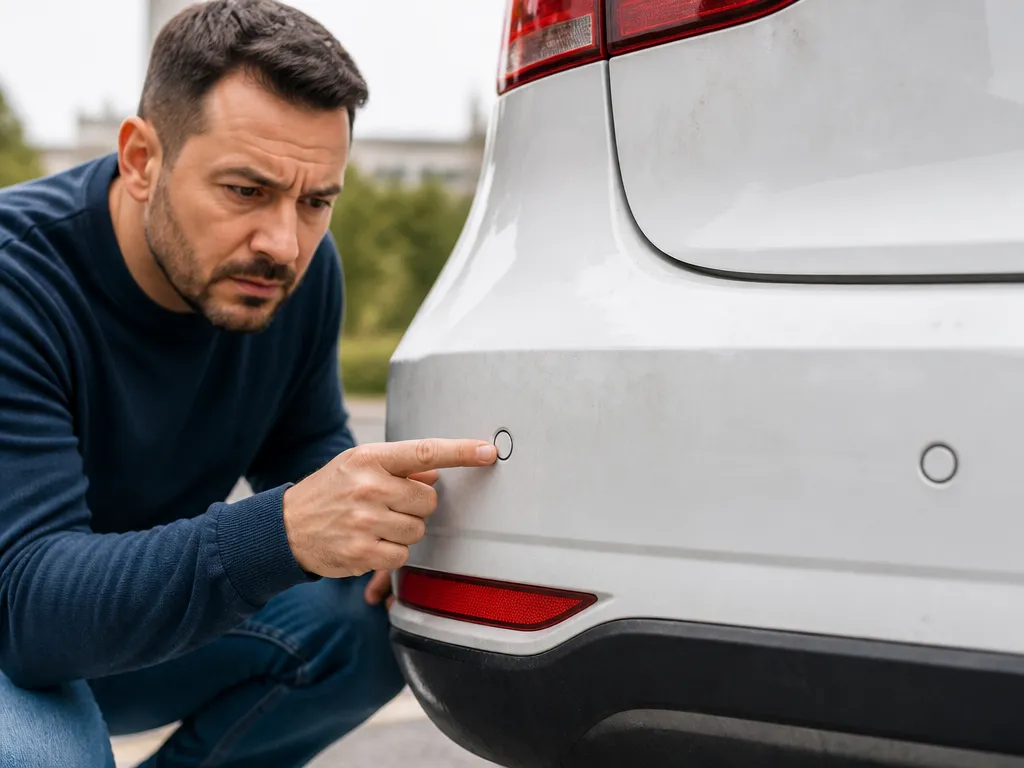
A parking sensor error message means the car cannot read one or more sensors correctly, or it detects abnormal conditions around them. The warning may appear when the system finds a sensor fault, a blockage, or an internal malfunction. It may disappear temporarily after you drive or cycle the ignition, but that does not prove the problem is fixed.
The sensors may still be healthy. Grime, ice, mud spray, or a bumper cover that shifted after an installation or impact can block or distort their readings. A recurring warning after careful cleaning points more strongly to a damaged sensor, wiring problem, connector fault, or control-module issue.
Use the Symptoms to Narrow the Cause
Treat the message as a diagnostic clue. The timing and circumstances often tell you whether the problem is temporary contamination or a fault that needs repair.
- Timing: Does it appear immediately when you select reverse, or only after driving over rough roads or through wet conditions?
- Reproducibility: Does it happen every time, or only occasionally?
- Recent events: Did you wash the car, replace a bumper, install a hitch, or scrape a curb?
- Other warnings: Do you also see “brake assist,” “collision avoidance,” or “park assist unavailable”? Those warnings may point to radar or camera systems beyond the ultrasonic parking sensors.
A message that appears after rain and disappears once the bumper dries suggests moisture or contamination. A warning that returns every time you reverse, especially after an impact or bumper repair, deserves a physical inspection and likely a scan.

Helpful pick
A-Premium Rear Parking Assist Sensor Compatible with Chevy, GMC & Cadillac
Once you have diagnosed the specific sensor causing your error message, this direct-fit replacement part can help resolve the issue effectively.
Quick Fixes to Try First
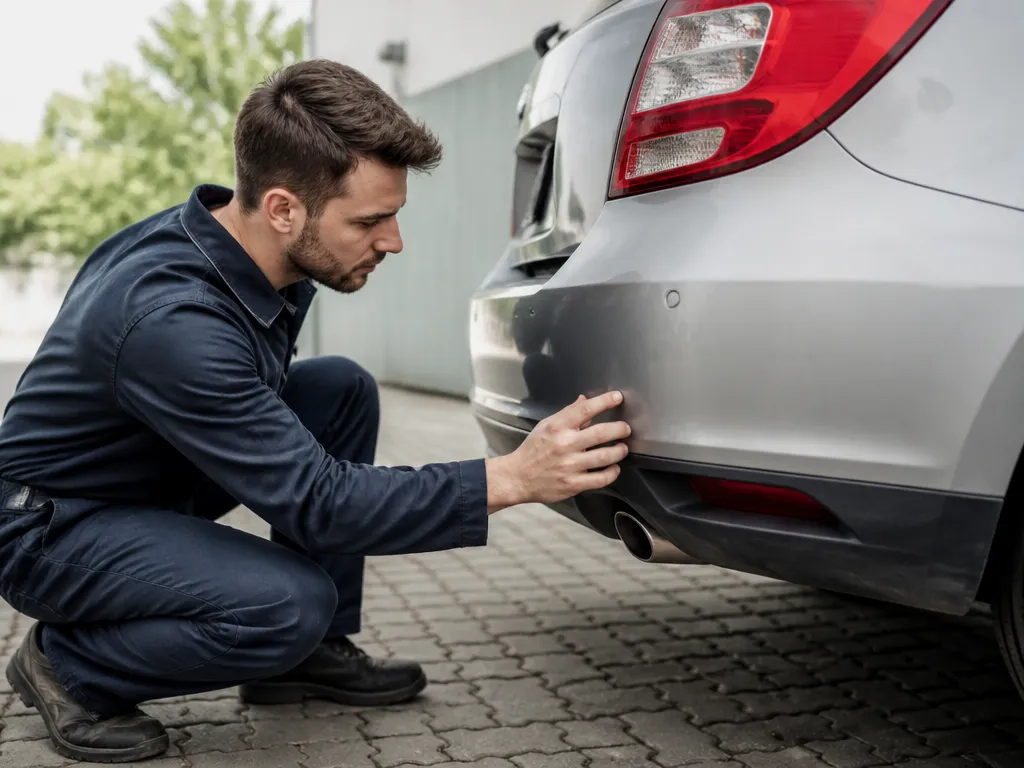
Use the simplest safe sequence before removing trim or buying parts.
- Clean the sensor faces thoroughly. Use car soap and water first, then a plastic-safe cleaner if a film remains. Avoid harsh solvents that can cloud or damage the sensor housings.
- Remove anything near the bumper. Clear mud, snow, ice, and debris. Temporarily remove or move aftermarket guards, mud flaps, and bike racks that sit near the sensor field.
- Check the mounting area for looseness. With the car off, press the bumper lightly and carefully. Stop if anything shifts, pops, or feels detached.
- Look for physical damage. Check for cracked bumper covers, missing clips, damaged bezels, or a sensor that sits deeper or higher than its neighbors.
- Run a controlled test. After cleaning and removing obstructions, reverse in an open area with no nearby obstacles. If the error appears immediately, move on to inspection or scanning.
💡 While cleaning your sensors, consider adding this garage parking assistant to help you park safely even if your vehicle sensors remain faulty. CENTAURUS Garage Parking Assist Led Flashing Garage Parking Sensor Perfect Target Indicator Parking Flashlight System with Adjustable Height Guide LED Stop Sign Bumper Sensor, Red (1 Pack).
What the System Still Does
A parking sensor warning is useful because it tells you not to trust the system’s readings. Treat the area around the bumper as unknown until the alert clears and the sensors work normally again.
A functioning parking sensor system can help you:
- Detect obstacles at low speeds when mirrors leave blind spots.
- Reduce parking bumps in tight spaces, especially with tall vehicles or limited visibility.
- Park more consistently when you approach similar spaces from the same angles.
When the system displays an error, those benefits are unavailable or unreliable. Use your mirrors, look around the vehicle, and avoid assuming that a silent system has detected a clear path.
Choose the Right Repair Path
The correct next step depends on whether the warning is temporary, constant, linked to body work, or paired with other driver-assistance alerts.
- Temporary warning that clears after cleaning or driving: Focus on surface contamination, ice, moisture, and minor obstructions.
- Persistent warning in the same conditions: Focus on sensor hardware, wiring, connectors, and bumper fitment.
- Warning after body work or bumper replacement: Check sensor installation, connectors, and camera or radar calibration if the vehicle uses those systems.
- Check for bumper damage or looseness. Inspect the corners and lower bumper areas, where scrapes and impacts are common.
- Inspect accessible connectors safely. Look for water intrusion, corrosion, loose plugs, or wiring pulled tight by a shifted bumper.
- Use a scan tool if the error repeats. Pull the exact fault codes before replacing a sensor.
- Treat calibration as mandatory when service disturbed the system. If the warning began after windshield replacement, bumper removal, or radar or camera work, complete calibration or an approved equivalent before blaming the sensors.
- The error appears only during the first few seconds of reverse: Intermittent sensor communication or delayed sensor wake-up, often related to moisture.
- The error appears when you use a hitch bike rack: Obstruction or interference in the sensor detection area.
- The error remains constant, even at low speed: A hard fault code, damaged sensor, or wiring or harness problem.
| Warning paired with other driver-assist alerts: Plan for a professional scan because a shared module or perception system may be involved. | Option | Key Requirement | Best For | Typical Time |
|---|---|---|---|---|
| Clean and re-test | No disassembly | Dirt, ice, film, blocked sensor faces | 10-30 minutes | |
| Inspect sensor mounts/connectors | Basic tools, careful access | Bent sensors, loose clips, visibly damaged wiring | 30-90 minutes | |
| Scan tool diagnostics | OBD/vehicle scan + sensor codes | Confirm which sensor failed, check wiring faults | 30-60 minutes | |
| Replace failed sensor(s) | Correct sensor part and fit | A sensor shows a hard fault code | 1-3 hours | |
| Calibration (camera/radar systems) | OEM or approved procedure | Alerts persist after windshield, bumper, or sensor service | 1-2 hours |
Times vary by vehicle access complexity.
Cleaning and re-testing costs the least and carries the lowest risk, but it cannot repair a failed sensor or damaged harness. A scan costs more than a visual inspection but identifies the affected sensor, circuit, or module and reduces guesswork. Calibration is usually needed only after certain camera, radar, windshield, or bumper services.

Helpful pick
A-Premium Parking Assist Sensor Compatible with Chevy, GMC, Buick, Cadillac
When your repair path requires replacing a faulty sensor, choosing an OE-compatible part ensures the system integrates perfectly with your vehicle’s computer.
When a Scan or Calibration Is the Better Choice
A scan for stored and current parking sensor fault codes is usually the quickest way to stop guessing once cleaning fails. The codes can identify a specific sensor, circuit fault, communication problem, or control-module issue.
Follow this order:
Replacing a sensor without checking its harness and connectors is an easy way to spend money without fixing the fault. If the parking system shares inputs with collision avoidance or other driver-assistance features, ignoring additional warnings can hide a larger problem.
Common Parking Sensor Error Patterns
A message that appears after heavy rain and clears after the car is washed usually points to temporary blockage, moisture, or contamination. Check for mud buildup along the lower bumper.
A warning that appears every time you reverse after scraping a curb on the passenger side points more strongly to physical damage. A sensor may be misaligned, a bezel may be cracked, or bumper clips may no longer hold the housing in the correct position. The repair may involve reseating the sensor, replacing it, or securing the bumper clips.
A vehicle that shows “park assist unavailable” alongside other safety warnings after front-end service needs scan diagnostics before parts replacement. Radar or camera alignment, module communication, or calibration may be involved.
Other useful patterns include:

Helpful pick
FainWan PDC Parking Aid Assist Sensor Compatible with Q4 e-tron Q4 e-tron Sportback ID.4 1EA919275A905 1EA919275BGRU 1EA919275CGRU
If your error patterns indicate a permanent sensor failure after heavy rain, this replacement PDC sensor is designed to restore full system functionality.
FAQ
What should I do first when I get a parking sensor error message?
After the initial checks, use a scan tool to identify the sensor or circuit code instead of replacing parts at random.
Can a cheap car wash or wax cause a parking sensor error message?
Yes. Residue, wax film, or a coating on the sensor face can interfere with the sensor’s ability to interpret echoes. Clean the area with gentle soap and water, let it dry, and test the system again.
How expensive is it to fix a parking sensor error message?
DIY cleaning usually costs little beyond time and basic supplies. Diagnosis and sensor replacement are often the main expenses, especially when multiple sensors or sections of the wiring harness are involved. Radar or camera calibration adds shop labor beyond sensor cleaning.
How do I know if I should stop driving?
Stop and get help if the parking sensor error appears with collision-avoidance or brake-assist faults. Do the same if the bumper has fresh damage, hanging trim, or exposed wiring that could suffer further water or impact damage. Even without those signs, remember that the parking sensors may be unavailable or unreliable until the error is resolved.
What is the most common mistake people make with parking sensor errors?
Replacing sensors before checking the mounts and connectors. A partially seated plug, water-corroded connector, or loose bumper clip can trigger the same message even after a sensor is replaced.
Disclosure: As an Amazon Associate, I may earn from qualifying purchases at no extra cost to you. Amazon and the Amazon logo are trademarks of Amazon.com, Inc, or its affiliates.
- Amazon, Amazon Prime, the Amazon logo and Amazon Prime logo are trademarks of Amazon. com, Inc. or its affiliates.

Hi, I am AKM Sad. I’m a car enthusiast and reviewer who loves exploring gadgets and accessories. I share honest reviews and practical tips to help you get the best products and enjoy a safer, smoother ride.