I’ve spent years helping drivers spot small engine issues before they grow into giant bills. If you’re asking, how do I know if my Honda Accord has engine problems, you’re already on the right path. In this guide, I break down clear signs, simple checks, and smart tools that I use on Accords every week. I’ll share what the sounds, smells, and dashboard lights really mean, and when to stop driving. Stick with me, and you’ll feel confident diagnosing your Accord at home.
Early Warning Signs You Should Never Ignore
Catching problems early can save your engine. Small clues add up fast, and the Accord is great at telling you when something’s off. I watch for changes in the way the car starts, idles, and accelerates.
Look for these signs:
- Rough idle or shaking at stop: Often a misfire, bad coil, or vacuum leak.
- Slow starts or stalling: Weak fuel pump, clogged filter, or sensor issues.
- Reduced power or lag: Possible turbo concern on 2.0T, clogged catalytic converter, or timing issues.
- Poor fuel economy: Misfire, dragging brakes, low tire pressure, or a faulty oxygen sensor.
- Burning oil smell or blue exhaust: Oil consumption, worn rings, or PCV valve issue.
- Sweet smell and white smoke: Coolant leak or head gasket risk, especially on long warm-ups.
- Metallic knock or ticking: Low oil, dirty oil, or valvetrain problems.
If two or more of these show up, I always scan for codes right away.
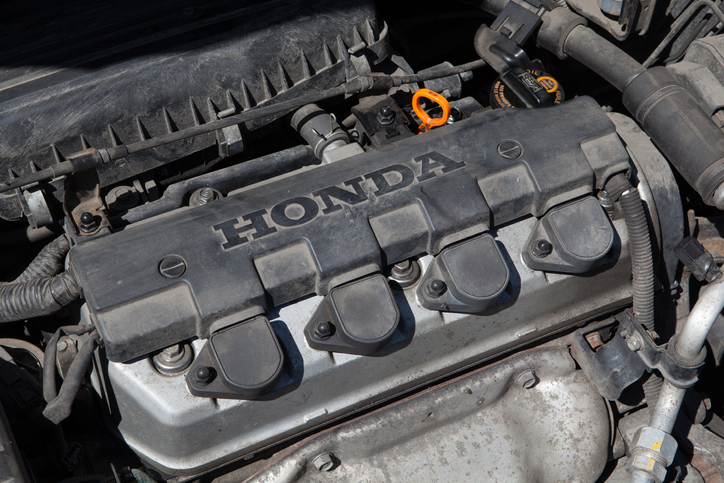
What Your Dashboard Is Telling You
The check engine light is your best early warning system. A steady light usually points to a drivability issue. A flashing light means stop driving and fix a misfire now to protect the catalytic converter.
Common Accord-related codes:
- P0300–P0304: Random or cylinder-specific misfire. Check coils, plugs, injectors.
- P0171: System too lean. Vacuum leak, MAF sensor, or fuel delivery.
- P0420: Catalyst efficiency low. Misfires or long-term fuel trims often to blame.
- P0010/P0011: VVT solenoid or oil flow issue. Dirty oil is a common cause.
- P0128: Coolant temp below range. Stuck-open thermostat.
- P0521: Oil pressure signal range. Check oil level and condition.
If the oil pressure light or red temp light comes on, I shut the car off immediately. That can save an engine.
Sounds, Smells, Smoke: What They Mean
Engines talk. I listen with the hood open and windows down on a short drive. Smells and smoke are like colored flags.
What I look for:
- Tapping or ticking at startup: Often normal for a second, but persistent ticking can mean low oil or valvetrain wear.
- Deep knock under load: Detonation, low octane on turbo models, or bearing wear. Do not ignore.
- Whistle or whoosh: Intake leak or turbo-related air leak on 2.0T models.
- Rotten egg smell: Catalytic converter overload from raw fuel.
- Blue smoke: Oil burning. White smoke on warm engine: possible coolant.
Tip: A quick throttle blip at idle can reveal hidden misfires or smoke that you won’t see at steady idle.
Simple Driveway Checks I Use
I love easy tests that take five minutes. These checks are safe and can catch issues early.
Do this at home:
- Check engine oil: Use the dipstick. Oil should be amber to brown, not gritty or milky. Low oil means leaks or consumption.
- Coolant level: Check the reservoir when the engine is cold. Look for crusty deposits near hoses.
- Look for leaks: Park on cardboard overnight. Note spots under the front, center, and rear.
- Exhaust test: Hold paper near the tailpipe. Consistent pulses are normal. Wet, oily spots point to oil burning.
- Idle test: With AC on and off, idle should be stable. Big RPM swings can be a vacuum or sensor issue.
- Fuel economy log: A sudden drop often hints at a misfire or O2 sensor problem.
Small changes often show up in these simple checks before a major failure.
Using An OBD-II Scanner On Your Accord
A basic OBD-II scanner is gold. I keep one in the glove box. You can read codes, live data, and freeze frames.
What to check:
- Fuel trims: Short-term and long-term should stay near -10% to +10%. Big positive numbers point to a vacuum leak or low fuel pressure.
- Misfire counters: Identify which cylinder is acting up.
- Coolant temp: Should reach operating temp quickly and hold steady.
- O2 sensors: Front sensor should switch rapidly. A lazy sensor can hurt fuel economy.
- MAP/MAF readings: Out-of-range values signal airflow issues.
Clear codes only after fixing the cause. If the same code returns, you have your lead.
Common Honda Accord Engine Issues By Year
Every generation has patterns. I’ve seen these across many Accords. Not every car will have them, but it helps to know the trends.
Useful patterns:
- 2003–2007 V6: Timing belt due every 7 years or around 90k–105k miles. It’s an interference engine; overdue belts risk major damage.
- 2008–2013 V6 with VCM: Some report higher oil consumption and fouled plugs. Watch oil levels closely.
- 2008–2012 4-cyl: Occasional oil consumption on high-mileage cars. PCV valve and ring wear can be factors.
- 2013–2017 2.4L: Generally solid. Watch for carbon on intake valves if many short trips, and keep up with oil changes for VVT health.
- 2018+ 1.5T/2.0T: In cold climates, some 1.5T owners report fuel dilution and rising oil level. Follow the severe-duty oil schedule and monitor oil smell. Turbo engines need clean oil.
- Any year: Coil and plug wear around 80k–100k miles. Cheap gas on turbo models can knock under load.
I always verify with service bulletins for the exact year and engine.
When To Stop Driving And Call A Pro
Some symptoms are red lines for me. Driving can turn a fixable issue into an engine rebuild. Towing beats a new engine bill.
Stop driving if:
- Oil pressure light or overheating warning appears.
- Check engine light flashes during a misfire.
- There’s a loud knock or severe loss of power.
- You see thick white smoke or a chocolate-milk look in oil (coolant contamination).
- Coolant or oil pours out, not just a small drip.
If you’re unsure, I recommend a quick tow and a diagnostic. Peace of mind is worth it.
Estimated Repair Costs And Timeframes
I like to set real expectations. Costs vary by region and parts, but these ballparks help plan.
Typical ranges:
- Spark plugs and coil on one cylinder: 150–400 dollars; 1–2 hours.
- Full set of coils and plugs: 400–900 dollars; 2–3 hours.
- Oxygen sensor: 200–400 dollars; 0.5–1 hour.
- Thermostat: 200–400 dollars; 1–2 hours.
- PCV valve: 50–200 dollars; 0.5–1 hour.
- Timing belt kit on V6: 600–1,200 dollars; 4–6 hours.
- Water pump with belt service: often bundled; add 100–300 dollars for parts.
- Catalytic converter: 1,200–2,500 dollars; 1–3 hours.
- Head gasket: 1,800–3,500 dollars; 10–20 hours.
- Turbo-related repair (2.0T): 1,500–3,500 dollars depending on parts.
Get a written estimate and ask for old parts back. It builds trust and clarity.
Preventive Tips That Actually Work
The best repair is the one you never need. I keep my Accord clients on a simple plan. It works.
Do this:
- Change oil on time: Use the right spec. Short trips? Follow the severe schedule.
- Use quality fuel: Top Tier gas helps keep injectors and valves cleaner.
- Replace air filter, plugs, and PCV on schedule: Cheap parts, big payoff.
- Watch fluid levels monthly: Oil, coolant, brake, and transmission.
- Scan for codes quarterly: Catch hidden issues fast.
- Warm up gently: Drive easy for the first few minutes. Don’t idle forever.
- Fix small leaks early: Gaskets and hoses don’t heal themselves.
Consistency beats heroics when it comes to engine health.
Frequently Asked Questions of How do I know if my Honda Accord has engine problems
What are the first signs of engine trouble in my Accord?
Rough idle, a steady or flashing check engine light, poor fuel economy, and new noises are early signs. If two or more appear at once, scan for codes and do basic checks.
Can I drive with a flashing check engine light?
No. A flashing light means an active misfire that can damage the catalytic converter. Park the car, tow it if needed, and repair the cause.
Why does my Accord smell like burning oil?
Oil may be leaking onto the exhaust or the engine is burning oil internally. Check the dipstick, look for leaks near the valve cover, and watch the tailpipe for blue smoke.
How often should I change spark plugs?
Most modern Accords use long-life plugs every 80k–100k miles. If you feel misfires or see a drop in economy, test sooner.
What OBD-II codes are most common on Accords?
Misfires (P0300–P0304), lean codes (P0171), catalyst efficiency (P0420), VVT oil flow issues (P0010/P0011), and coolant temperature (P0128) are common.
Does the 1.5T Accord have fuel dilution issues?
Some owners in cold climates have reported fuel smell in oil and rising oil level. Follow severe oil change intervals, use quality fuel, and monitor oil. Many cars run fine with proper maintenance.
When should I replace the timing belt on a V6 Accord?
Around 90k–105k miles or 7 years, whichever comes first. It’s an interference engine, so don’t delay.
Conclusion
You don’t need a shop to catch most engine problems early. By listening for new sounds, watching the dash, checking fluids, and scanning for codes, you can spot issues before they cost big. I’ve seen drivers save thousands by acting on small clues fast. Take the tips here, set a simple maintenance routine, and keep your Accord running like it should.
If this helped, try one driveway check today and log what you find. Want more guides like this? Subscribe, leave a comment with your symptoms, or ask for a custom checklist for your model year.
Watch This Video on How do I know if my Honda Accord has engine problems
Disclosure: As an Amazon Associate, I may earn from qualifying purchases at no extra cost to you. Amazon and the Amazon logo are trademarks of Amazon.com, Inc, or its affiliates.
- Amazon, Amazon Prime, the Amazon logo and Amazon Prime logo are trademarks of Amazon. com, Inc. or its affiliates.

Hi, I am AKM Sad. I’m a car enthusiast and reviewer who loves exploring gadgets and accessories. I share honest reviews and practical tips to help you get the best products and enjoy a safer, smoother ride.


