Parking sensors can often be added, but “any car” is the wrong promise. The limiting factor is rarely whether sensors are possible; it is whether your car’s wiring, computer, and trim can support the system you want.
Many cars can take an aftermarket kit, usually within a day. The installation still requires suitable sensor placement, access to power and the reverse signal, and protection against wiring interference and false alerts. Factory-style integration is more limited.
Key Takeaways
- Most cars are workable. Aftermarket kits can be installed on many vehicles without factory parking sensors.
- Factory integration varies. Cars with compatible modules and harnesses produce cleaner, more OEM-like installations.
- Electrical access matters. You need a reliable reverse-light signal and a solid ground.
- Placement controls accuracy. Incorrect sensor height or spacing can cause constant beeps or blind spots.
- DIY has limits. Bumper removal and drilling are common, but poor alignment can ruin the system.
- Systems behave differently. Some provide distance readings, while others only produce audible alerts.
When Parking Sensors Can Be Added
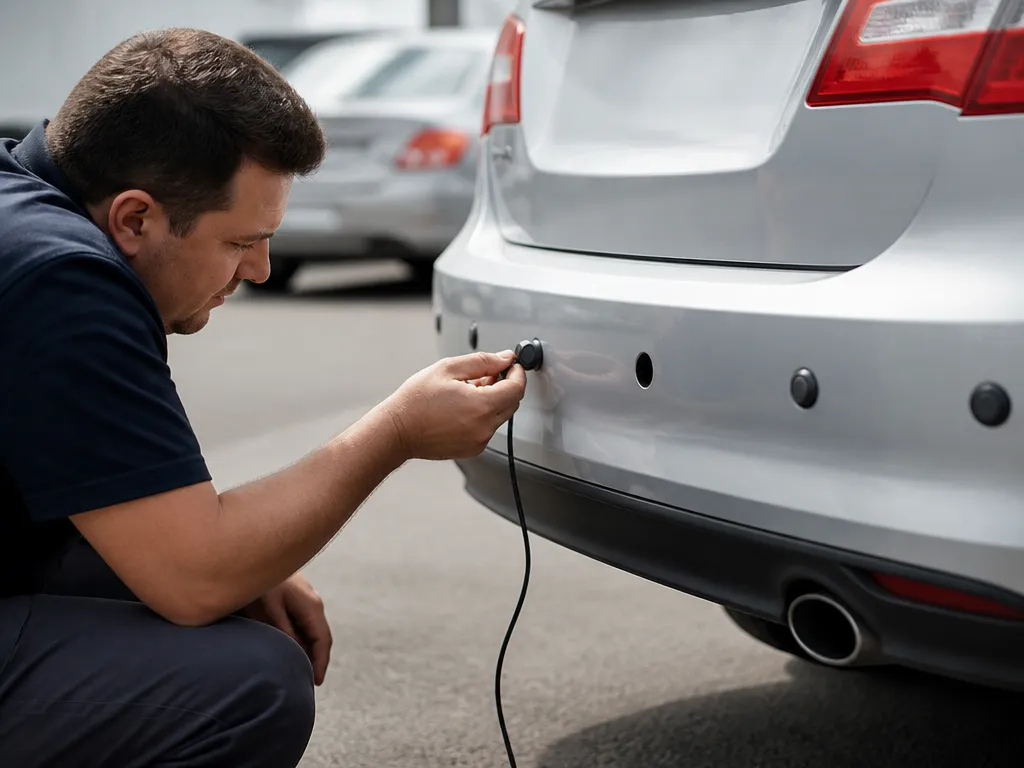
The main obstacles are compatibility and integration, not the sensors themselves. A car with a complex camera system, radar, or factory display may not accept an aftermarket system that uses the original screen or warning tones. You may still be able to add a separate beeper and small display, but it will not behave exactly like the factory equipment.
Parking kits generally fall into two categories: audible systems that beep as you approach an object, and display-based systems that show distance or proximity information. Both can work on many vehicles. A display-based kit requires a mounting location that does not block the driver’s view, vents, or controls.
The bumper also affects the installation. Some bumpers accept clean drilled holes and standard clips. Others require more careful drilling, special brackets, or surface-mounted sensors. That difference determines both the difficulty and the finished appearance.
What to Check Before Buying a Kit
Decide whether you want a system that simply works or one that looks and behaves like factory equipment. If beeps and a separate distance display are enough, an aftermarket kit will usually meet the need. If you want warnings on the original screen or factory-style tone patterns, you must match the kit to your car’s modules, wiring, and software.
Confirm the signal the kit requires. Many systems connect to the reverse-light circuit or a dedicated reverse-trigger wire so they activate only when you select reverse. If you cannot identify that circuit safely, the installation can quickly become frustrating. Tapping the wrong wire may cause the system to activate in drive or fail to activate in reverse.
Sensor count affects coverage. Two sensors may leave the corners poorly covered, while four to eight sensors provide more forgiving coverage for typical parking. Front and rear installations are possible, but combining separate kits requires consistent sensor spacing and compatible control-module settings.
Set realistic expectations about accuracy. Parking sensors estimate distance; they do not replace mirrors, cameras, or looking around the vehicle. They may warn late if you are moving quickly, and unusual surfaces can cause inaccurate readings. Common problem objects include spare tires, bike racks, heavily textured bumpers, and tall trailer tongues.
How to Install Parking Sensors Correctly
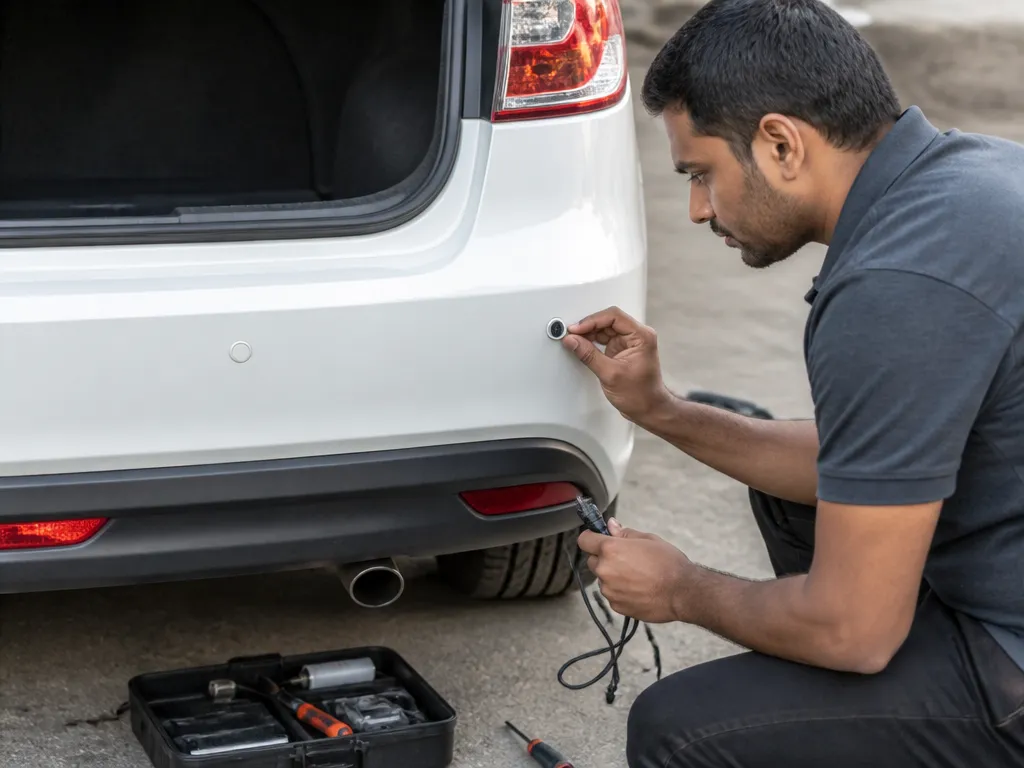
Plan around bumper access before worrying about where the beeper will go. If the bumper must come off for clean sensor placement, allow enough time to remove it carefully and route the wiring without rushing. Hasty alignment is a common cause of poor results.
Measure every mounting point before drilling. Use the kit’s template, keep the sensors evenly spaced, and install them at the specified height. Holes that look “close enough” can still produce constant warnings, late alerts, or areas with no detection.
Choose the control-module location before disassembling the car. The module should be protected from water splash, secured against vibration, and accessible if you need to adjust its settings. A module left in a loose or exposed location can develop intermittent faults that resemble failed sensors.
Use a multimeter or another reliable test method to identify the reverse signal. Reverse-light wiring differs by model, and a mistaken connection can make the sensors trigger in the wrong gear or remain inactive.
Finish with calibration and testing. Many kits allow sensitivity adjustments. Test each sensor on a flat surface near a wall, then verify that the alerts become more frequent as you approach at walking speed.

Helpful pick
JDMSPEED Set of 4 Pcs Rear Bumper Backup Parking Sensor w/O-Ring Replacement for Chevrolet Cadillac GMC Chevy Saturn Buick Replaces 25961317 15239247 25961321 21995586 25962147 Parking Assist Sensors
If you are replacing factory sensors, these high-quality replacements ensure your installation maintains the original look and functionality of your vehicle.
Why Add Parking Sensors?
Parking sensors reduce low-speed surprises near curbs, walls, vehicles, and other objects that may sit outside your direct line of sight. They are particularly useful when reversing in a vehicle with limited rear visibility or a camera that does not show the lower corners well.
They can also make tight parking less stressful. Instead of stopping early, checking several mirrors, and relying on guesswork, you get a repeatable warning as the vehicle approaches an obstacle.
An aftermarket kit can cost less than repairing a scraped bumper, although the value depends on the kit and installation quality. Preventing one minor scrape may justify the upgrade for some drivers.
You can also choose the type of feedback you prefer. A beeper gives an immediate warning with minimal hardware. A distance display provides more information but adds another component to mount and wire.
Helpful pick
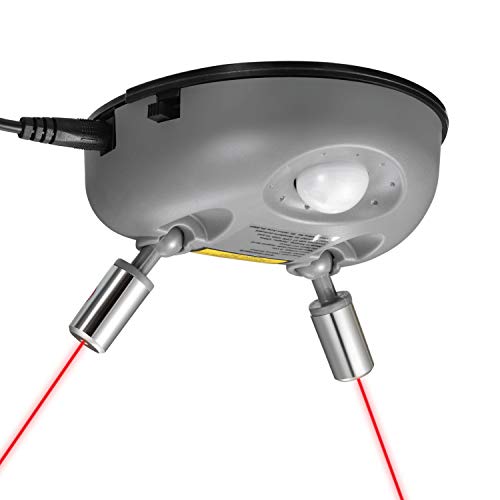
Fosmon, Wider Angle Upgrade, Dual Laser Garage Parking Assist Guide System, 360-degree Adjustable Parking Sensor with AC Adapter and Battery Backup for Car/Automotive
This dual laser garage parking guide helps you avoid common low-speed surprises by ensuring you park perfectly in your home garage.
Parking Sensor Options
You have three practical installation paths:
- Universal aftermarket kit: This is the most common option for vehicles without factory sensors. It usually includes drilled or clip-in sensors, a control module, and a display or beeper. It is the best choice when factory-screen integration is not important.
- Vehicle-specific kit: These kits are designed for particular makes and models and may include model-matched templates or mounting points. They reduce alignment guesswork and can produce a cleaner, more OEM-like installation, but they often cost more and are not available for every vehicle.
- Factory-compatible integration: If your car already has the correct wiring and a compatible module, you may be able to add sensors that the vehicle recognizes. This offers the closest factory experience, but compatibility can be narrow and the required parts may be expensive.
The installation method also involves a trade-off. Drilled sensors are usually more discreet, but they require careful measurement and sometimes substantial disassembly. Surface-mount or clip-on sensors are faster to install, but they may look less integrated and can be more sensitive to mounting position.
| Option | Key Spec / Requirement | Best For | Main Trade-off |
|---|---|---|---|
| Universal aftermarket kit | Typically needs reverse trigger + power | Most cars that are not factory-prepped | Fit may be less OEM, more measuring and drilling |
| Vehicle-specific aftermarket kit | Model-matched template and sensor placement | Cars where you want a cleaner look | Higher cost and limited availability by model |
| Factory-compatible integration | Compatible module and harness support | Best OEM warning behavior | Compatibility can be narrow, sometimes expensive |
| Beeper-only kit | Audible alerts, sometimes minimal wiring | Quick upgrade | Less information for distance judgment |
| Display-based kit | Distance display or in-dash interface | People who want “how close” feedback | Adds extra mounting and cabling work |
Choosing the Right Installation Approach
Treat the job as an alignment project, not simply a wiring upgrade. The sensors themselves are straightforward, but bumper geometry and mounting height determine whether the system is helpful or irritating. If you are not comfortable measuring template coordinates and drilling straight holes, using a professional installer is the safer choice.
Check the wiring route before removing trim. Some cars provide easy access behind the bumper, while others require extensive fascia or interior-trim removal. A supposedly simple installation can become a weekend project when the reverse signal or control-module route is difficult to reach.
Protect the system from weather. Control modules and sensor-lead connections need sealed or well-protected connections. Exposed splices and loose wiring can cause intermittent warnings after rain, car washes, or temperature changes.
Test methodically. Confirm that the system activates in reverse, check every sensor at a known distance, and perform a slow test in a controlled area such as a driveway before relying on it in a busy parking lot.

Helpful pick
Purthog 2026 Upgraded LED Garage Parking Aid,Adjustable Garage Parking Sensor with Red/Yellow/Green LED Display,Dual Power Garages Stopper for Parkings Car as Garages Car Stop Indicator
Proper alignment is key; this LED garage parking aid provides visual feedback to help you master the geometry of your parking space.
How Different Vehicles Affect the Installation
A compact SUV without a factory parking-assist package will usually accept an aftermarket rear sensor kit with reverse-trigger wiring. The owner typically drills sensor holes in the rear bumper cover, installs the sensors evenly, routes the harness to the control module, and connects activation to the reverse-light wire. The result can be a reliable beep system that activates only while backing up, even without a factory distance display.
A 2016-ish model sedan that already has a factory harness behind the bumper may support a more seamless installation if you can source the compatible module and sensors. Existing wiring and software may allow the sensors to behave more like OEM equipment. The trade-off is that you must match parts to the exact trim and build, and you may not be able to reuse components from a generic kit.
A pickup truck can be more difficult because bumper height, textured plastic, and accessories such as hitch-mounted bike racks can affect detection. An installer may choose a higher sensor count for better corner coverage and position the sensors to reduce false alerts around the hitch. A system can be installed correctly yet still perform poorly if it is not tuned to the truck’s bumper and accessories.
For a DIY installation, a minivan owner might choose an eight-sensor rear kit for more consistent coverage near the corners. After installation, testing near a wall at walking speed should show the beeps becoming more frequent as the vehicle gets closer. If alerts start too early or too late, check sensitivity settings and sensor alignment before replacing the sensors.
FAQ
Can I add parking sensors to any car?
Yes, in many cases. Installation depends on available mounting space, bumper construction, and access to power and a reverse-trigger signal.
How much does it cost to add parking sensors in the US?
The available material does not provide current pricing, so there is no exact figure to quote. Cost depends on the number of sensors, whether you install them on the rear or both front and rear, whether you choose a display or beeper-only system, and whether you do the work yourself or pay a shop for bumper removal and wiring.
How long does it take to install parking sensors?
A typical DIY installation can take a full day, mainly because bumper removal and wiring take longer than expected. A professional installation may be faster, but the time still depends on whether the kit requires drilling, how easily the wiring can be reached, and how much calibration and testing the system needs.
Are parking sensors safe to install, or do they risk damaging the car?
They are generally safe when installed with correct wiring and sealed connections. Mistakes can cause problems such as incorrect triggering or fuse issues. Use proper splices or connectors, protect the control module from moisture, and verify the reverse and power wires before making connections.
What is the most common mistake when adding parking sensors?
Poor sensor placement is the most common mistake. If the height or spacing differs from the kit’s template, the system may produce constant beeps, weak warnings, or blind spots near the bumper corners.
Plan the bumper access, measure carefully, seal the wiring, and test the system before trusting it in tight parking spaces.
Disclosure: As an Amazon Associate, I may earn from qualifying purchases at no extra cost to you. Amazon and the Amazon logo are trademarks of Amazon.com, Inc, or its affiliates.
- Amazon, Amazon Prime, the Amazon logo and Amazon Prime logo are trademarks of Amazon. com, Inc. or its affiliates.

Hi, I am AKM Sad. I’m a car enthusiast and reviewer who loves exploring gadgets and accessories. I share honest reviews and practical tips to help you get the best products and enjoy a safer, smoother ride.