Choosing an Automotive Power Circuit Probe involves finding a tool that balances reach, ease of use, and diagnostic depth. These devices differ mainly in cable length, display clarity, and specialized testing modes like waveform tracking. The Autel PowerScan PS100 is a comprehensive diagnostic tool for 12-24V electrical systems.
🏆 Our Top Pick
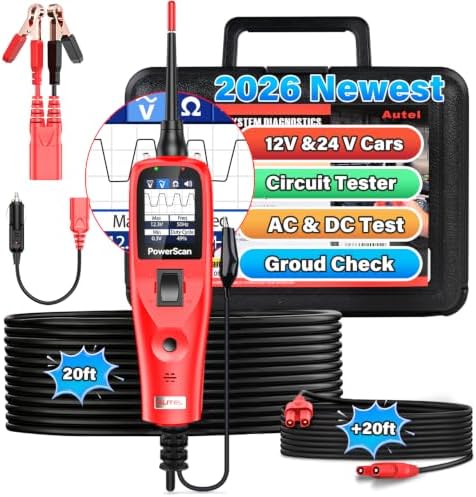
Autel PowerScan PS100 Circuit Tester 2.0
Professional technicians and trailer wiring specialists who require a high-performance, all-in-one diagnostic tool.
☰ Table of Contents 10
- Quick Comparison
- How We Picked
- 1. Autel PowerScan PS100 Circuit Tester 2.0
- 2. ANCEL PB100 Automotive Circuit Tester
- 3. KZYEE KM10 Power Circuit Probe Tester with Live Waveform Display
- Selecting the Right Circuit Probe
- Essential Diagnostic Considerations
- What Buyers Get Wrong
- Frequently Asked Questions
- Conclusion
Quick Comparison
Best overall
Autel PowerScan PS100
combines essential voltage, continuity, and component activation modes with a reliable 40ft reach for diverse vehicle diagnostics.
Best for
ANCEL PB100
offers an intuitive interface that simplifies complex electrical troubleshooting for DIYers and professional mechanics working in tight spaces.
Best for
KZYEE KM10
features a color TFT display that provides clearer waveform visualization when monitoring sensor and alternator control signals.
- Supports 6-30V vehicle electrical systems
- Tests voltage, polarity, continuity, and signals
- Activates components in or off vehicle
- Features four diagnostic modes

- Compatible with 12-24V electrical systems
- Tests voltage, polarity, continuity, and signals
- Activates components on or off board
- Includes 20 ft cord and 20 ft extension

- Tests DC voltage, AC voltage, and resistance
- Verifies continuity and identifies polarity
- Activates components to test functionality
- Displays signal waveforms on TFT screen

- Works with 6V, 12V, and 24V systems
- Includes wire tracer for broken connections
- Tests voltage, resistance, diode, and continuity
- Activates components like lights and motors

- Includes storage case and built-in LED
- Tests voltage, polarity, and continuity
- Supplies 12V power or ground
- Features overload and short circuit protection

- Works with 8 to 50 volt systems
- Features 160×128 TFT display
- Includes six diagnostic modes
- Built-in flashlight for dark environments

- Tests 6 to 48 V systems
- Features two built-in LED lights
- Includes 14.76FT cable
- LCD display shows voltage values
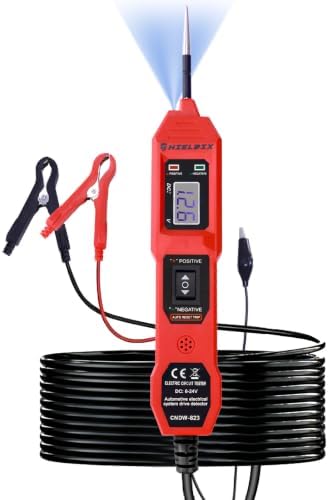
- Works with 6V to 24V systems
- Thin probe for hard-to-reach areas
- Tests voltage, continuity, and diodes
- LCD display with bidirectional detection

- Tests DC 6-12V circuits
- Includes three interchangeable probes
- Features insulated heat-resistant cord
- Includes end hook for hands-free operation

- Lightweight and portable design
- Steel probe pierces wire insulation
- Handle light glows on circuit connection
- Tests circuits from 6V to 24V
How We Picked
To qualify, each probe had to feature integrated voltage detection, continuity testing, and built-in overload protection to ensure user and vehicle safety. We prioritized tools that replace multiple devices—like multimeters and test lights—with a single, streamlined interface.
Our selection process focused on real-world utility for both professionals and DIYers. We specifically looked for devices that support component activation, allowing you to test motors, lights, or relays directly without complex jumper-wire setups. We also verified that each tool included a sufficiently long cable, as reach is critical for testing trailers or long vehicles without constant battery repositioning.
✂️ What put a product out
- Lack of clear overload protection circuitry.
- Inability to operate on 24V systems.
- Missing essential component activation capabilities.
- Short cables that limit access to the rear of the vehicle.
#1 Top Pick
1. Autel PowerScan PS100 Circuit Tester 2.0
🎯 Best for: Professional technicians and trailer wiring specialists who require a high-performance, all-in-one diagnostic tool.
🌟 Key Features
- Mode Button: Cycles through four diagnostic modes, including DC and AC voltage, resistance, and tone on/off, allowing for quick and accurate circuit assessment.
- Component Activation: Generates signals to test components like motors and radiator fans directly, eliminating the need for complex, error-prone jumper wire setups.
- 40ft Total Reach: Includes a 20ft cord plus a 20ft extension, allowing users to test electrical systems on long vehicles and trailers without opening the hood.
- Circuit Protection: Features a resettable 10 Amp circuit breaker that trips during overloads, protecting the vehicle battery and the tool itself from damage.
💡 Why We Recommend It
It provides a robust, all-in-one diagnostic solution that handles everything from signal tracing to heavy-duty component activation. By using the AC mode, you can connect to a sensor’s signal wire to view live frequency and duty cycle data, confirming if the ECM is commanding an alternator on.
The depth of data, such as frequency and duty cycle, may be more than a casual DIYer requires.
📋 Key Specs
| Supported Voltage | 6-30V |
| Cable Length | 40ft |
| Protection | Resettable circuit breaker |
🛠️ What It Means Day to Day
The 40ft reach ensures you can test rear trailer lights while remaining connected to the front battery. Its intuitive red/green LED system provides instant polarity feedback during routine checks. When the positive terminal is connected, the red LED illuminates with a beep; the green LED indicates a negative connection. This visual feedback, combined with the backlit LCD, makes the tool effective for low-light environments.
✓ Pros
- Extensive 40ft reach
- Reliable overload protection
- Versatile diagnostic modes
✗ Cons
- May be overkill for beginners
#2 Best for DIYers
2. ANCEL PB100 Automotive Circuit Tester
🎯 Best for: DIYers needing a straightforward, intuitive diagnostic tool.
🌟 Key Features
- 4-in-1 Modes: Allows effortless switching between DC/AC voltage, resistance, and diode testing to evaluate vehicle electrical health with precision.
- Component Activation: Enables direct power or ground application to components, helping determine if a fault lies in the part or the control circuit.
- Dual Power Supply: Offers flexibility by allowing power from either the cigarette lighter adapter or the vehicle’s own battery clips.
- Signal Testing: Monitors voltage and frequency on signal wires, assisting in the identification of abnormal readings in alternator and switch circuits.
💡 Why We Recommend It
Its interface is designed to provide immediate, practical feedback, which is helpful when you’re working in cramped engine bays where you can’t always look at a screen.
📋 Key Specs
- Supported Voltage: 12-24V
- Cable Length: 40ft
🛠️ What It Means Day to Day
You can quickly identify bad grounds by measuring the voltage drop between a suspected point and the battery. The audible tones save time by confirming continuity without eyes-on verification.
Because the tool includes a 20ft main cord and a 20ft extension, you can reach the back of trailers or long vehicles without needing to move your power source. The built-in circuit breaker is a vital safety feature for this process. If you encounter a short circuit, the breaker trips to protect the tester and resets automatically once the fault is cleared. This allows you to test wiring faults repeatedly without the hassle of replacing blown fuses.
✓ Pros
- Simple, intuitive operation
- Dual power options
- Clear audible feedback
✗ Cons
- Lacks advanced waveform logging
#3 Best for Waveforms
3. KZYEE KM10 Power Circuit Probe Tester with Live Waveform Display
🎯 Best for: Technicians who need clear visual signal monitoring.
🌟 Key Features
- Live Waveform Display: Uses a color TFT screen to view signal changes, max/min voltage, and frequency, which is vital for sensor circuit diagnostics.
- Integrated Work Light: Includes a built-in light that illuminates the immediate test area, making it easier to work in dark engine compartments.
- 40ft Reach: Combines a 20ft main cable with a 20ft extension to ensure full vehicle accessibility from engine bay to rear lighting.
- Versatile Testing: Supports DC/AC voltage, resistance, and diode tests, providing a comprehensive toolkit for narrowing down wiring faults.
💡 Why We Recommend It
The KM10 shines when you need to see signal trends rather than just static numbers. The color screen makes complex data much easier to read at a glance during busy repair sessions. By observing the waveform on the screen, you can confirm if a sensor is functioning as intended by comparing your readings against vehicle service information.
The screen-heavy interface is larger than traditional pens, which might feel bulky for simple fuse checks. However, the internal circuit breaker adds a layer of safety by interrupting power output during overload conditions.
📋 Key Specs
| Supported Voltage | 12-24V |
| Display Type | Color TFT |
| Cable Length | 40ft |
🛠️ What It Means Day to Day
You can use the probe to apply battery power or ground directly to components like motors or lights. This helps you determine if a part is faulty or if the issue lies within the wiring. The built-in light is a practical addition for night-time maintenance or shaded garage work.
✓ Pros
- Excellent waveform visualization
- Built-in work light
- Long 40ft reach
✗ Cons
- Larger than standard probes
Selecting the Right Circuit Probe
Choosing the right probe depends on your specific diagnostic needs and the type of vehicles you service. Focus on tools that offer a balance of durable construction and clear, actionable feedback.
Diagnostic Depth
Some tools provide simple voltage readings, while others display waveforms or frequency data. If you’re performing basic tasks like checking for power or ground, a standard digital display is sufficient. However, if you need to evaluate sensor activity or alternator performance, choose a probe that monitors Max/Min voltage, frequency, and duty cycle. This level of data helps you confirm if an ECM is correctly commanding a component.
Cable Length
Ensure the tool has enough reach for your vehicle type. A 40ft reach—typically achieved by combining a 20ft main cord with a 20ft extension—is essential for trucks, long trailers, or testing from the engine bay to the rear lights. Shorter leads, often around 13ft to 15ft, are manageable for compact cars but may limit your mobility on larger platforms.
Power Options
Look for dual-power tools that offer both cigarette lighter and battery clip connections. This adds significant convenience when testing inside the cabin or under the hood. Using a cigarette lighter adapter allows you to conduct in-vehicle tests without needing to open the hood or attach clips directly to the battery terminals.
Protection Features
Always prioritize tools with built-in circuit breakers. This prevents damage to sensitive vehicle electronics and ensures the probe itself survives accidental short circuits during testing. A resettable breaker is superior to a fuse, as it allows you to resume work immediately after an overload without needing a replacement part.
Essential Diagnostic Considerations
When preparing to use your new probe, verify that your tool matches the voltage requirements of the specific circuit you’re troubleshooting. Most modern probes support 12V to 24V systems, but always confirm the unit’s operating range before connecting to prevent damage to sensitive vehicle electronics.
Check Your Vehicle
- Voltage Range: Confirm if your vehicle uses 12V or 24V systems. While many probes are versatile, some specialized tools have lower or higher limits. Always verify the unit’s operating range before connecting.
- Accessibility: Consider if your engine bay is cramped. A probe with a slim, stainless steel tip is often easier to maneuver into tight connector housings. Some models also include built-in LED work lights, which are essential for navigating dark engine compartments or testing under the dashboard.
- Cable Reach: For larger vehicles, trailers, or long-wheelbase trucks, ensure your cable length is sufficient. Many kits provide a 20ft main lead plus a 20ft extension, allowing you to reach from the battery to the rear lights without moving your power source.
💡 Quick Tip: Before testing, clean your ground connection point. A poor ground can mimic a faulty component or cause misleading voltage drop readings, leading to unnecessary part replacements.
Choosing Your Match
For a professional technician, the Autel PowerScan PS100 offers robust durability and a full feature set. If you’re a DIYer, the ANCEL PB100 simplifies the learning curve. For those focused on sensor signals, the KZYEE KM10 provides essential visual waveform feedback.
What Buyers Get Wrong
1. Assuming All Probes Are Identical
Many buyers treat circuit testers as interchangeable, failing to distinguish between passive test lights and active power probes. While a basic test light only indicates the presence of voltage, an active probe can supply power or ground directly to components like radiator fans, fuel pumps, or wipers. This capability allows you to test parts in your hand or in the vehicle without cumbersome jumper wires, saving significant time. Always verify if your chosen tool supports component activation to avoid buying a device that lacks the diagnostic depth required for modern electrical troubleshooting.
2. Ignoring The Importance Of Cable Reach
Users frequently underestimate the physical distance between a vehicle’s battery and its rear lighting or trailer connections. A short cable limits your mobility, forcing you to constantly move your power source or struggle with awkward positioning. A 40ft reach—typically achieved through a 20ft main cable paired with a 20ft extension—is often necessary for full vehicle coverage. Choosing a model with a cigarette lighter adapter also adds convenience, as it allows you to power the device without needing to open the hood and connect directly to the battery terminals.
3. Neglecting Overload Protection
Some users assume all probes are inherently safe, but a mistake during testing can easily damage your vehicle’s sensitive ECU. A tool without a built-in, resettable circuit breaker leaves both the probe and the car’s electrical system vulnerable to spikes. Always prioritize tools with integrated overload protection that cuts power and triggers a buzzer if limits are exceeded. This feature ensures that if you accidentally trigger a short, the tool protects itself rather than burning out.
Our Top Picks
FAQs Of Best Automotive Power Circuit Probe
Can I use these probes on computer-controlled sensors?
Yes, but use caution. While many probes, like the KZYEE KM10, are designed to test signal circuits, you must verify the tool’s impedance. High-impedance tools are safer for sensitive ECU circuits to prevent accidental damage.
Do I need a separate battery to power the probe?
No, most automotive probes are designed to be powered directly by the vehicle’s battery or cigarette lighter socket. The VDIAGTOOL V200 Pro is an example of a tool that offers both power options for maximum convenience.
How do I locate a short circuit with these tools?
Apply voltage to the circuit using the probe’s power function. The built-in circuit breaker will trip if it detects a short, allowing you to trace the fault location by observing where the breaker continues to trip as you move along the wire.
Are these probes safe for 24V truck systems?
Most high-quality probes, such as the ANCEL PB100 and Autel PowerScan PS100, are fully compatible with both 12V and 24V systems. Always confirm the specific voltage range listed on the product packaging before testing.
Conclusion
Investing in the right diagnostic equipment will save you plenty of time in the garage. Once you’ve picked your tool, try practicing on a spare battery or a simple trailer light setup. You’ll soon feel more confident tackling those tricky electrical gremlins, and your car’s wiring won’t seem so intimidating anymore.
Disclosure: As an Amazon Associate, I may earn from qualifying purchases at no extra cost to you. Amazon and the Amazon logo are trademarks of Amazon.com, Inc, or its affiliates.
- Amazon, Amazon Prime, the Amazon logo and Amazon Prime logo are trademarks of Amazon. com, Inc. or its affiliates.

I am Sadman, the founder of CarSensorHub.com, where I share my passion for cars and technology. I specialize in writing detailed reviews and helpful guides on car gadgets, accessories, safety tools and many more. My mission is to help car owners discover the best products and tips to improve their driving experience and stay safe on the road.