You’re picking a car seat, and the big split isn’t brand. It’s how long the seat stays useful. Some seats here start at birth and run to the booster years. Others are boosters only, for a kid who’s already out of a harness. Weight limits, height limits and mode counts tell you which group a seat belongs to.
Best overall: Graco TurboBooster 2.0 Backless, because it covers ages 4-10, 40-100 lb and up to 57 inches, with height-adjustable armrests and hideaway cup holders. Best for a growing baby: Safety 1st Grow and Go, because it runs rear-facing from 5 lb all the way to a belt-positioning booster at 100 lb, with no rethreading as your child grows. Best for long rear-facing: Graco Extend2Fit, because the 4-position extension panel adds up to 5 inches of legroom and rear-facing goes to 50 lb.
The rest of this guide walks through each seat, what it asks of you, and who should skip it.
How We Picked
We compared the listings for this guide. A seat earned a place only if its listing stated the numbers that matter: the weight range for each mode, the height limit, and how the harness or headrest adjusts.
We also favored listings that spelled out the everyday details — whether the pad comes off for washing, whether the cup holders come out, whether installation uses a seatbelt, LATCH anchors, or both. Those details decide how the seat behaves in year three, not week one.
That’s why it runs from a backless booster to a convertible that folds for travel.

- For ages 4-10, 40-100 pounds, up to 57 inches tall
- Backless booster rated by consumer magazines
- Tested in frontal, rear and rollover crashes
- Tested for extreme car interior temperatures

- 3-in-1 design from 5 to 100 lb
- Headrest and straps raise with one up-front motion
- Install with seatbelt or lower Latch anchors
- Machine-washable, dryer-safe seat pad
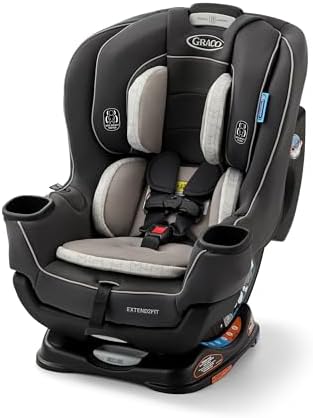
- Rear-facing harness 4-50 lb, forward-facing 26.5-65 lb
- Extend2Fit panel adds up to 5" of legroom
- Rear-facing up to 50 lb
- Tested in frontal, side, rear and rollover crashes

- Rear-facing 5-40 lb, forward-facing 26.5-65 lb, booster 40-100 lb
- Dual cup holders rotate away for a 10% slimmer seat
- Tested for side impact and beyond
- Headrest and harness adjust together in one motion

- Forward-facing harness 40-65 lbs and 43.4"-49"
- Belt-positioning booster 40-100 lbs and 43.4"-52"
- Narrow design fits 3 across the back seat
- Removable seat pad is machine-washable and dryer-safe

- Deep design with overlapping head and body sides
- Meets or exceeds federal safety standards
- Height adjusts to 7 positions with one hand
- High back to no back booster, 40 to 120 lb

- From birth to booster, 5-120 lb
- 4 modes in 1 seat
- Rear-facing up to 50 lb
- Slim-fit design fits 3-across
1. Graco TurboBooster 2.0 Backless Booster Car Seat
Best for: a big kid who’s done with a harness
This is the simplest seat on the list, and that’s the point. It’s a backless booster for ages 4-10, 40-100 lb and up to 57 inches tall. The armrests adjust for height, so a taller kid isn’t resting their arm at the same spot as a smaller one. The cup holders hide away when you need the space.
In daily use, a backless booster means your child uses the car’s own seatbelt across their lap and shoulder, and the seat’s job is to lift them so that belt sits right. There’s no harness to buckle, no rethreading, nothing to adjust but the armrests. Graco says it’s ProtectPlus Engineered, tested for frontal, rear and rollover crashes, plus extra testing based on the New Car Assessment Program and for extreme car interior temperatures.
This isn’t the seat for a child still in a harness, or for one under 40 lb. If your kid falls asleep and slumps sideways on longer drives, a backless seat gives them nothing to lean against — the highback version of this same seat is the one to look at instead.
Pros
- Covers ages 4-10, 40-100 lb, up to 57 inches
- Height-adjustable armrests for a growing child
- Hideaway cup holders save back seat space
Cons
- No back support for a sleeping child
- Not for kids under 40 lb
2. Safety 1st Grow and Go All-in-One Convertible Car Seat
Best for: one seat from newborn to booster years
This is the seat that tries to be the only one you buy. It runs three stages: rear-facing from 5-40 lb, forward-facing harness from 30-65 lb, and belt-positioning booster from 40-100 lb. The QuickFit harness system raises the headrest and straps together in one up-front motion, so a growth spurt doesn’t mean pulling the seat out to rethread it.
Setup gives you choices. You can install with the vehicle seatbelt or with lower LATCH anchors and a top tether, and a three-position recline plus removable baby pillows help you fit it to a small newborn or a bigger toddler. The seat pad is machine-washable and dryer-safe, and it unclips without removing the harness, which matters on the day someone spills a full sippy cup.
The two cup holders are dishwasher-safe. Side impact protection is engineered and tested to meet or exceed federal safety standards, and the listing states it meets the federal Side Impact standard. A parent who wants one purchase to cover every stage is the right buyer here. A parent who already owns an infant seat and just needs the next step up is paying for stages they won’t use.
Pros
- Three stages, 5-100 lb, one seat
- QuickFit harness adjusts with one motion
- Washable pad unclips without removing harness
Cons
- Rear-facing stops at 40 lb
3. Graco Extend2Fit 2-in-1 Convertible Car Seat
Best for: keeping a toddler rear-facing longer
The selling point here is legroom, and it’s a real number: a 4-position adjustable extension panel adds up to 5 inches of space for your child’s legs. That’s the difference between a toddler who fits rear-facing comfortably and one who’s jammed against the back seat. Rear-facing harness runs from 4-50 lb, and forward-facing harness from 26.5-65 lb.
The 50 lb rear-facing limit is the reason to pick this seat. Safety guidance favors rear-facing as long as the seat allows, so a seat that allows more of it’s doing a specific job. The Simply Safe Adjust harness system moves the headrest and harness together in one motion, so no rethreading when the straps need to go up.
Graco says it’s ProtectPlus Engineered for frontal, side, rear and rollover crashes. This isn’t the seat for you if you want one purchase to reach the booster years — it’s a two-mode convertible, and it ends at a forward-facing harness, not a booster. A family planning to hand the seat down through several kids should weigh that.
Pros
- Up to 5 inches of extra legroom
- Rear-facing to 50 lb, the highest here
- Headrest and harness adjust together
Cons
- Stops at forward-facing harness, no booster mode
4. Graco Slimfit 3-in-1 Convertible Car Seat
Best for: a tight back seat with three kids aboard
Three modes, one seat: rear-facing harness from 5-40 lb, forward-facing harness from 26.5-65 lb, and highback booster from 40-100 lb. The slim design is the headline. Dual integrated cup holders rotate away, and Graco says that makes the seat 10% slimmer, which is the kind of figure that matters when you’re trying to fit three across.
The headrest has 10 positions, so you can find the height that puts the harness or the belt where it belongs as your child grows. The Simply Safe Adjust system moves the headrest and harness together in one motion. Graco says it’s ProtectPlus Engineered to the newest testing standards for side impact and beyond.
Buy this if back seat width is your daily problem. Skip it if you want the longest possible rear-facing stretch — rear-facing ends at 40 lb here, well below the Extend2Fit’s 50 lb. Two seats that look similar from the same brand split on exactly that number.
Pros
- Three modes, 5-100 lb
- Cup holders rotate away for a 10% slimmer seat
- 10-position headrest for a precise fit
Cons
- Rear-facing ends at 40 lb
5. Cosco Kids Finale DX 2-in-1 Booster Car Seat
Best for: carpool duty and tight three-across rows
Two modes here: a forward-facing harness booster with a 5-point harness from 40-65 lb and 43.4-49 inches, and a belt-positioning booster from 40-100 lb and 43.4-52 inches. Note the starting point — this seat is for a child already at 40 lb, not a baby.
The listing calls it lightweight and easy to move from car to car, which is the whole reason a seat like this exists. If your child rides in a different car twice a week, a seat you can unclip and carry beats a heavy convertible. The narrow design fits three across the back seat of most vehicles, according to the listing, which is the other job it’s built for.
Cleanup is simple: the seat pad is removable, machine-washable and dryer-safe, and the cup holders come out for the dishwasher. It meets or exceeds federal safety standards. This isn’t the seat for a child under 40 lb, and it never faces rear. If you’re still in the rear-facing years, look at the convertibles above.
Pros
- Light and easy to move between cars
- Narrow design fits three across most vehicles
- Washable pad and dishwasher-safe cup holders
Cons
- Forward-facing only, starts at 40 lb
- Harness mode ends at 65 lb
6. Evenflo GoTime LX Booster Car Seat (Astro Blue)
Best for: the longest run in a booster
This one is a booster from the start, and it stretches further than the others: 40-120 lb for kids at least 5 years old. That 120 lb limit means a bigger, older kid stays in a proper booster instead of moving to the car’s belt alone.
It has two modes. It starts as a highback booster with a deep design and overlapping head and body sides for support, then converts to a no-back booster as your child gets older. Height adjusts to 7 positions with one hand, so you can keep the vehicle belt sitting correctly as they grow. Evenflo says it meets or exceeds all applicable federal safety standards.
Two cup holders are built into the seat, which keeps drinks and snacks within reach and the driver’s eyes on the road. Buy this if your child is already past 40 lb and you want a seat that lasts through the booster years. Skip it if you still need a harness — there’s no 5-point harness here, so a child who isn’t ready for a seatbelt-positioned booster should be in one of the convertible seats instead.
Pros
- 40-120 lb, the highest booster limit here
- Converts from highback to no-back
- 7-position one-hand height adjustment
Cons
- No harness mode at all
- Only for kids at least 5 years old
7. Diono Radian 3R
Best for: one seat for ten years, and travel
Diono builds this seat around a single claim: 10 years, one car seat, from 5-120 lb, in 4 modes in 1. That span covers birth through the booster years. Rear-facing goes up to 50 lb, matching the Extend2Fit, and the seat then moves through forward-facing and booster stages.
The shell is mechanically engineered from reinforced automotive-grade high-strength steel, per the listing, and ComfortPlus memory foam is included. The slim-fit design is built to fit three across. The detail that sets it apart from everything else here: it folds for travel or compact storage and is FAA approved for airline use, so it can fly with you and then go straight into a rental car.
Buy this if you want to buy once and travel with it. Skip it if you want a seat to move between cars — this one is built around a steel core.
Pros
- 5-120 lb across 4 modes
- Folds for travel, FAA approved for airline use
- Slim fit for three across
Cons
- Steel core makes it a stay-put seat
Also Worth Considering
Graco Backless Booster Car Seat is the highback and backless version of the TurboBooster, for ages 4-10, 40-100 lb and up to 57 inches. It adds an adjustable headrest, so a child who still nods off on the school run has something to lean against. If the backless TurboBooster 2.0 appeals but you want that head support, this is the same family of seat with a back that comes off later.
Graco SnugRide Lite LX is an infant seat at 7.2 lb, rear-facing from 4-30 lb and up to 32 inches, with a 4-position adjustable base. It’s an infant seat, the stage before the convertibles on this list.
Graco Turn2Me rotates 180 degrees in rear-facing mode, which means you can turn the seat toward you to buckle a child instead of reaching across. It’s a 3-in-1 covering rear-facing, forward-facing and highback booster, with SnugLock installation. Worth a look if lifting a toddler into a fixed seat is the part of your day you’d rather skip.
How to Choose in Sixty Seconds
Which weight range do I actually need?
Start with your child’s current weight and height, then add the years you want the seat to last. A seat that starts at birth and ends at the booster years covers everything, but you’ll pay for stages you may not reach. A booster that starts at 40 lb is the right call if your child is already there. Check the height limit too — the Graco TurboBooster 2.0 Backless caps at 57 inches, and Cosco’s booster mode caps at 52 inches, so a tall kid can outgrow a seat before hitting its weight limit.
Do I need a harness or a seatbelt-positioning booster?
It depends on your child’s weight and age, not on preference. The Evenflo LX Booster Car Seat has no harness at all and is for kids at least 5 years old and 40 lb. The Cosco 2-in-1 runs a 5-point harness from 40-65 lb before switching to belt-positioning mode. If your child is under 40 lb, you need a convertible seat, not a booster.
What should I check before I order?
Confirm three things: the mode limits, how the seat installs in your car, and what comes apart for cleaning. The Safety 1st Grow and Go installs with a seatbelt or LATCH anchors and top tether, and its pad unclips without removing the harness. The Graco Slimfit 3-in-1 rotates its cup holders away to save width — useful if you fit three across. Measure your back seat before buying any seat described as narrow, and check whether your car has LATCH anchors in the spot you plan to use.
Frequently Asked Questions
What does a car seat need from my vehicle to work?
It needs either a seatbelt or lower LATCH anchors plus a top tether, depending on the seat and mode. The Safety 1st Grow and Go installs with a vehicle seatbelt or lower LATCH anchors and top tether, so you have both routes. Note that LATCH has a weight limit, past which the seatbelt becomes the correct method.
What goes wrong first with a car seat?
The cover gets dirty, and the seat gets outgrown on height before weight. The Graco TurboBooster 2.0 Backless runs to 57 inches, while the Cosco 2-in-1’s booster mode stops at 52 inches — a tall child can hit those ceilings while still under the weight limit. Check both against your child’s growth curve, not just today’s measurement.
Is the simplest seat on this list enough?
For a child who’s at least 4 years old, 40 lb and under 57 inches, the Graco TurboBooster 2.0 Backless does the job by lifting your child so the car’s seatbelt fits correctly. It has no back to lean against, so a child who sleeps in the car may slump. If that’s your situation, the Evenflo LX Booster Car Seat or the highback Graco Backless Booster Car Seat adds that support.
Closing
For most families, the Graco TurboBooster 2.0 Backless is the straightforward pick once a child is past 40 lb — it does one job, and the height-adjustable armrests keep it useful for years. If you’re starting from birth and want to buy once, the Safety 1st Grow and Go covers every stage from infant to booster without rethreading. Next step: weigh your child, check your back seat width, and confirm the mode limits on the seat you’re considering before you order.
Disclosure: As an Amazon Associate, I may earn from qualifying purchases at no extra cost to you. Amazon and the Amazon logo are trademarks of Amazon.com, Inc, or its affiliates.
- Amazon, Amazon Prime, the Amazon logo and Amazon Prime logo are trademarks of Amazon. com, Inc. or its affiliates.

I am Sadman, the founder of CarSensorHub.com, where I share my passion for cars and technology. I specialize in writing detailed reviews and helpful guides on car gadgets, accessories, safety tools and many more. My mission is to help car owners discover the best products and tips to improve their driving experience and stay safe on the road.


