Testing the ABS (Anti-lock Braking System) sensors on your Ford F-150 can feel intimidating if you’re not a mechanic. But with some patience and the right steps, you can get clear answers about your truck’s braking health. ABS sensors play a huge role in keeping you safe, preventing wheel lock-up, and helping you stay in control during hard stops. If one fails, your dash might light up with an ABS warning, or you may notice strange braking behavior. Understanding how to test these sensors not only saves you money but also gives you confidence on the road.
What Abs Sensors Do In Your Ford F-150
Before diving into testing, it helps to know what ABS sensors actually do. These small devices, usually placed near each wheel, monitor wheel speed. They send information to the truck’s computer, which uses it to prevent the wheels from locking up during braking. If a sensor gives wrong data, the ABS system may not work right, or you’ll see a warning light.
Modern F-150s use two types of sensors:
- Active (magnetic) sensors, which need power to work and send digital signals.
- Passive (variable reluctance) sensors, which generate their own voltage and send analog signals.
Knowing which type you have is important, as the testing method can differ.
Signs Of A Bad Abs Sensor
How do you know if you need to test your ABS sensors? Here are some common warning signs:
- ABS warning light on your dashboard
- Brakes feel less responsive or act oddly
- Unusual noises from the brakes
- Traction control or stability control lights turning on
While these signs could mean other problems, the ABS sensor is often a common culprit.
Tools Needed For Testing
You don’t need a lot of fancy tools. Here’s what you’ll need:
- Digital multimeter (with ohmmeter and AC voltage settings)
- OBD-II scanner (preferably with ABS capability)
- Jack and jack stands (to safely lift the vehicle)
- Wheel chocks (for safety)
- Screwdriver or small socket set (to remove sensors if needed)
- Safety gloves and glasses
Safety First: Prepare Your F-150
Safety should always come first. Park your F-150 on a level surface and set the parking brake. Use wheel chocks to prevent rolling. If you need to remove a wheel for better access, loosen the lug nuts before lifting the truck. Use jack stands—never rely only on the jack.
Locating The Abs Sensors
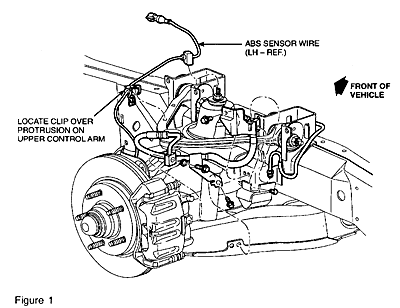
On most Ford F-150s, you’ll find the ABS sensors mounted near the brake rotors (front) or on the axle (rear). Look for a small sensor with a wire leading from it. Some trucks have four sensors (one at each wheel), while others have only three (one sensor for each front wheel and one on the rear axle).
Step-by-step: How To Test Ford F-150 Abs Sensors
1. Check For Trouble Codes
Start by connecting your OBD-II scanner to the diagnostic port under the dashboard. Turn the ignition key to ON (engine off) and let the scanner read the codes. If you get codes like C0035 or C0040, they can point to a faulty wheel speed sensor.
Non-obvious insight: Some scanners will only show “ABS Fault” without specifying the wheel. In that case, you’ll need to test each sensor.
2. Inspect The Sensor And Wiring
Visually check the sensor and its wiring. Look for:
- Broken or frayed wires
- Corrosion at the connector
- Dirt or metal shavings stuck to the sensor tip
Tip: Even a small amount of debris can interfere with the sensor signal.
3. Test The Sensor’s Resistance (passive Sensors)
Most older F-150s use passive sensors. Here’s how to test them:
- Unplug the sensor’s electrical connector.
- Set your multimeter to ohms (Ω).
- Touch the probes to the sensor terminals.
A typical reading is between 800 and 2000 ohms. If your reading is much higher (infinite) or much lower (zero), the sensor is likely bad.
Example Readings:
- Front Left: 1300 Ω (good)
- Front Right: ∞ (open circuit — bad sensor)
4. Test For Ac Voltage (passive Sensors)
You can also test the sensor by spinning the wheel and measuring AC voltage.
- Set your multimeter to AC volts.
- Plug the sensor back in (or use back-probing wires).
- Spin the wheel by hand.
- You should see a small AC voltage (0.1–1 volt). If there’s no voltage, the sensor may be faulty.
5. Testing Active (magnetic) Sensors
Newer F-150s (2015+) often use active sensors. These need a power supply and send a digital signal.
- With the ignition ON, check for 12 volts at the sensor’s connector (one wire should be power, one ground, one signal).
- Use a scan tool or an oscilloscope for the most accurate test. A basic multimeter may not read the signal well.
- If you don’t have a scan tool, check for any physical or wiring damage, as active sensors rarely fail internally.
Non-obvious insight: Cleaning the sensor and tone ring can sometimes “fix” false ABS warnings caused by dirt, not a bad sensor.
Credit: www.brakeandfrontend.com
Comparing Sensor Types: Passive Vs Active
This comparison shows key differences between the two sensor types used in Ford F-150s.
| Feature | Passive Sensor | Active Sensor |
|---|---|---|
| Signal Type | Analog (AC voltage) | Digital (square wave) |
| Power Needed | No | Yes |
| Common Years | 1997–2014 | 2015–present |
| Testing Tool | Multimeter | Scan tool/Oscilloscope |
Interpreting Test Results
If your tests show an open circuit (infinite resistance) or no voltage while spinning the wheel, the sensor is likely bad. If all sensors test fine but the ABS light is on, the issue might be with the tone ring, wiring, or ABS module.
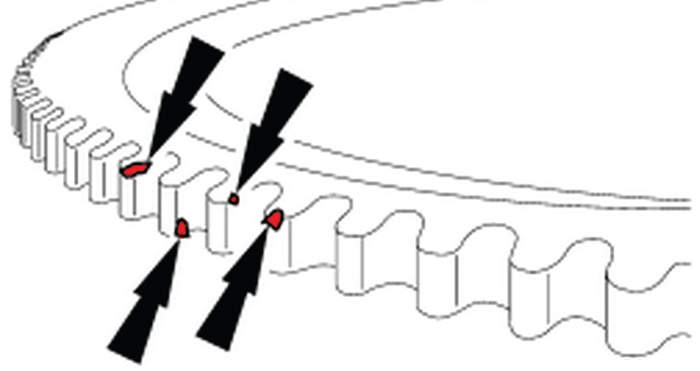
A common mistake is replacing the sensor without checking the tone ring (the toothed part the sensor reads). If it’s cracked or dirty, the new sensor won’t help.
Credit: www.brakeandfrontend.com
How To Replace A Faulty Abs Sensor
If you find a bad sensor, replacement is straightforward:
- Remove the wheel (if needed for access).
- Unplug the sensor connector.
- Remove the sensor’s retaining bolt (often a small hex or Torx).
- Gently wiggle out the sensor. Clean the mounting hole.
- Install the new sensor, bolt it down, and plug in the connector.
Always clear any ABS codes with your scan tool after replacing a sensor.
Preventing Future Abs Sensor Issues
- Clean the area around the sensor regularly, especially if you drive off-road.
- Check your brake components during every tire rotation or brake job.
- Fix any torn or worn wiring harnesses right away.
Real-world Example
John owns a 2012 Ford F-150. His ABS light came on after a snowy drive. He used a multimeter to test all four sensors. The right rear sensor showed infinite resistance. He replaced it, cleaned the tone ring, and the ABS light turned off—problem solved.
He later found that snow and salt had corroded the old sensor’s connector.
Common Mistakes When Testing
- Testing the wrong sensor type. Always check if your truck uses passive or active sensors.
- Ignoring the tone ring. A cracked or dirty tone ring can mimic sensor failure.
- Not using jack stands. Never work under a truck supported only by a jack.
- Skipping the wiring check. Often, the problem is a broken wire, not the sensor itself.
Cost Of Abs Sensor Repair
Most Ford F-150 ABS sensors cost between $20 and $70. Labor at a shop can range from $80 to $150 per sensor. Doing it yourself can save money, but only if you’re confident in your testing.
When To See A Professional
If you’ve tested all sensors, checked the wiring, and still have an ABS light, it may be time to visit a trusted mechanic. ABS modules and wiring harnesses require advanced diagnostics.
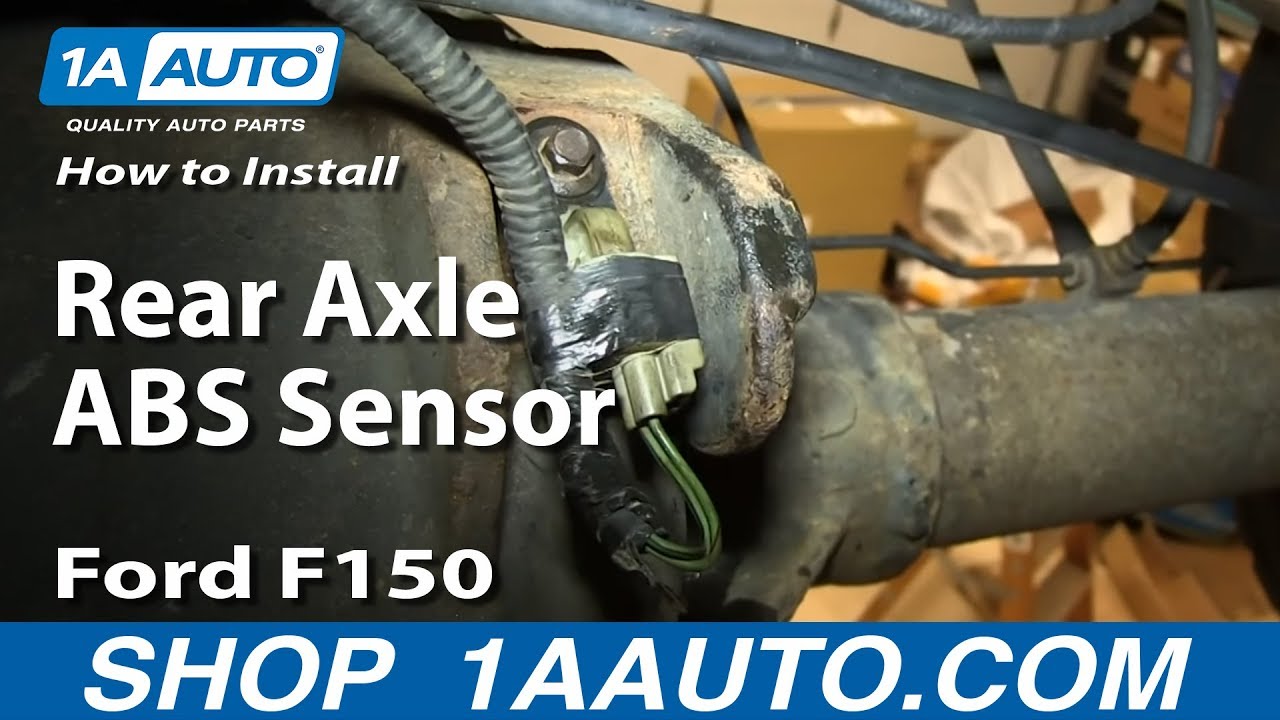
Credit: www.youtube.com
Additional Resources
For more details, you can visit the official ABS system overview.
Abs Sensor Testing: Quick Reference Table
Use this table to quickly remember ideal test values for Ford F-150 sensors.
| Sensor Type | Resistance (Ohms) | AC Voltage (Spin Test) | Power Supply |
|---|---|---|---|
| Passive (Front/Rear) | 800–2000 Ω | 0.1–1V | No |
| Active (Front/Rear) | Varies (often high) | Digital signal | Yes (12V) |
Frequently Asked Questions
What Happens If I Drive With A Bad Abs Sensor?
Driving with a bad ABS sensor means your anti-lock brakes and often traction control won’t work. Braking will still work, but you may lose control in slippery conditions.
Can I Clean An Abs Sensor Instead Of Replacing It?
Yes, you can try cleaning the ABS sensor and the tone ring first. Dirt or metal shavings often cause false alarms. If cleaning doesn’t help, you may need a replacement.
How Do I Know If My F-150 Uses Passive Or Active Sensors?
Check your truck’s year. F-150s from 1997–2014 usually use passive sensors, while 2015 and newer models use active sensors. A scan tool can also help identify the sensor type.
Do I Need To Reset The Abs Light After Replacing A Sensor?
Yes. Use an OBD-II scan tool to clear the ABS code after fixing the problem. The light may turn off by itself after a drive, but resetting it is faster.
Are Aftermarket Abs Sensors Reliable For The Ford F-150?
Many aftermarket ABS sensors work well if they meet OEM specs. Some cheaper sensors may not last as long or fit perfectly. When in doubt, choose a trusted brand.
Testing and replacing ABS sensors on your Ford F-150 is a smart DIY project if you follow safe steps. With a bit of care and the right tools, you’ll keep your truck’s safety systems working and avoid expensive shop bills. Start with a scan tool, confirm with a multimeter, and you’ll know exactly where the problem lies. Safe driving!
Disclosure: As an Amazon Associate, I may earn from qualifying purchases at no extra cost to you. Amazon and the Amazon logo are trademarks of Amazon.com, Inc, or its affiliates.
- Amazon, Amazon Prime, the Amazon logo and Amazon Prime logo are trademarks of Amazon. com, Inc. or its affiliates.

I am Sadman, the founder of CarSensorHub.com, where I share my passion for cars and technology. I specialize in writing detailed reviews and helpful guides on car gadgets, accessories, safety tools and many more. My mission is to help car owners discover the best products and tips to improve their driving experience and stay safe on the road.