Choosing the right leak detector depends on your specific HVAC needs. While all units identify refrigerant leaks, they differ in sensor technology, sensitivity levels, and ease of use. The Fieldpiece DR82 Infrared is our top pick for most technicians because it balances high-sensitivity infrared detection with a durable, long-lasting sensor.
🏆 Our Top Pick

Fieldpiece – DR82 Infrared Refrigerant Leak Detector – Ultra-Sensitive Leak
Technicians needing a durable, ultra-sensitive tool for daily use.
☰ Table of Contents 18
- Quick Comparison
- How We Picked
- 1. Fieldpiece – DR82 Infrared Refrigerant Leak Detector – Ultra-Sensitive Leak
- 2. Fieldpiece – DR58 Heated Diode Refrigerant Leak Detector – Ultra-Sensitive
- 3. Inficon D-TEK 3 Refrigerant Leak Detector
- 4. testo 316-3 Refrigerant Leak Detector
- 5. Mastercool 55900 IntellaSense II Refrigerant Leak Detector
- 6. Elitech HVAC Refrigerant Leak Detector 10 Yrs Infrared Sensor Life
- 7. NAVAC NML1 Refrigerant Leak Detector
- 8. Aituzero Rechargeable Refrigerant Leak Detector
- 9. Aprvtio ALD-200 Refrigerant Leak Detector Professional-Grade
- 10. Elitech Refrigerant Leak Detector
- Choosing Your Leak Detector
- Before You Buy
- Comparing the Top Detectors
- Common Leak Detector Mistakes
- Frequently Asked Questions
- Conclusion
Quick Comparison
- Best overall: Fieldpiece DR82 Infrared — Uses infrared sensor technology to detect micro leaks as small as 0.03 oz/yr with high reliability.
- Best for pros: Testo 316-3 — Features a heated diode sensor and automatic zeroing for quick, precise measurements in contaminated areas.
- NAVAC NML1 — A lightweight tool at 0.77 lbs that includes a rechargeable battery and a long 15.7-inch probe.
- Detects leaks under 0.03 oz/yr
- Compatible with all common refrigerants
- IP54 rated with 10-year sensor life
- Backlit LCD with LED leak indicators

- Detects leaks under 0.03 oz/yr
- Compatible with all common refrigerants
- IP54 rated with 300 hour sensor life
- Backlit LCD with LED leak indicators

- Low, medium, high, super sensitivity settings
- Automatic and manual zero modes
- Detects all CFCs, HCFCs, HFCs, HFOs
- Includes rugged carrying case
- Automatic zeroing for rapid measurements
- Detects CFCs, HFCs, HCFCs, R22, R134a, R404A, R410A, R507, R438A
- Sensitivity down to 0.15 oz/year
- Rugged housing design

- Heated tin oxide sensor for all refrigerants
- Complies with SAE J2791, J2913, EN 14624
- Super sensitive mode for small leaks
- 15.5” flexible probe with environment-sensing tip

- Infrared sensor with 10 years lifetime
- TFT screen for alerts and battery info
- Adjustable sensitivity up to 0.1 oz/yr
- Front buttons for quick operation

- Rechargeable lithium battery
- Weighs 0.77 lbs with 15.7 inch probe
- Detects CFC, HCFC, HFC refrigerants
- Detects leaks ≤ 0.1 oz/year; 1500 hour sensor

- Japanese semiconductor sensor with 3 sensitivity levels
- Sound, light, and vibration alarm modes
- TFT display with real-time PPM readings
- 2000mAh battery with 8 hours use

- Heat diode sensor for A1, A2L, A3 refrigerants
- Sensitivity adjustable up to 0.14 oz/yr
- 2.8-inch TFT display with audible alarms
- 2.8-inch TFT color display

- Corona sensor for all halogenated refrigerants
- 6s preheating; 0.21oz/yr sensitivity
- 8.26 inch flexible probe
- Powered by 4 AAA batteries
How We Picked
We compared 30 different refrigerant leak detector listings to identify tools that provide reliable, professional-grade performance. Each selected unit had to explicitly state its sensor type, sensitivity limits, and compatibility with common refrigerants to ensure it meets standard HVAC service requirements.
✂️ What put a product out
- Lack of clear sensitivity specifications.
- Incompatibility with modern HFO refrigerants.
- Unclear battery life or charging methods.
#1 Top Pick
1. Fieldpiece – DR82 Infrared Refrigerant Leak Detector – Ultra-Sensitive Leak
🎯 Best for: Technicians needing a durable, ultra-sensitive tool for daily use.
🌟 Key Features
- Infrared Sensor: Uses advanced technology to detect leaks as small as 0.03 oz/yr, offering higher sensitivity than traditional bubble testing methods.
- Durable Design: Rated IP54 to resist moisture and oil, ensuring the tool remains functional in harsh, dirty HVAC work environments.
- Clear Indicators: Features a backlit LCD screen that displays leak intensity, plus an LED tip and audio beep to pinpoint leaks.
- Long Battery Life: Powered by a USB-C rechargeable battery that provides over 10 hours of continuous use on a single charge.
💡 Why We Recommend It
This unit detects all common refrigerants, including HFO blends. It is built for professional service work.
📋 Key Specs
| Sensor life | 10 years |
| Sensitivity | <0.03 oz/yr |
| Probe length | 17 inches |
| IP rating | IP54 |
🛠️ What It Means Day to Day
✓ Pros
- Highly sensitive infrared sensor.
- The sensor is built for an exceptionally long service life.
- Durable, moisture-resistant housing.
- Clear backlit LCD display.
✗ Cons
- Premium tool for professionals.
- Requires regular filter maintenance.
#2 Best for Micro Leaks
2. Fieldpiece – DR58 Heated Diode Refrigerant Leak Detector – Ultra-Sensitive
🎯 Best for: Specialists requiring maximum sensitivity for hard-to-find micro leaks.
🌟 Key Features
- Heated Diode Sensor: Highly sensitive technology that detects leaks down to 0.03 oz/yr, providing 20 times the sensitivity of traditional bubbles.
- Wide Compatibility: Detects a broad range of refrigerants including HFC, CFC, HCFC, HFO, and H2N2 tracer gas for versatile use.
- Long Battery Life: Equipped with an 18-hour USB rechargeable battery, ideal for long days in the field without needing a charge.
- Rugged Build: Features an IP54-rated housing that resists oil and moisture, protecting the internal components during daily maintenance tasks.
💡 Why We Recommend It
This tool is for those needing extreme sensitivity and long battery life. It also detects tracer gases.
📋 Key Specs
| Sensor life | 300 hours |
| Sensitivity | <0.03 oz/yr |
| Battery life | 18 hours |
| Probe length | 17 inches |
🛠️ What It Means Day to Day
✓ Pros
- Exceptional sensitivity.
- Long-lasting battery.
- Detects tracer gas.
- Rugged, moisture-resistant body.
✗ Cons
- Shorter sensor life than infrared.
- Requires regular tip replacement.
#3 Also Great
3. Inficon D-TEK 3 Refrigerant Leak Detector
🎯 Best for: Technicians wanting advanced control over sensitivity and zero modes.
🌟 Key Features
- Sensitivity Settings: Offers Low, Medium, High, and Super sensitivity settings to match the specific leak size being investigated.
- Zero Modes: Includes both automatic and manual zeroing modes to help technicians filter out background refrigerant levels.
- Broad Compatibility: Designed to detect all CFCs, HCFCs, HFCs, HFOs, and various blends, including A2Ls.
- Rugged Carrying Case: Comes with a durable case to protect the unit during transport and storage between job sites.
💡 Why We Recommend It
This detector is for professionals who want the flexibility of manual zeroing. It’s highly adaptable to different environments, from quiet residential spaces to noisy mechanical rooms.
It isn’t for those who prefer a “one-button” operation. The advanced settings require some familiarity to use effectively in the field.
🛠️ What It Means Day to Day
✓ Pros
- Flexible sensitivity modes.
- Manual and automatic zeroing.
- Wide refrigerant compatibility.
- Includes protective case.
✗ Cons
- More complex to operate.
- No TFT screen mentioned.
#4 Best for Pros
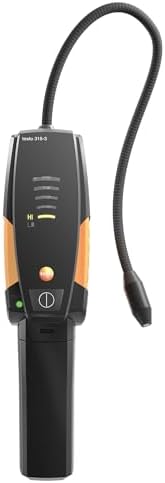
4. testo 316-3 Refrigerant Leak Detector
🎯 Best for: Professional HVAC technicians needing reliable, fast measurements.
🌟 Key Features
- Heated Diode Sensor: Patented technology provides high and low sensitivity adjustment to ensure precise leak detection down to 0.15 oz/year.
- Automatic Zeroing: Allows the detector to be used in areas that are already contaminated without giving false readings.
- Versatile Compatibility: Reliable for CFCs, HFCs, HCFCs, and specific refrigerants like R22, R134a, and R410A.
- Simple Operation: Designed with a single-button interface that makes it intuitive to use during fast-paced service calls.
💡 Why We Recommend It
This tool is built for speed. Its automatic zeroing feature makes it a favorite for technicians who need to work quickly in areas where a leak has already saturated the air.
📋 Key Specs
| Sensitivity | 0.15 oz/year |
| Sensor type | Heated diode |
| Operation | One-button |
🛠️ What It Means Day to Day
✓ Pros
- Fast, reliable zeroing.
- The device is designed for intuitive, streamlined operation.
- Rugged, functional design.
- Excellent for professionals.
✗ Cons
- Lower sensitivity than others.
- Basic display interface.
#5 Best for Certified Use
5. Mastercool 55900 IntellaSense II Refrigerant Leak Detector
🎯 Best for: Technicians who need certified performance and peak hold functionality.
🌟 Key Features
- Heated Tin Oxide Sensor: Detects all common refrigerants with a fast response time, suitable for a variety of HVAC systems.
- Certified Performance: Complies with SAE J2791 and J2913 standards, ensuring it meets strict industry performance requirements for automotive and HVAC.
- Peak Hold Function: Locks onto the highest leak signal, allowing you to compare levels while continuing to scan for other leaks.
- Intelligent Probe: The 15.5-inch probe includes an environment-sensing tip designed to minimize false alarms in drafty or dirty areas.
💡 Why We Recommend It
This tool is for the technician who values industry certifications and the ability to “lock” a reading. The peak hold function is a major advantage during complex system inspections.
It is not a lightweight, minimalist device. The “C” batteries and large case make it bulkier than USB-rechargeable models.
📋 Key Specs
| Probe length | 15.5 inches |
| Standards | SAE J2791, J2913, EN 14624 |
| Power | 2 “C” batteries |
🛠️ What It Means Day to Day
✓ Pros
- Certified industry performance.
- Useful peak hold function.
- Environment-sensing tip.
- Includes leak test vial.
✗ Cons
- Uses “C” batteries.
- Bulkier than rechargeable units.
#6 Best for Long Life
6. Elitech HVAC Refrigerant Leak Detector 10 Yrs Infrared Sensor Life
🎯 Best for: Technicians looking for a long-lasting, infrared-based detector.
🌟 Key Features
- TFT Screen: Features a high-quality display that clearly shows sensitivity levels, battery status, and leak alerts during operation.
- Adjustable Sensitivity: Offers High, Medium, and Low settings, reaching a maximum sensitivity of 0.1 oz/yr.
- Wide Compatibility: Detects all halogenated refrigerants including CFCs, HFCs, HCFCs, and HFOs with a fast one-second response time.
💡 Why We Recommend It
This detector is a great balance of modern technology and longevity. The TFT screen provides visual data that’s much easier to interpret than simple beeps.
It isn’t for those who prefer the specific smell or reaction of heated diode sensors. Some technicians find infrared sensors behave differently in cold or drafty environments.
📋 Key Specs
| Sensor life | 10 years |
| Sensitivity | 0.1 oz/yr |
| Response time | 1 second |
🛠️ What It Means Day to Day
✓ Pros
- Very long sensor life.
- Clear, informative TFT screen.
- Fast response time.
- Adjustable sensitivity modes.
✗ Cons
- Infrared sensor performance.
- Requires regular charging.
#7
7. NAVAC NML1 Refrigerant Leak Detector
🎯 Best for: Technicians prioritizing a lightweight, highly portable tool.
🌟 Key Features
- Lightweight Design: Weighs only 0.77 lbs, making it one of the easiest tools to carry for extended service days.
- Semiconductor Sensor: Uses a 2 CFM ball-bearing fan to draw air in, ensuring accurate detection of small leaks.
- Long Probe: The 15.7-inch flexible gooseneck probe allows for easy reach into tight, hard-to-access areas in HVAC systems.
- Rechargeable Battery: Includes a built-in lithium battery for long service life and high performance on every job.
💡 Why We Recommend It
This is the ultimate portable tool. Its low weight and compact size make it ideal for technicians navigating tight spaces.
It isn’t for those who need a heavy-duty unit with a screen or advanced diagnostics.
📋 Key Specs
| Weight | 0.77 lbs |
| Probe length | 15.7 inches |
| Sensitivity | 0.1 oz/year |
🛠️ What It Means Day to Day
✓ Pros
- Extremely lightweight.
- Long, flexible probe.
- Rechargeable battery included.
- Simple to use.
✗ Cons
- No display screen.
- Basic feature set.
#8 Best for Visual Trends
8. Aituzero Rechargeable Refrigerant Leak Detector
🎯 Best for: Technicians wanting visual trend graphs and multiple alarm modes.
🌟 Key Features
- Japanese Sensor: High-precision semiconductor sensor offers sensitivity down to 0.1 oz/yr for pinpointing small leaks.
- Three Alarm Modes: Includes sound, light, and vibration alerts that can be enabled independently for different work environments.
- USB-C Charging: Built-in 2000mAh battery provides 8 hours of use, with simple USB-C charging for daily convenience.
💡 Why We Recommend It
The trend graph helps you visualize if you are nearing a leak. It’s a great tool for those who like visual data.
It isn’t for those who want a simple, “analog-style” detector. The digital features may be more than some users need for basic maintenance.
📋 Key Specs
| Sensitivity | 0.1 oz/yr |
| Battery | 2000mAh |
| Alarm modes | 3 (sound, light, vibration) |
🛠️ What It Means Day to Day
✓ Pros
- Unique trend graph display.
- Vibration alarm mode.
- Rechargeable USB-C battery.
- High-precision sensor.
✗ Cons
- Requires digital navigation.
- 8-hour battery life.
#9 Best for A2L Refrigerants
9. Aprvtio ALD-200 Refrigerant Leak Detector Professional-Grade
🎯 Best for: Professionals working with A2L refrigerants and tracer gases.
🌟 Key Features
- 3-in-1 Detection: Uses a next-generation heated diode sensor to detect A1, A2L, and A3 refrigerants, plus tracer gases.
- TFT Color Display: A 2.8-inch screen provides high visibility for concentration levels, even in dark basements or bright outdoor light.
- Smart Features: Includes peak mode to capture maximum leakage and a reset function to minimize false alarms.
- Durable Housing: Built with oil-resistant and impact-resistant materials to survive tough job sites.
💡 Why We Recommend It
This unit is designed for the modern technician who handles A2L refrigerants like R32 and R454B. It’s a future-proof tool for current refrigerant standards.
It isn’t for the occasional user who only works with older refrigerants. The advanced sensor and screen are specifically for those facing new safety and efficiency standards.
📋 Key Specs
| Display | 2.8-inch TFT |
| Sensor | Heated diode |
| Compatibility | A1, A2L, A3 refrigerants |
🛠️ What It Means Day to Day
✓ Pros
- Excellent A2L refrigerant support.
- Large, clear color display.
- Useful peak mode.
- Durable, oil-resistant body.
✗ Cons
- Requires careful calibration.
- More features than basic needs.
#10 Best for Beginners
10. Elitech Refrigerant Leak Detector
🎯 Best for: Beginners or those needing a simple tool.
🌟 Key Features
- Analog Circuit: An updated version of the classic WJL-6000, using an analog circuit for fast response times.
- Six Sensitivity Levels: Provides flexibility with six levels to help find different leak sizes.
- Flexible Probe: Includes an 8.26-inch probe, which is shorter than professional models but sufficient for basic access.
- Visual/Audible Alarms: Features dual-color battery indicators and audio/visual alarms for easy monitoring.
💡 Why We Recommend It
This is a no-frills, reliable tool for someone just starting in the trade or for a DIY enthusiast. It does the job without the complexity of digital screens.
It isn’t for the full-time professional who needs high-end infrared sensors or advanced digital diagnostics. The short probe also limits reach in complex systems.
📋 Key Specs
| Sensitivity | 0.21 oz/yr |
| Probe length | 8.26 inches |
| Power | 4 AAA batteries |
🛠️ What It Means Day to Day
✓ Pros
- Very simple to use.
- Six sensitivity levels.
- Fast, reliable response.
✗ Cons
- Short probe length.
- Uses AAA batteries.
Choosing Your Leak Detector
Selecting the right leak detector involves balancing sensitivity, sensor type, and ease of use. A quality detector should pinpoint leaks without frequent false alarms.
Sensor Technology
Infrared and heated diode sensors are the industry standard. Infrared sensors generally have a longer life and are less prone to saturation, while heated diode sensors provide excellent sensitivity for micro-leaks.
Sensitivity Levels
Look for adjustable sensitivity settings. These allow you to start with low sensitivity to find a general area and increase it to pinpoint the exact leak location.
Probe Flexibility
A long, flexible probe is essential for tight spots. A short, rigid probe may restrict access.
Battery Type
Rechargeable batteries are preferred for daily use. They provide consistent power and eliminate the need for carrying spare disposable batteries on the job.
Before You Buy
Consider your typical work environment and the types of systems you service most often. If you work with modern refrigerants, ensure your tool is compatible.
What to Check
- Refrigerant Compatibility: Confirm the device detects the specific refrigerants you encounter, such as A2Ls or tracer gases.
- Calibration Needs: Understand how the device performs auto-zeroing to ensure you can use it in contaminated spaces.
💡 Quick Tip: Always perform an auto-zero calibration in clean air before you begin inspecting a system to ensure the most accurate readings.
Choosing Your Tool
If you’re a professional working in residential or light commercial HVAC, the Fieldpiece DR82 Infrared or Testo 316-3 are excellent choices. For technicians specializing in automotive or high-leak-risk systems, the Mastercool 55900 IntellaSense II or Aprvtio ALD-200 offer the precision and certifications required by industry standards.
Comparing the Top Detectors
These models are some of the most reliable options available for professional and DIY use.
| Feature | Fieldpiece DR82 | Fieldpiece DR58 | Inficon D-TEK 3 |
|---|---|---|---|
| Sensor Type | Infrared | Heated Diode | Infrared |
| Sensitivity | 0.03 oz/yr | 0.03 oz/yr | Not listed |
| Probe Length | 17 inches | 17 inches | Not listed |
| Battery | USB-C | USB-C | Not listed |
| Sensor Life | 10 years | 300 hours | Not listed |
⚡ When the answer flips: If you need to detect tracer gas, the Fieldpiece DR58 is a better choice than the Fieldpiece DR82 because it supports H2N2.
Common Leak Detector Mistakes
1. Ignoring Background Contamination
Many people believe a detector will only beep near a leak. In reality, sensors can get saturated if the area is already contaminated. Always zero the device in fresh air first.
2. Moving the Probe Too Fast
Users often wave the probe rapidly, which can cause the sensor to miss a small leak. Move the probe slowly around fittings and ports to give the sensor time to react.
3. Neglecting Filter Tips
People often forget that filter tips get clogged with oil and dust. This reduces sensitivity significantly. Change your filters regularly to maintain the performance of your tool.
📌 Key Takeaway: Slow movement and regular sensor maintenance are the secrets to finding even the smallest, most difficult refrigerant leaks in a system.
The Fieldpiece DR82 Infrared is the best choice for most professionals due to its sensor life and sensitivity. If you need advanced features or work with A2Ls, the Aprvtio ALD-200 is a strong alternative. Check your specific refrigerant needs before ordering.
Related guides
- Black Friday & Cyber Monday Rooftop Tent Deals
- Car Dehumidifier Black Friday & Cyber Monday Deals 2026
- Door Edge Guards Black Friday & Cyber Monday Deals 2026
Our Top Picks
🥈
Best for Micro Leaks
Fieldpiece – DR58 Heated Diode Refrigerant Leak Detector – Ultra-Sensitive
FAQs Of Best Refrigerant Leak Detectors
Do I need to calibrate my leak detector before every use?
Yes, most professional detectors require you to perform an auto-zero calibration in clean air. This ensures the unit ignores ambient refrigerant levels and only triggers when it detects a new leak source.
Can I use my leak detector in very cold weather?
The listing doesn’t mention operating temperature ranges. If you’re working in extreme cold, the sensor may take longer to warm up or provide less accurate readings. Always check the manufacturer manual for temperature limits.
What is the difference between an infrared and a heated diode sensor?
Infrared sensors are generally longer-lasting and less prone to false alarms from oil or moisture. Heated diode sensors are highly sensitive and excellent at detecting very small, microscopic leaks in complex systems.
Are these detectors compatible with A2L refrigerants?
Compatibility varies by model. If you work with newer, mildly flammable A2L refrigerants, look for units like the Aprvtio ALD-200 or the Inficon D-TEK 3, which explicitly state support for these modern substances.
Conclusion
Investing in a reliable tool makes your daily troubleshooting much faster and more accurate. Once you’ve picked the model that fits your workflow, take it out to a job site and practice with it. You’ll quickly see how much easier it is to pinpoint those stubborn leaks and get your customers back up and running.
Disclosure: As an Amazon Associate, I may earn from qualifying purchases at no extra cost to you. Amazon and the Amazon logo are trademarks of Amazon.com, Inc, or its affiliates.
- Amazon, Amazon Prime, the Amazon logo and Amazon Prime logo are trademarks of Amazon. com, Inc. or its affiliates.

I am Sadman, the founder of CarSensorHub.com, where I share my passion for cars and technology. I specialize in writing detailed reviews and helpful guides on car gadgets, accessories, safety tools and many more. My mission is to help car owners discover the best products and tips to improve their driving experience and stay safe on the road.